The DESI Collaboration is a winner of the 2026 Gizmodo Science Fair for greatly advancing our understanding of how the universe began, evolved, and will continue to grow in the future.
The question
What is the nature of our universe’s expansion, and how does dark energy come into play?
The result
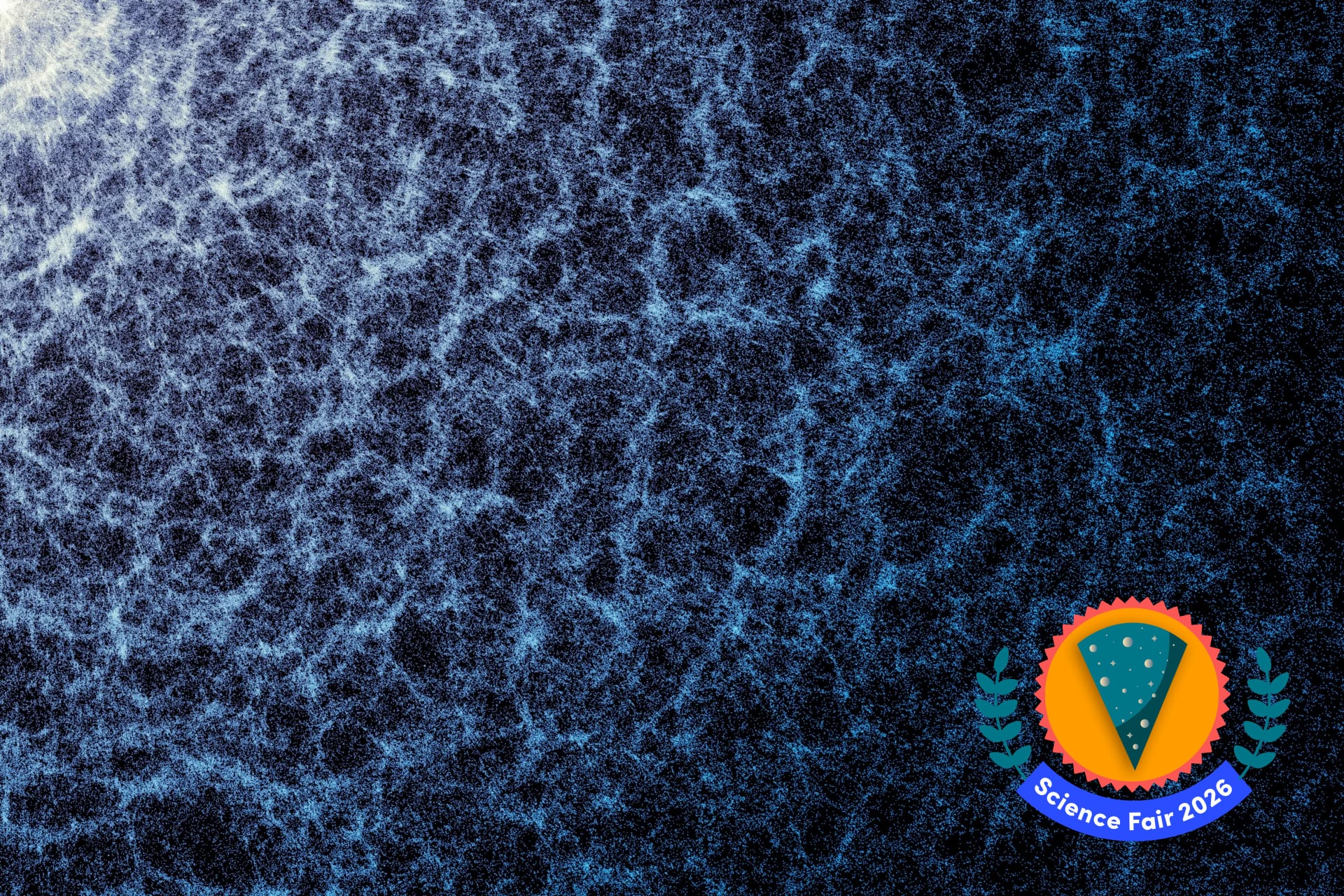
The more of the universe we map out, the less certain we seem to become about the true nature of dark energy—the force said to drive our universe’s expansion. In April of this year, the Dark Energy Spectroscopic Instrument—DESI—officially concluded its first five-year survey, producing the largest high-resolution 3D map of the universe. This map covers more than 47 million galaxies and quasars and 20 million stars over 11 billion years of cosmic history. That also represents six times as much data as all previous measurements combined.
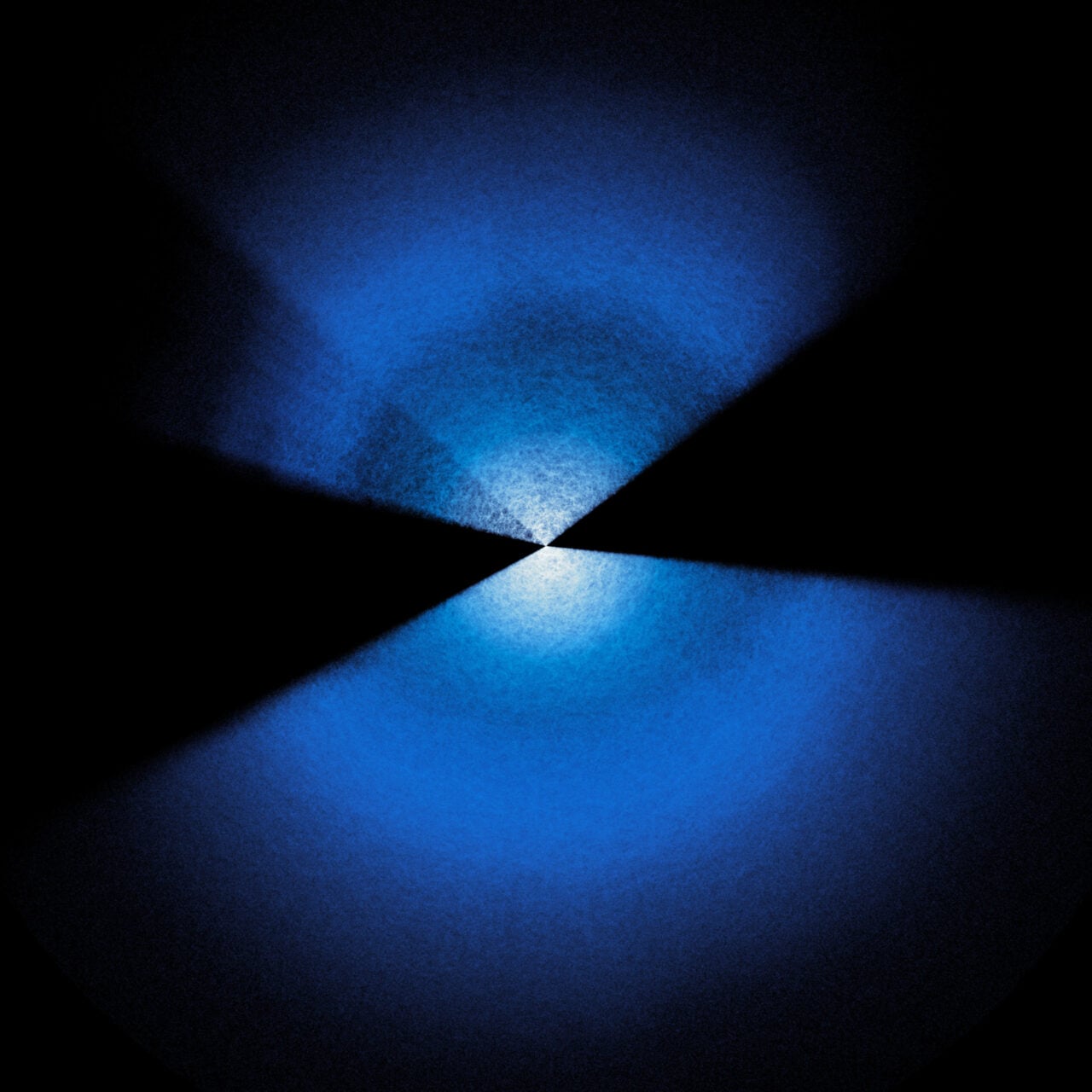
“As we look back at galaxies further and further away from us, we’re looking back in time—the time it takes for the light to reach us from these distant galaxies,” explained Will Percival, DESI co-spokesperson and an astrophysicist at the University of Waterloo in Canada. “So [a galaxy survey] can build up a history of the universe; we can build up slices that show us how the universe was at different ages.”
In the coming months to years, cosmologists will pick apart the data, running observations against theoretical models. They will in particular scrutinize the validity of the cosmological constant, lambda (Λ), which asserts that the universe’s expansion is accelerating—a widely accepted idea unexpectedly challenged by DESI.
Why they did it
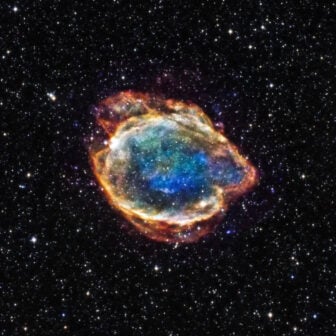
In 1998, astronomers studying distant supernovas found evidence that the universe was expanding at an ever-accelerating rate. But the arsenal of variables and equations scientists had at the time wasn’t enough to prove it. If the universe just had some regular matter and gravitational force, its evolution would be determined by how fast that matter was expanding and the influence of gravity pulling it together, Percival explained.
“To get this acceleration of the expansion, you need something else to be present in the universe, whether it’s a force or a new scalar field,” he added. We’ve termed this dark energy. But naming something doesn’t tell us what it is.”
Enter DESI. With information about millions and millions of galaxies, astronomers are free to run all sorts of cosmological tests using the datasets, which the DESI Collaboration publicly releases after some priming in-house. This isn’t research that happens overnight. After all, the questions here address the universe’s birth, how it’s growing—and, perhaps most importantly, how it might end.
Why they’re a winner
DESI isn’t the first instrument tasked to study dark energy. In fact, DESI members, including Percival and Klaus Honscheid, the collaboration’s co-instrument scientist, have ample experience working with similar projects, including DESI’s forebears. But it certainly represents the ingenuity of scientists—both in how the project was set up and in what it’s accomplished in such a short amount of time.
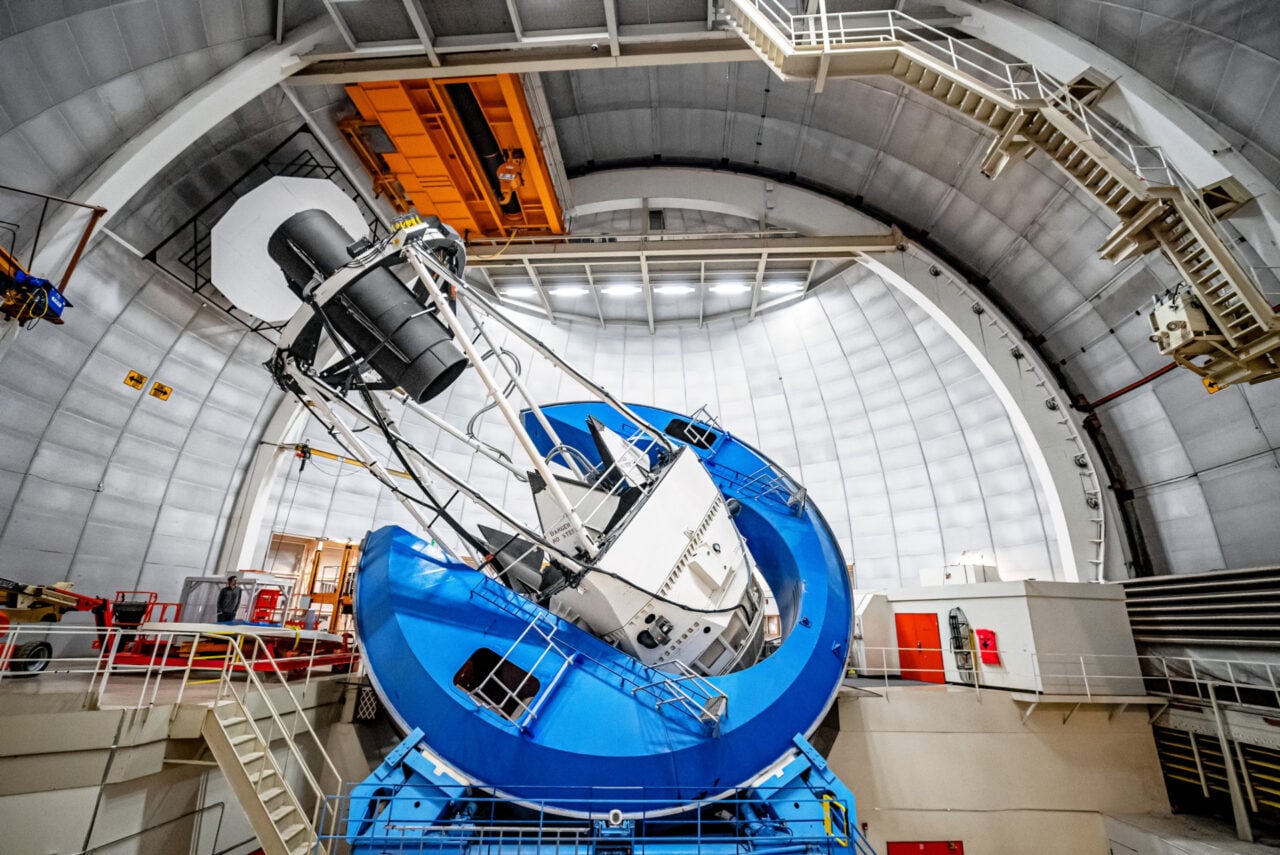
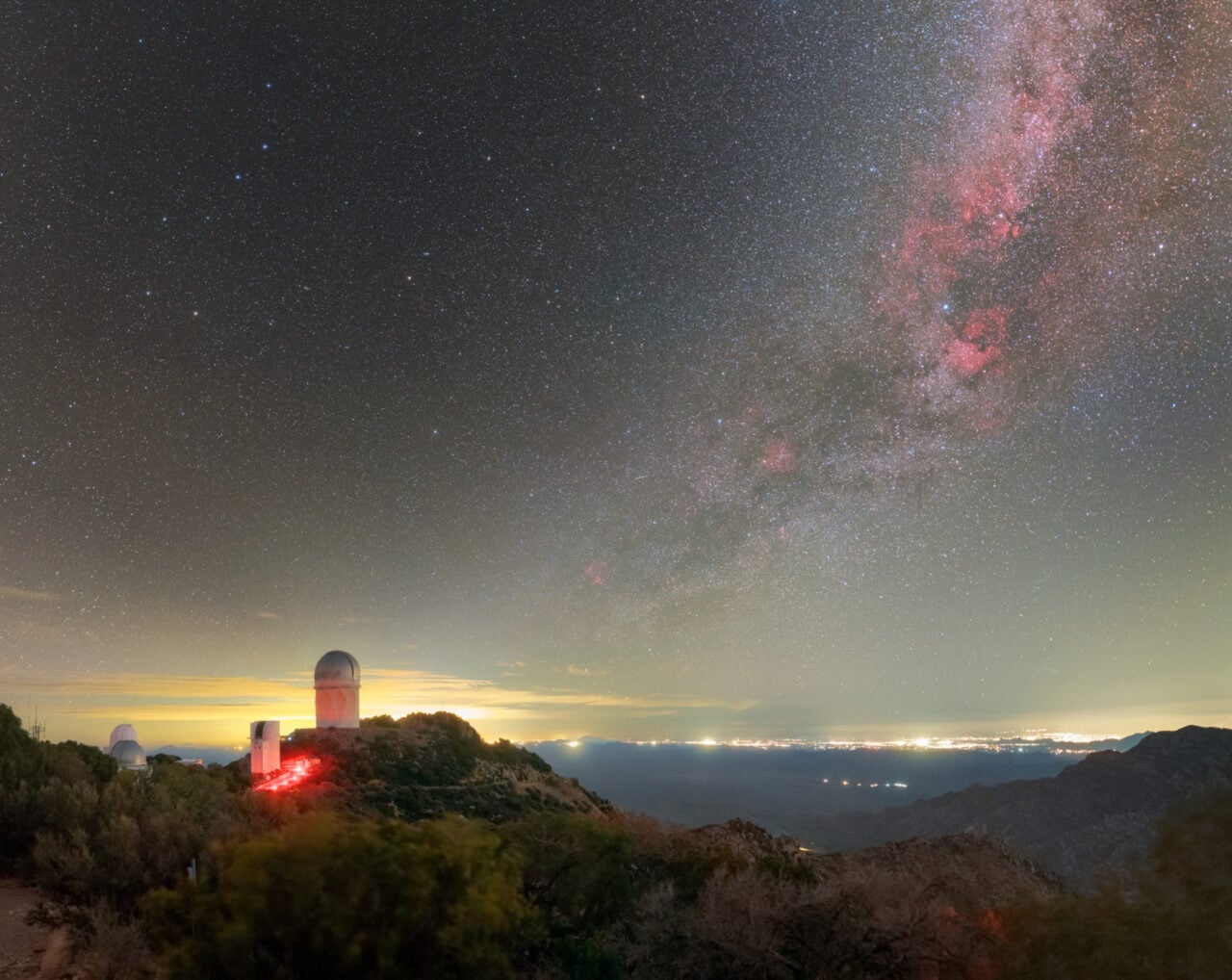
DESI is installed on top of the Mayall 4-meter telescope at Kitt Peak National Observatory in Arizona. Mayall launched in 1973, and considering the ever-growing sizes of telescopes (Vera Rubin’s mirror is 8.4 meters wide), that might not sound so impressive. There’s also the old bit of physics wisdom that claims bigger is better. But this telescope, which the community had “moved on [from],” was perfectly suited for DESI’s mission, Honscheid said, a physicist at Ohio State University.
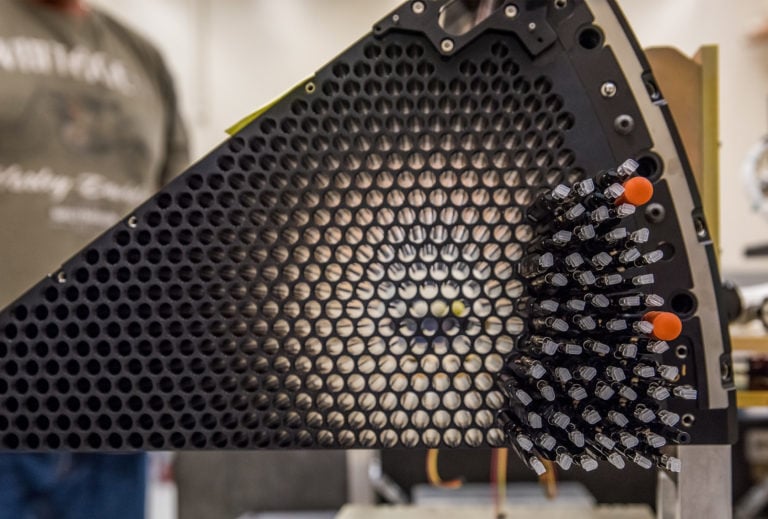
“The way we do this is we have 5,000 little robots—not the robots in science fiction, but these pencil-sized objects that can be remotely controlled, with optical fibers at the tip,” Honscheid explained. “You know from imaging where a galaxy is, and then you move the fiber’s tip to exactly that location; you do that with all 5,000 of them and then move on to the next exposure.”
This level of precision is why, in a way, DESI is too good at its job. It created ripples of shock across cosmology even before the survey actually ended in April. Most famously, an analysis of data from its first three years didn’t quite align with the standard model of cosmology. In other words, there might be something deeply amiss with our understanding of the cosmological constant. If true, the consequences for cosmology would be nothing short of catastrophic and revolutionary.
“I think everybody was expecting that our data would match this model,” Percival recalled. “So it was an incredible surprise when we first analyzed the data and found that it matched the [standard] model, which was good, but we found that it required parameters that were different from those we were expecting.”
This particular finding falls slightly below the standard for declaring a statistically significant discovery, according to Honscheid. “But it’s very enticing,” he said. “It’s a great hint.”
What’s next
The instrument is also still technically running (the day before his chat with Gizmodo, Honscheid had to tend to a glitch in the humidity control system; the issue was quickly solved). Currently, the plan is to have DESI study the night sky until about 2028. Then DESI will begin its second run, which will go until around 2035. There will definitely be upgrades, but the primary goal for now is to maintain its top-notch capabilities, Honscheid explained.
On the research side, scientists are actually not done with the dataset from DESI’s first three years of operations—simply because there is so much to study. That’s partly why DESI opted for staggered data releases to open its observations to the community, as even partial DESI data could be of great interest to the community, Percival said. After all, astronomers’ questions are as plentiful as the stars in the universe. That said, the five-year data dump is still being prepared, Percival explained. He added that there’s always a lot of coding, mathematics, and science to find the “most robust way” for folks to explore their interests.
“We tend to just say, ‘Okay, here’s how we analyzed a previous survey.’ We’ll do that with the new data,” Percival said. “But in some ways, the problems we’re facing are the same, but because we have so much data now, things we swept under the carpet 10, 15 years ago, we now do have to worry about, because our error bars are sufficiently small that now they’ve become important.”
“This problem of dark energy is sufficiently interesting, exciting, and big that [humanity has] put together a large number of very different experiments to really investigate it,” Percival said. “The more experiments you have, the more different ways you have of measuring accelerated expansion—the more you can believe any results that do come. There’s Euclid, which is coming up to its first data sample. There’s Roman, which is due for launch later this month… For sure, humans have always wanted to know their place in the universe.”
The team
As of 2026, DESI reports that the experiment “brings together more than 1,000 researchers, including 350 PhD students, 200 postdocs, and 150 undergraduates, from more than 70 institutions” worldwide. The collaboration is managed by the U.S. Department of Energy’s Lawrence Berkeley National Laboratory. The full list of DESI team members can be found here.
Click here to see all of the winners of the 2026 Gizmodo Science Fair.
Update: The story was updated after publication to better clarify ongoing and upcoming activities at DESI.