Since March, scientists have been keeping their eyes peeled as the Dark Energy Spectroscopy Instrument (DESI) started chipping away at the final tile of the largest 3D map of the universe to date. And last night, DESI officially finished recording more than 47 million galaxies and quasars and 20 million nearby stars—concluding a five-year groundbreaking journey.
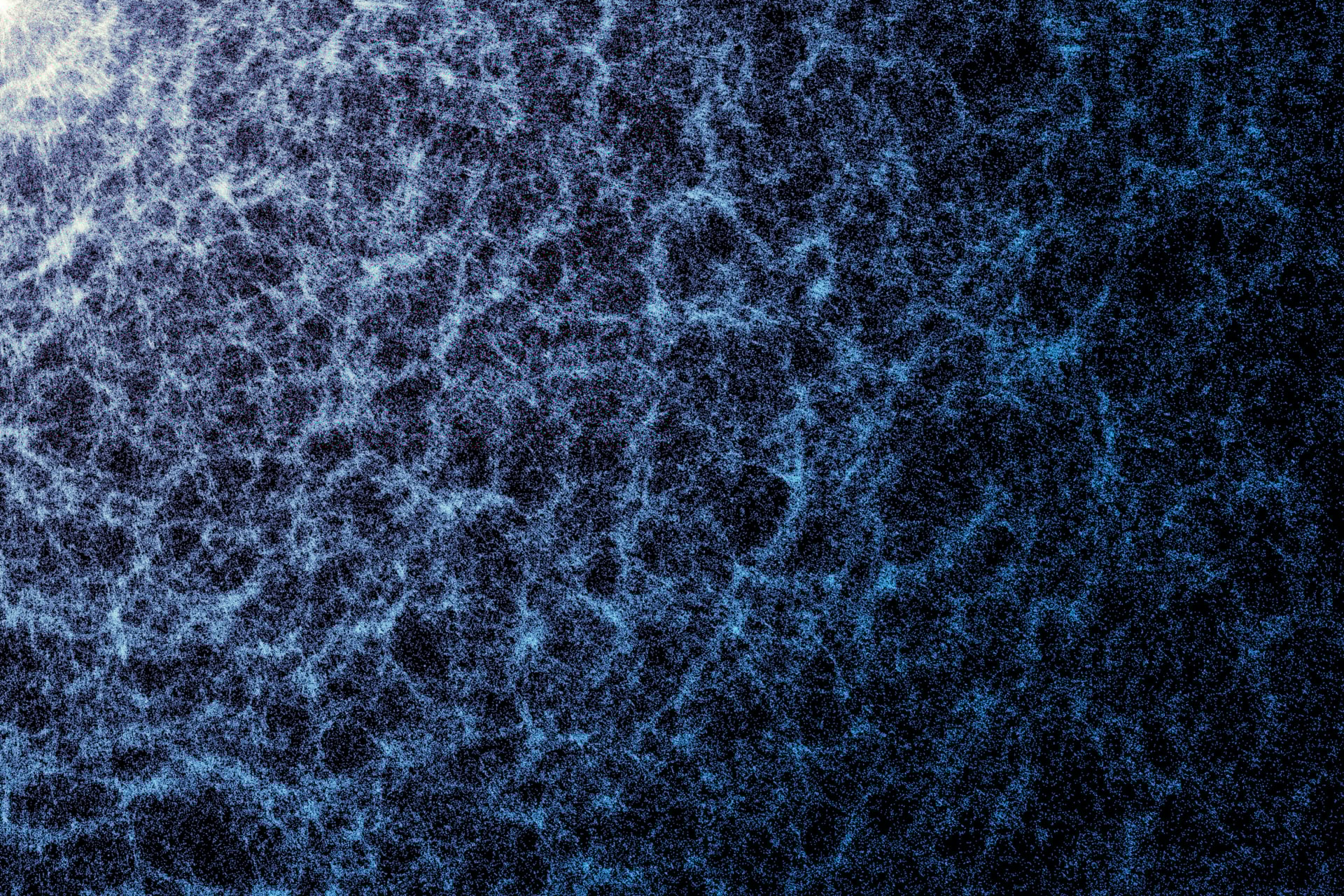
In a statement today, the DESI Collaboration officially published the final results of the instrument’s first survey run: a high-resolution 3D map of the universe spanning over 11 billion years of cosmic history. Impressively, in five years DESI, based in Kitt Peak National Observatory in Arizona, collected cosmological data for “six times as many galaxies and quasars as all previous measurements combined,” according to the release. Astronomers will use this dataset to study the influence of dark energy, a hypothetical force that drives the acceleration of the universe.
“I feel very excited! It’s a huge accomplishment,” Adam Myers, co-manager of DESI’s survey operations and an astrophysicist at the University of Wyoming, told Gizmodo. “Although the survey itself took under 5 years, many of us have been engaged in development work for a decade or more… The main feeling was a sense of pride that we were part of this amazing collaboration that had executed this groundbreaking experiment.”
While the researchers are celebrating the completion of the original survey, they’re ready to get started on churning through the data, according to DESI director Michael Levi. In a statement, Levi said the team was “all curious about what new surprises are waiting for us.”
Too good
DESI most recently made headlines in 2025, when the first batch of analyses strongly indicated that dark energy changes over time. This contradicted conventional cosmological models, which maintained that dark energy was constant. While groundbreaking, the results technically weren’t “complete,” as the analysis was based on only the first three years of DESI data. The final verdict, therefore, would have to wait until astronomers had the full picture.
Well, the “full picture” is now available. That said, the sheer volume of DESI data means that scientists aren’t even finished studying the first batch, although the research team said investigations of the final dataset are already underway.
“Now that we have that final data set, the cosmologists will be working hard to unpack any subtle new features of dark energy revealed by the data,” Myers told Gizmodo. “Complementary datasets have also grown larger, and analysis techniques are constantly being refined, so watch this space!”
At the same time, this demonstrates DESI’s unbelievable potential in studying dark energy, which constitutes around 68.7% of the universe. Understanding how dark energy evolves has heavy implications for how the universe grows—and, most importantly, how it might end. We’ll likely hear more on this front once scientists fully process and analyze the enormous collection of data. So, as Myers says, stay tuned.
Working overtime
To give a quick overview, DESI is equipped with 5,000 fiber-optic “eyes” that allow it to capture detailed images of distant cosmic objects, equating to about 80 gigabytes of data each night. Then, it consistently revisits the same area to record the full “footprint” of faint sky lights. Each data point gets processed through ten spectrographs to determine its position, velocity, and chemical composition.
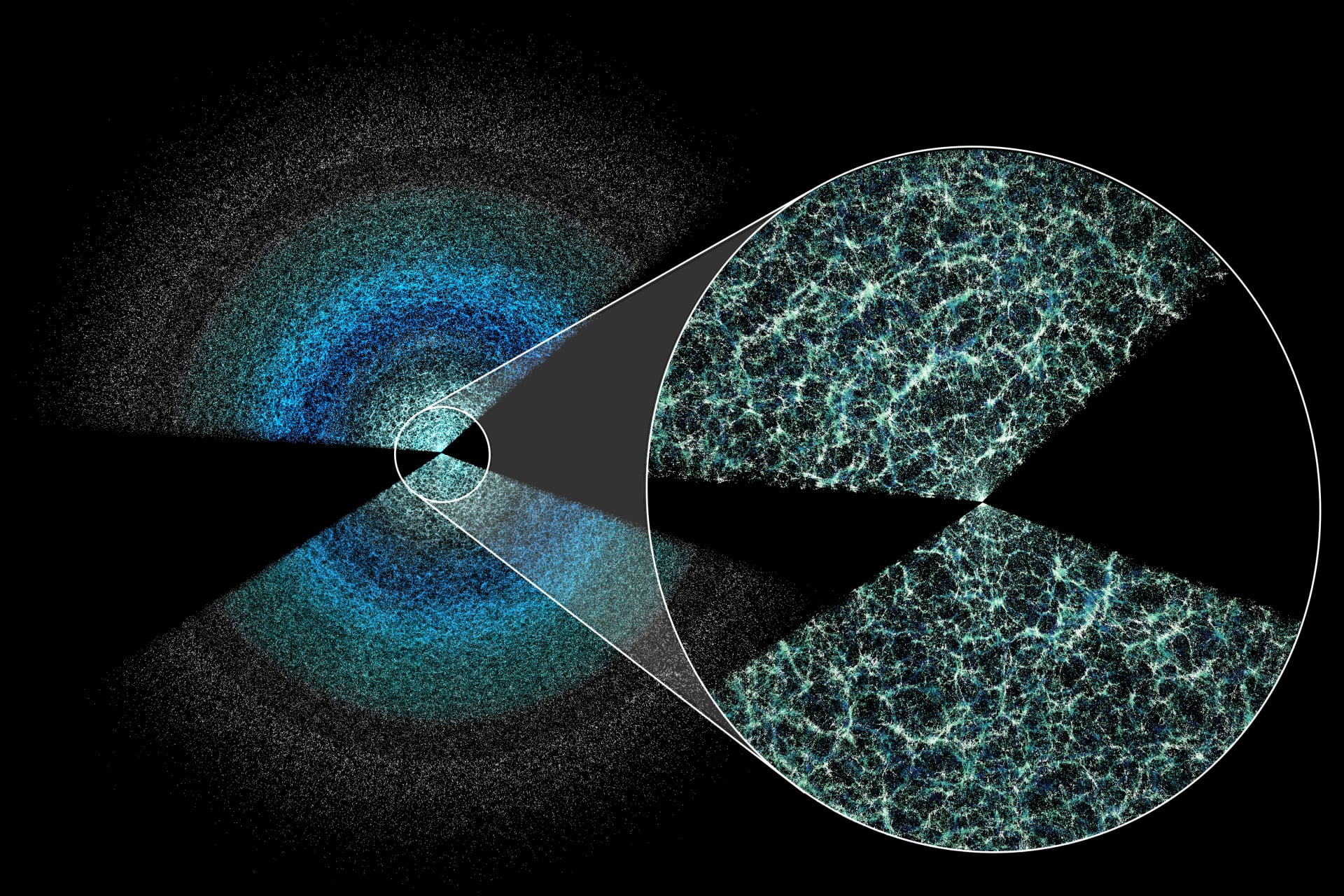
Overall, DESI ended up being too good at its job. As a result, the team added an entirely new side project, the “Bright-Time Survey,” which had DESI capture how reflected light from the moon affects the observation of faint, distant objects. Over five years, DESI managed to cover roughly two-thirds of the northern light sky.
In uncharted skies
Again, it’s very likely that some significant news will soon drop regarding the nature of dark energy. In the meantime, DESI will keep surveying the night sky until about 2028, which is when the instrument will focus on revisiting parts of the sky that the initial survey wasn’t able to capture.
The team hopes that the extended map will help us understand other cosmic mysteries beyond dark energy, such as dark matter. But scientists also intend to gather clearer data on things like nearby dwarf galaxies and stellar streams, bands of stars torn from smaller galaxies into the Milky Way. The sky is the limit—literally.
“DESI has impacted our understanding of everything from stars and galaxies to black holes and transient objects that appear and disappear on the sky,” Myers told Gizmodo. “Dark energy is exciting, but the scope of the scientific reach of the DESI survey and collaboration is remarkable.”
“Now we’re pushing beyond our original plan,” Levi said. “We don’t know what we’ll find, but we think it’ll be pretty exciting.”
This article has been updated to include comments from Adam Myers.