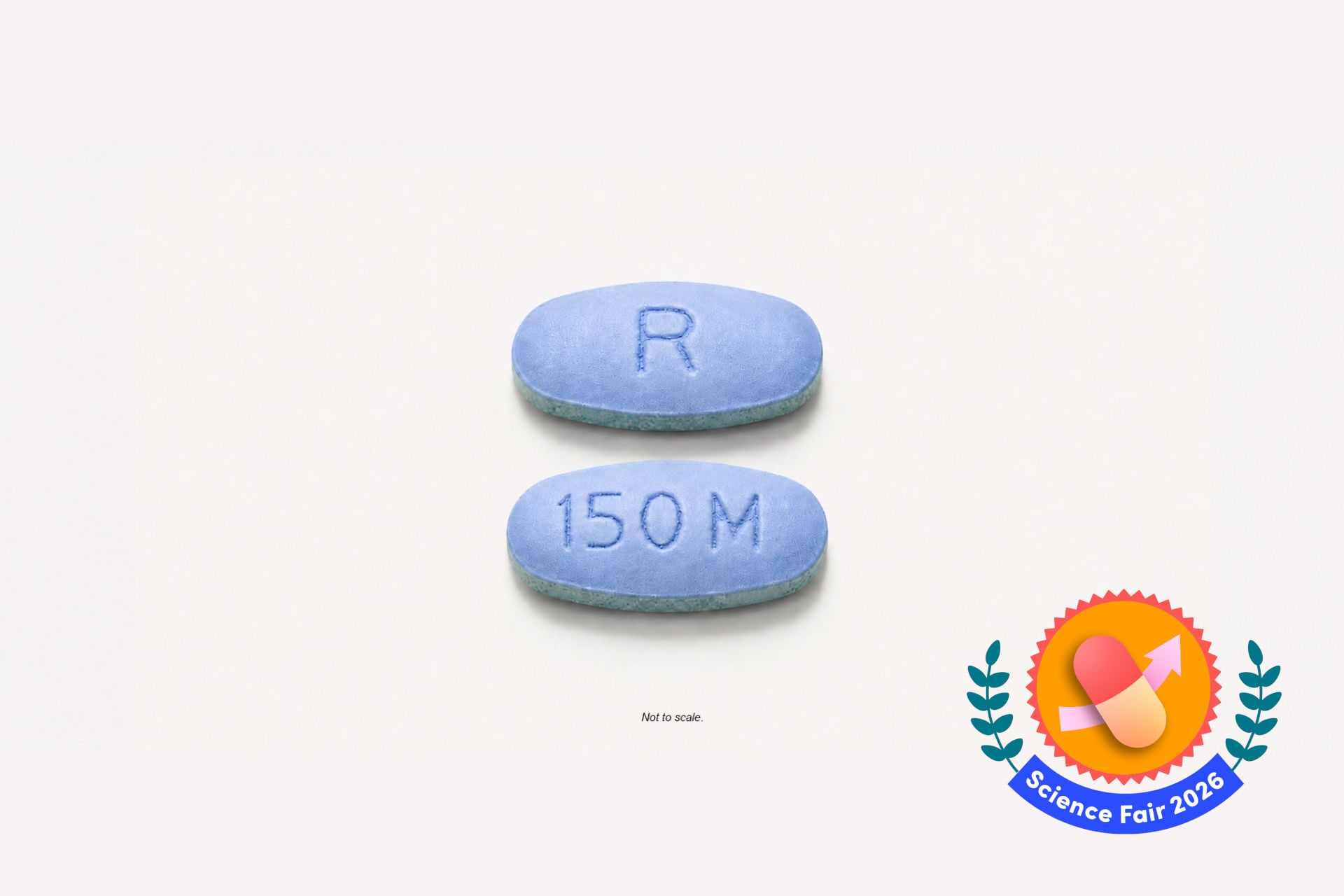
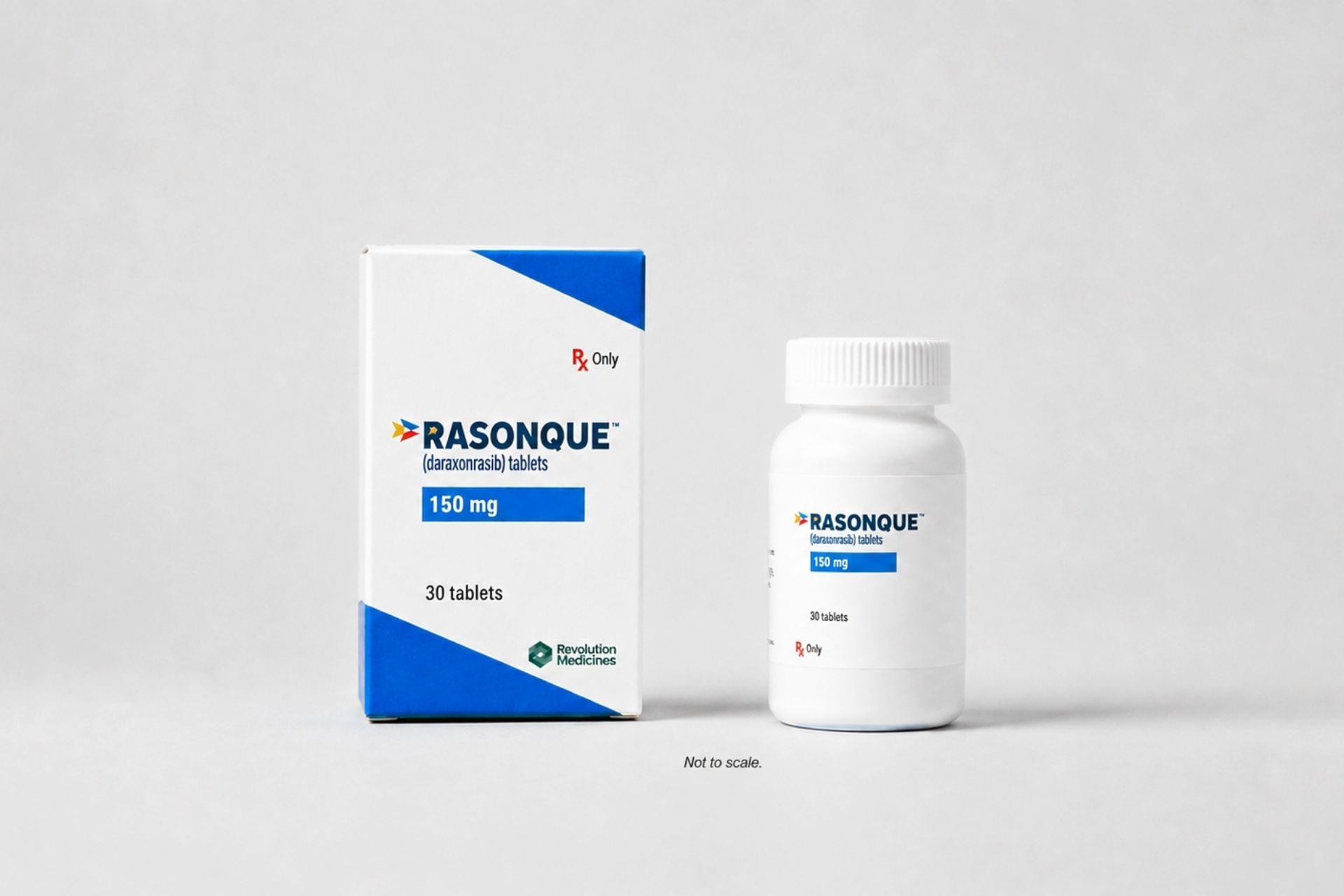
Revolution Medicines is the winner of the 2026 Gizmodo Science Fair for its research and development of Rasonque (daraxonrasib), the first approved cancer drug of its kind.
The question
Can we find an effective and reliable treatment for pancreatic cancer, which currently only has a five-year survival rate of 13%?
The results
In a large-scale clinical trial of 500 people with metastatic pancreatic ductal adenocarcinoma (the most common form of pancreatic cancer), people on daraxonrasib lived twice as long as those on standard chemotherapy: 13.2 months median survival compared to 6.7 months. The treatment group also lived longer without progression of their cancer, and the drug was relatively well-tolerated, with only about 1% discontinuing the drug.
In late August, the Food and Drug Administration approved Rasonque for people with pancreatic ductal adenocarcinoma who have already tried at least one prior systemic therapy or who are not candidates for multiagent systemic therapy.
Why they did it
RevMed originally began in 2014 as a natural product chemistry company focused on finding novel treatments for infections, according to Jan Smith, RevMed’s chief scientific officer. After its early efforts failed to take off, however, the company made a pivotal decision to move into oncology, Smith said, “recognizing that cancer represented one of the most meaningful opportunities to make a difference for patients.”
Like many scientific discoveries, RevMed researchers didn’t purposefully set out to develop drugs like daraxonrasib. They began working on a drug candidate designed to inhibit SHP2, an enzyme that transmits growth signals from outside a cancer cell to a pathway inside the cell governed by RAS, a family of proteins that many in the field had considered impossible to directly target with drugs. To their surprise, their candidate could actually shrink tumors fueled by mutations of RAS, something that wasn’t supposed to happen.
“This observation led us to the realization that we had ‘a tiger by the tail’ and needed to go after RAS itself,” Smith said. “Despite RAS being the first genetic driver of human cancer ever discovered, RAS-driven cancers have defied targeted treatment approaches for decades, making RAS truly the holy grail target of oncology.”
Daraxonrasib is specifically the first approved medication in a class of drugs known as RAS(ON) inhibitors. RAS acts as a sort of switch for cell growth, and cancer-fueling RAS mutations force the protein to be stuck in its active “ON” state, driving further growth. Daraxonrasib and similar agents bind to and block activity from mutant RAS proteins left in this state.
“These inhibitors harness a naturally occurring protein in cells to create a complex with a precisely engineered, large surface area that establishes a molecular foothold on the smooth, featureless surface of RAS(ON), enabling direct inhibition of RAS in its oncogenic state,” explained Smith.
Why they’re a winner
It’s hard to oversell just how earthshaking RevMed’s breakthrough is. Scientists have made great strides in treating many different kinds of cancer, with the notable exception of pancreatic cancer. We’re even less equipped to handle metastatic pancreatic cancer, which currently has a five-year survival rate of 3%.
However, the vast majority of pancreatic cancers, around 90%, are fueled by RAS mutations. And though daraxonrasib isn’t the first approved drug that targets RAS, it is the first that attacks a broad range of RAS mutations, which should allow it to target much of that 90% slice. Right now, the drug is only meant for cases that haven’t responded to other treatments, but RevMed has already launched a phase III trial testing it as a frontline drug for metastatic pancreatic ductal adenocarcinoma.
To be clear, daraxonrasib is not a cure. Some people don’t respond to the drug initially, and even when they do, their cancers can often still adapt to the treatment over time and find ways to keep growing. But daraxonrasib will give doctors and patients the first real fighting chance they’ve had against pancreatic cancer, and it’s likely only the start of a new era.
What’s next
RevMed has eight phase III trials that it has either completed, is actively carrying out, or plans to launch by the end of 2026, and its researchers are working to deepen their pipeline. Though daraxonrasib is a broad-reaching inhibitor, the company is also developing other candidates that more narrowly go after specific RAS mutations.
“We’re progressing both multi- and mutant-selective approaches to explore new potential treatment options for RAS-driven cancers,” Smith said. Further down the line, the company is hoping to pioneer drugs that can counteract a cancer’s resistance to RAS-targeted therapies.
Notably, pancreatic cancer isn’t the only type often driven by RAS mutations; up to 50% of colorectal cancers involve these mutations, as do around a third of lung adenocarcinomas. Several of the company’s trials are testing drugs for non-small cell lung cancers as well as solid tumors associated with RAS.
The team
It’s taken plenty of resources and teamwork for RevMed to reach the top of the mountain. One critical aspect of its success was the acquisition of the company Warp Drive Bio in 2018, which pioneered the tri-complex inhibitor platform that eventually made daraxonrasib a reality.
“This research has required collaboration across multiple disciplines and organizations. Our internal team spans deep expertise in chemical biology, cancer biology, structure-based and computationally assisted drug discovery, medicinal chemistry, pharmacology, translational research and clinical oncology,” Smith said.
And of course, none of this would be possible without the many cancer patients who volunteered their time and bodies. As of now, the company has treated more than 2,500 people with one or more of its RAS(ON) inhibitors. And because of them, the roughly 67,000 Americans diagnosed annually with pancreatic cancer now have more hope than ever.
Click here to see all of the winners of the 2026 Gizmodo Science Fair.