Vantablack inspires awe and disquiet. When BMW used this “blackest black” paint on one of its 2019 concept cars, the BMW X6, the German automaker noted that any surface coated in this carbon nanotube-based emulsion “loses its defining features to the human eye, with objects appearing two-dimensional.” The result, BMW added, “can be interpreted by the brain as staring into a hole or even a void.”
Vantablack never made it onto a commercial BMW vehicle, becoming instead a glare-reduction coating proposed for satellites and spookier applications, like stealth submarines. But that hasn’t deterred Singapore-based coatings developer Nipsea Group, whose R&D wing has now announced a more resilient blacker-than-black paint that it hopes will meet China’s burgeoning demand for deep-black luxury vehicles. Nipsea’s Vantablack-inspired composite, the researchers said, has proven capable of absorbing an average of 99.9% of all visible light wavelengths.
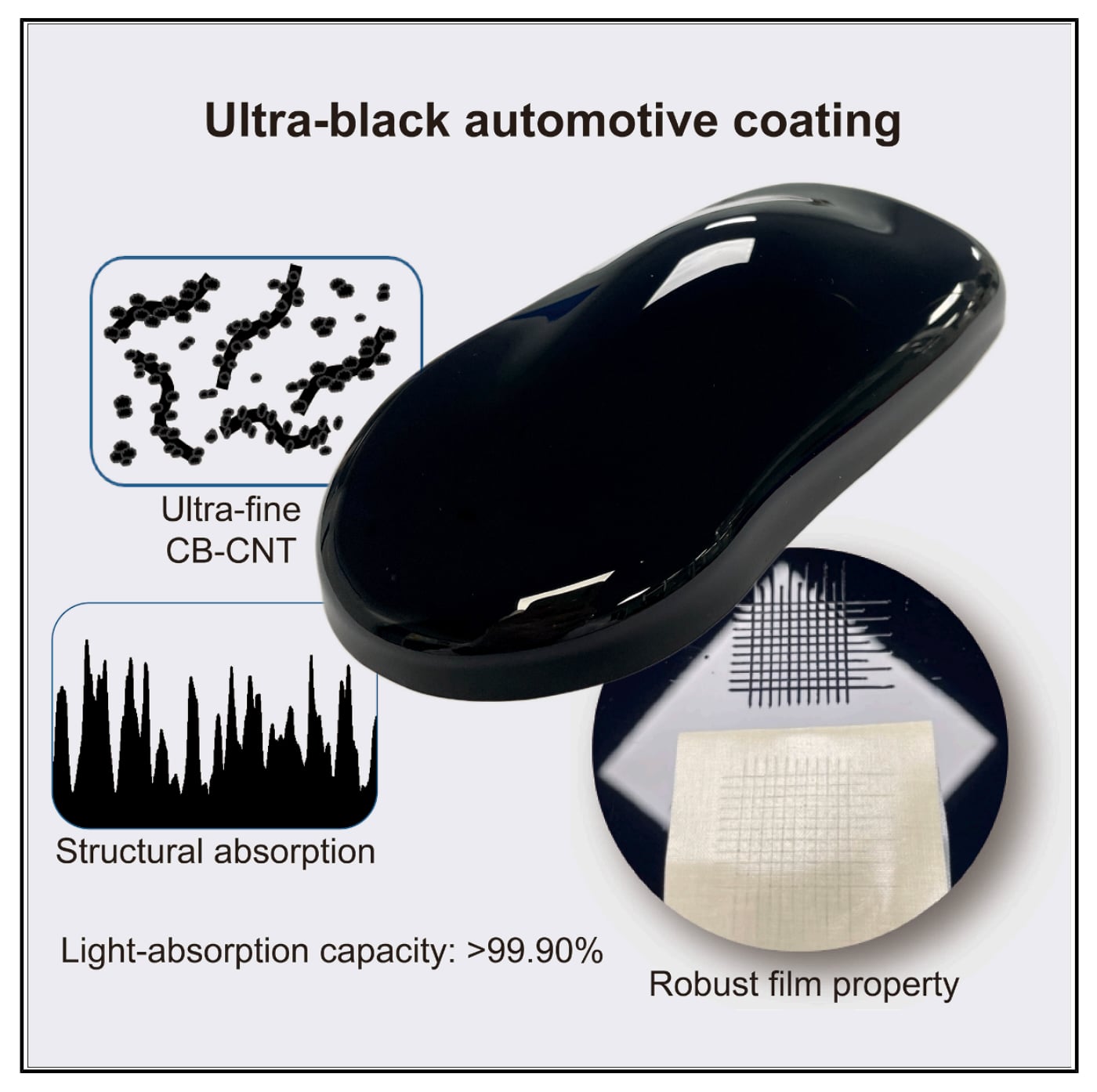
This new “ultra-black coating,” as the team wrote in its new paper for the journal Matter & Light, also remained “notably stable” even after humidity and water resistance tests—qualifying it for “application as ultra-black automotive coating.”
“In China, car color has become a key selling point,” Nipsea research chemist Zhiwei Liu said in a statement. “Deep black finishes have long been the premium choice and signature color for luxury cars due to their elegant appearance, powerful visual impact, and luxurious undertone.”
Altered carbon
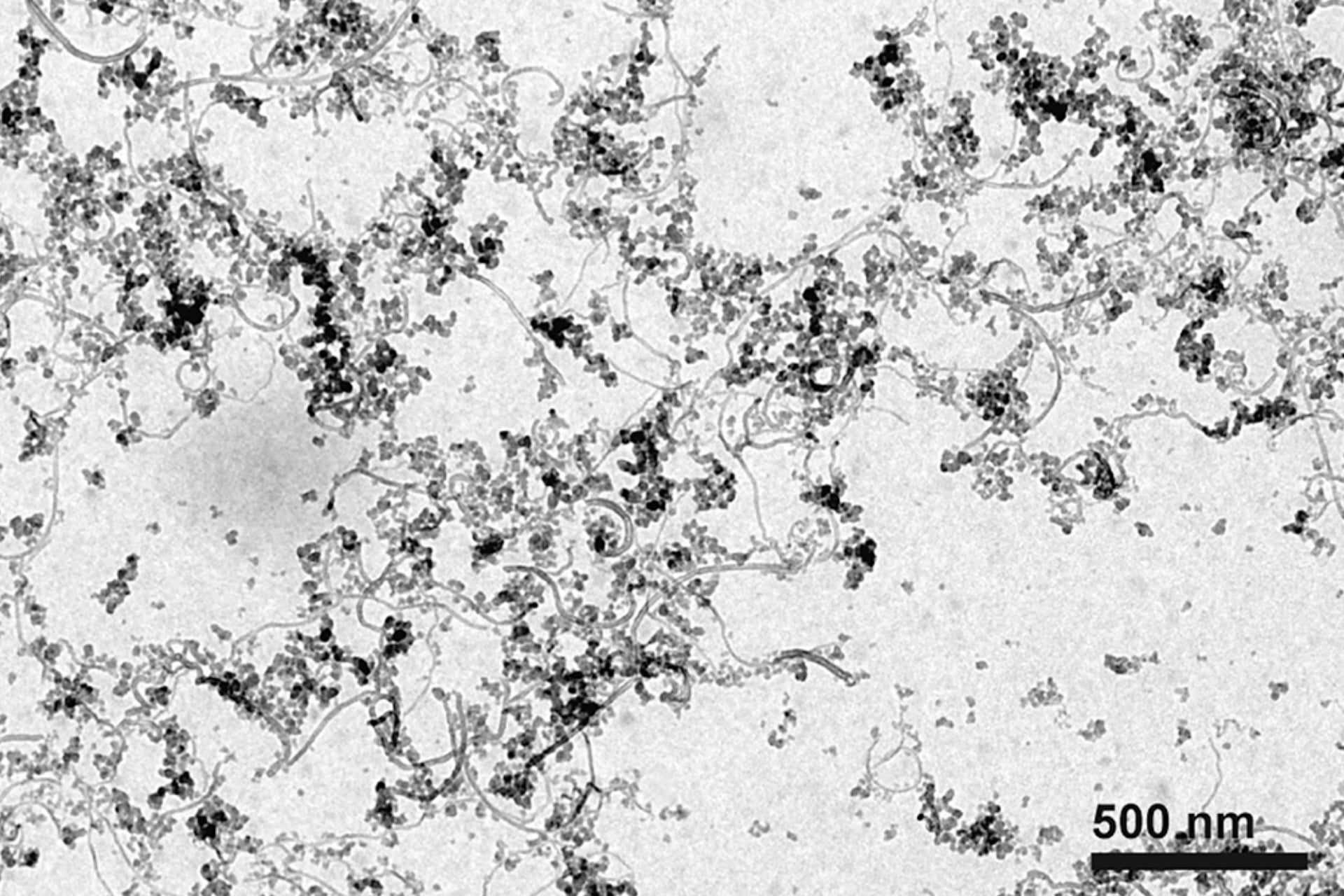
Liu and his team benefited from a natural attraction between carbon black and carbon nanotubes (CB-CNT) called a pi-interaction. This helped the particles line up in a “connecting-the-dots” structure within the paint mixture.
“CB-CNT ultrablack coating possesses a unique structural light-trapping morphology,” the team wrote in its new study, “endowing it with a superior light-absorbing capacity and a higher level of blackness compared to conventional CB black coating.”
The team, working with Nipsea’s Color Technology, Group Core R&D Shanghai, said the new ultra-black also compared well to the purely carbon nanotube variety present in Vantablack, a proprietary design of Surrey Nanosystems in the U.K. It also proved to be comparable to derivative paints that also employ vertically aligned carbon nanotube arrays.
“The perfect light absorbents, vertically aligned CNT arrays and commercially available Vantablack, demonstrate exceptional ultra-low reflectance of 0.04% and 0.05%, respectively,” the team wrote. “The average reflectance in [the] visible region of CB-CNT ultra-black coating is approximately 0.08%.”
Making an ‘optical black hole’ road-ready
Looking at more matte-finish versions of these kinds of ultra-absorbent black paints can really mess with your head, or as one Reddit user so elegantly put it, “it feels like your brain has been hacked.” Naturally, that brings some concerns as an automotive paint, for both safety and aesthetics.
“[It] blots out virtually all the design details and highlights,” as BMW put it in 2019.
The team included a glossy overcoat for its automotive tests to help its ultra-black vehicle model retain the look of a 3D object. They also tested the coating’s resilience to heat and humidity, part of adhesion issues that CNT-only paints like Vantablack have faced in the past.
The team subjected two CB-CNT-coated panels to 104 degree Fahrenheit (40 degree Celsius) heat, one in a water bath for 10 days and another in 95% humidity for 14 days. According to Liu and his coauthors, their coating showed “no significant visual paint defects” afterward and even passed a standard adhesion test—although they still believe there’s further work to be done before you might see any eerily dark luxury sedans cruising down your street.
“[There] is still room for improvements in practical processability of carbon-nanotube-containing nanomaterials,” Liu said.
Read more: Drop This Watch Covered in the World’s Blackest Paint at Night and You May Never Find It Again