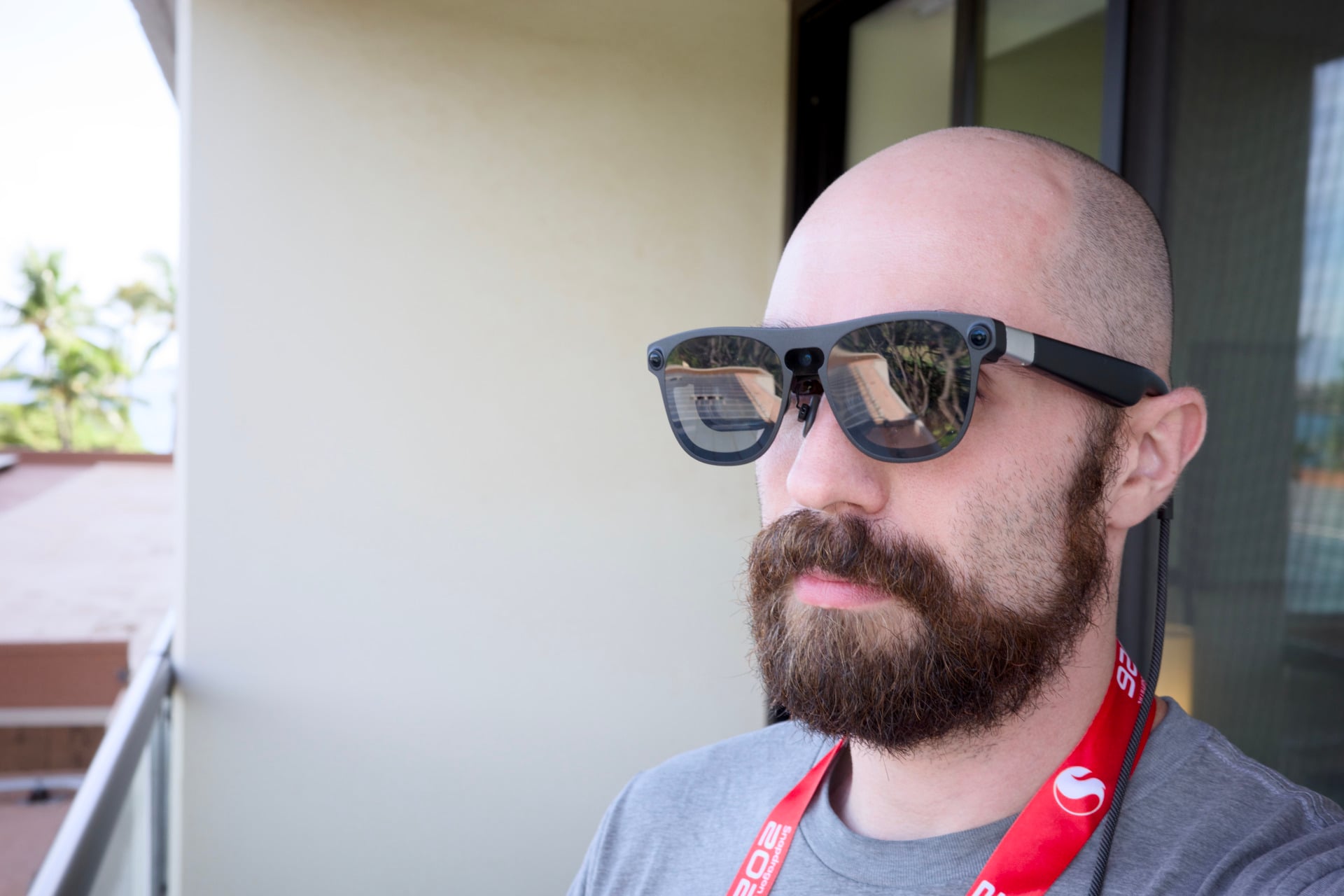
There’s one fact of life that we just have to accept about today’s XR glasses: nobody looks cool in them. So if we’re going to compare devices like the Snap Specs and the Xreal Aura, we’re not ranking them on dorkiness. It’s a case of pure usability, not pure innovation, that will determine which one will be put in front of your eyes.
Collectively, Gizmodo’s consumer tech team has spent way too much time sitting with wearable screens inches from our eyes. Meta’s VR Glasses, announced Wednesday, are promising yet another realm of more-portable AR. We’ve already talked extensively about both Xreal’s Aura and Snap Specs, so we don’t need to sit here and rehash everything. At Qualcomm’s Snapdragon Summit, I used both, one after the other, and there’s only one that feels built for the current moment.
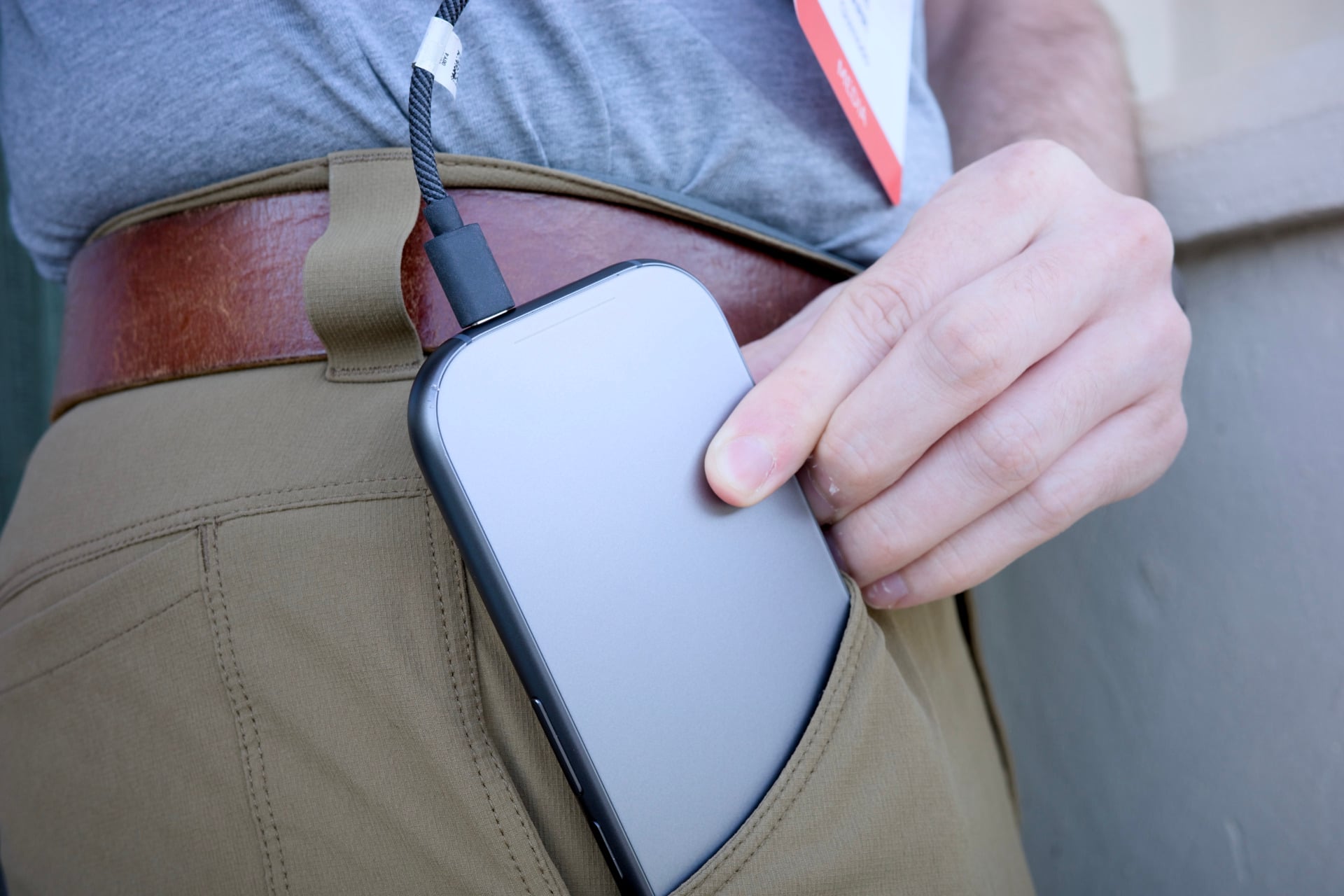
The first thing you’ll want to know is what Xreal told me about the battery life for Aura. With the connected compute and battery puck at full charge, the company told me they can get around four hours of use with typical passive or active experiences, whether that’s watching video or running various Android apps. They may get as much as five hours with simple productivity work, and potentially more if you’re only mirroring a screen from your laptop or gaming device like a Steam Deck.
Snap promised a similar battery life on its Specs of around four hours with mixed use. I don’t have the capacity to test either for as long as I would need to. Aura necessitates you stick a phone-sized compute puck in your pocket, whereas the Specs offer the full freedom of traditional (though oversized) spectacles. There may actually be a benefit to this puck, with the ability to charge while in use thanks to its two USB-C ports. You can use these same ports to hook up another device and use it as a secondary screen.
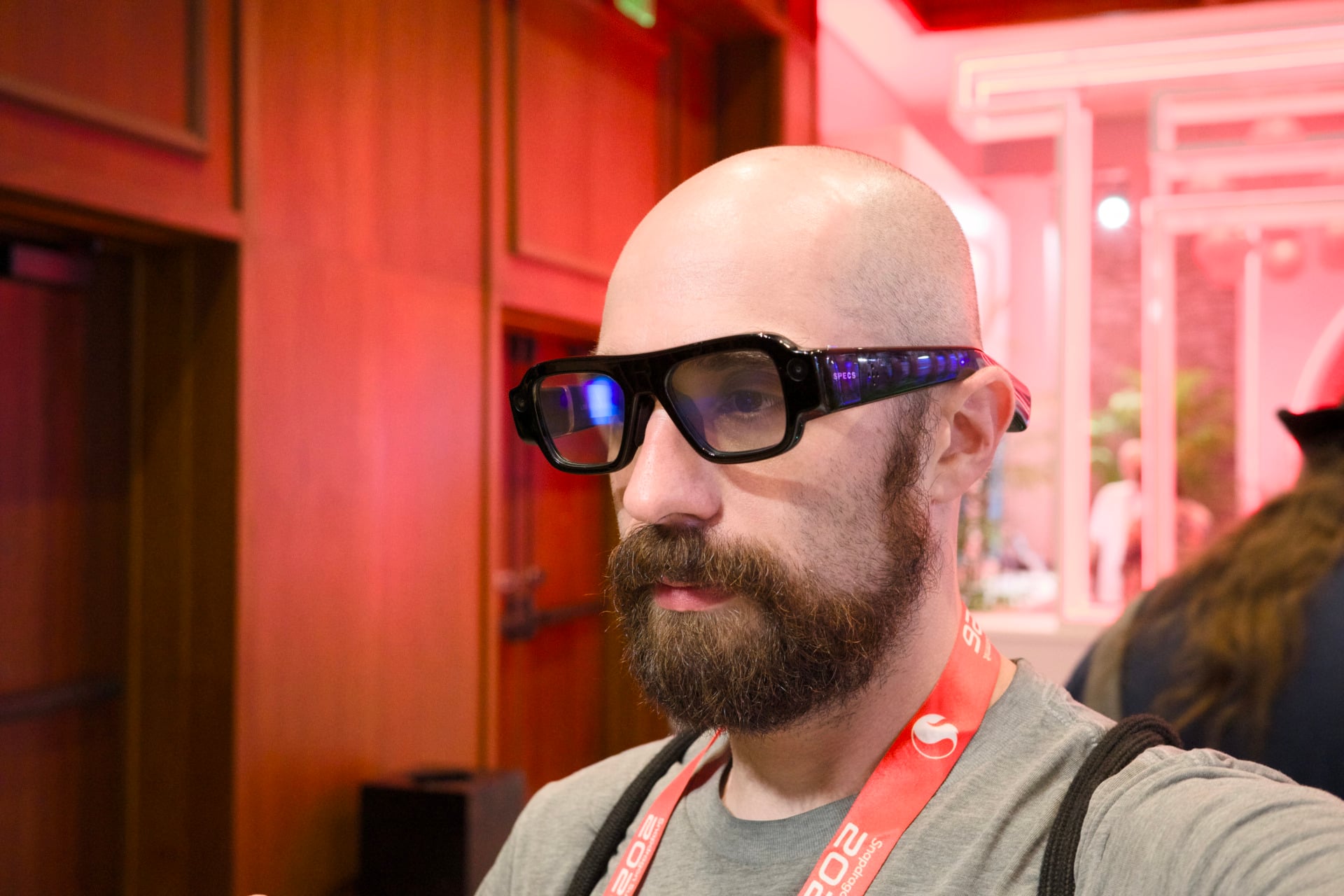
I went through several apps in Specs, including a golf putting helper, a round of augmented reality chess, and a few other AR-specific experiences. No, I’m not all that interested in using AR Snapchat. Despite a few finicky moments when the hand tracking didn’t recognize my inputs, it was certainly cool. Novelty will eventually fade, but for now their 6DoF (six degrees of freedom) capabilities are wild to see running wholly within a pair of glasses.
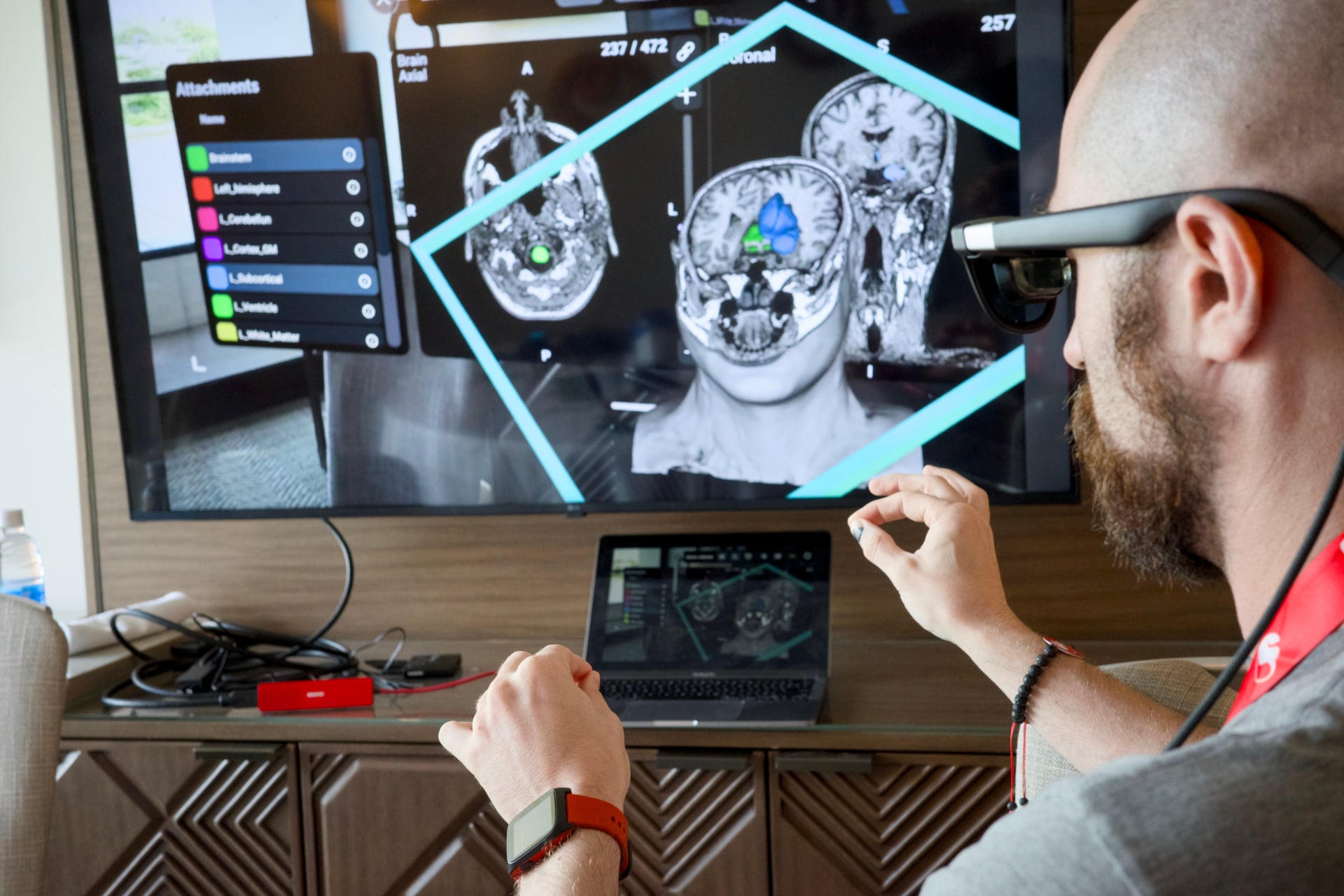
Aura is simpler. It’s running Android XR, Google’s new Android-based operating system that lets you access all your regular media apps, like YouTube. AR games like Oh My Galaxy! ran without any issue. Then Xreal took me through an enterprise app built for medical professionals. The app let you stick a model of somebody’s head in AR space, then look through the skull as if analyzing a CT scan in 3D. Again, it’s a unique experience, and it may be useful for a very select kind of medical professional. But one thing Aura has that Snap doesn’t is the entire Android ecosystem behind it, with the promise of using all your typical phone apps in AR.
Xreal’s glasses are less compact and aren’t as novel as the Specs, though they feel like they’re made more for the moment, not some idealized future where glasses replace our phones. The main distinction is a simple one: FOV—aka field of view. Snap Specs present a 51-degree FOV in front of your eyes, while Xreal can get 70 degrees. The difference is immediate if you use both pairs of smart glasses back-to-back. In Snap Specs, I sometimes couldn’t fit entire windows inside the narrow alley of the screen. Aura by comparison was large enough to have at least one large window open and—maybe—enough for two smaller windows to become your best productivity robot.
In terms of power, there’s essentially no way to compare each. Snap said its Specs are using two Qualcomm Snapdragon XR chips, though the company is not very forthcoming with full specifications. Aura is powered by the Qualcomm Reality Elite processor, and based on my experience with the only other Android XR device available, the Samsung Galaxy XR, the new chip is making the whole system run so much smoother.
Let’s be frank, you’ll probably only wear any of these XR glasses at home or as in-flight entertainment. It’s not just the fact you’ll look like the most comical “glasshole.” The Snap Specs are not light enough to treat them like your typical sunglasses. They also cost $2,195. Xreal has praised its pair, which will come in under $1,500, though we’ll have to see what happens when it hits the scene later this year.
(Full disclosure: travel and lodging were paid by Qualcomm, and Gizmodo did not guarantee any coverage as a condition of accepting the trip.)