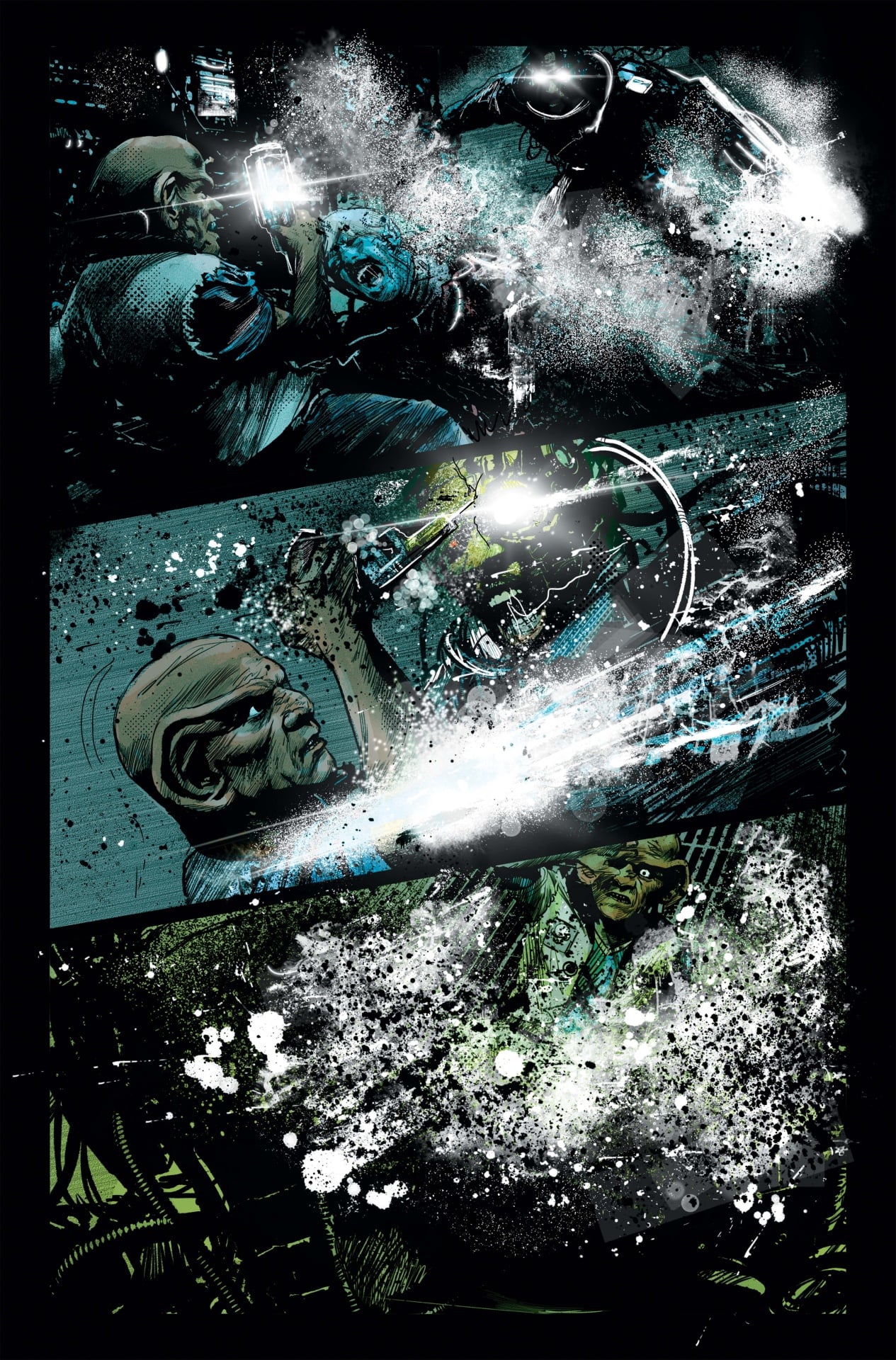
A new artist has joined IDW’s Star Trek: The Last Starship comic for its seventh issue, and with that comes a new arc that boasts a noticeable tone shift into horror. If you haven’t been keeping up with previous issues, fear not: you can dive right in and get Star Trek frights—featuring Captain James T. Kirk during the time of the Burn—without missing a beat.
Here’s the description for issue #7: “The crew of the USS Omega are desperately trying to hold the Federation’s vision of a united galaxy together, but they’re failing. The spirit of cooperation is dead, but Starfleet’s mission might not be, thanks to a research station on the aptly named Deep Space Hope. There, one last shining ray of possibility remains in an ever-darkening universe. A way to put everything back in its rightful place… if only Sato and his crew are bold enough to seize it.”
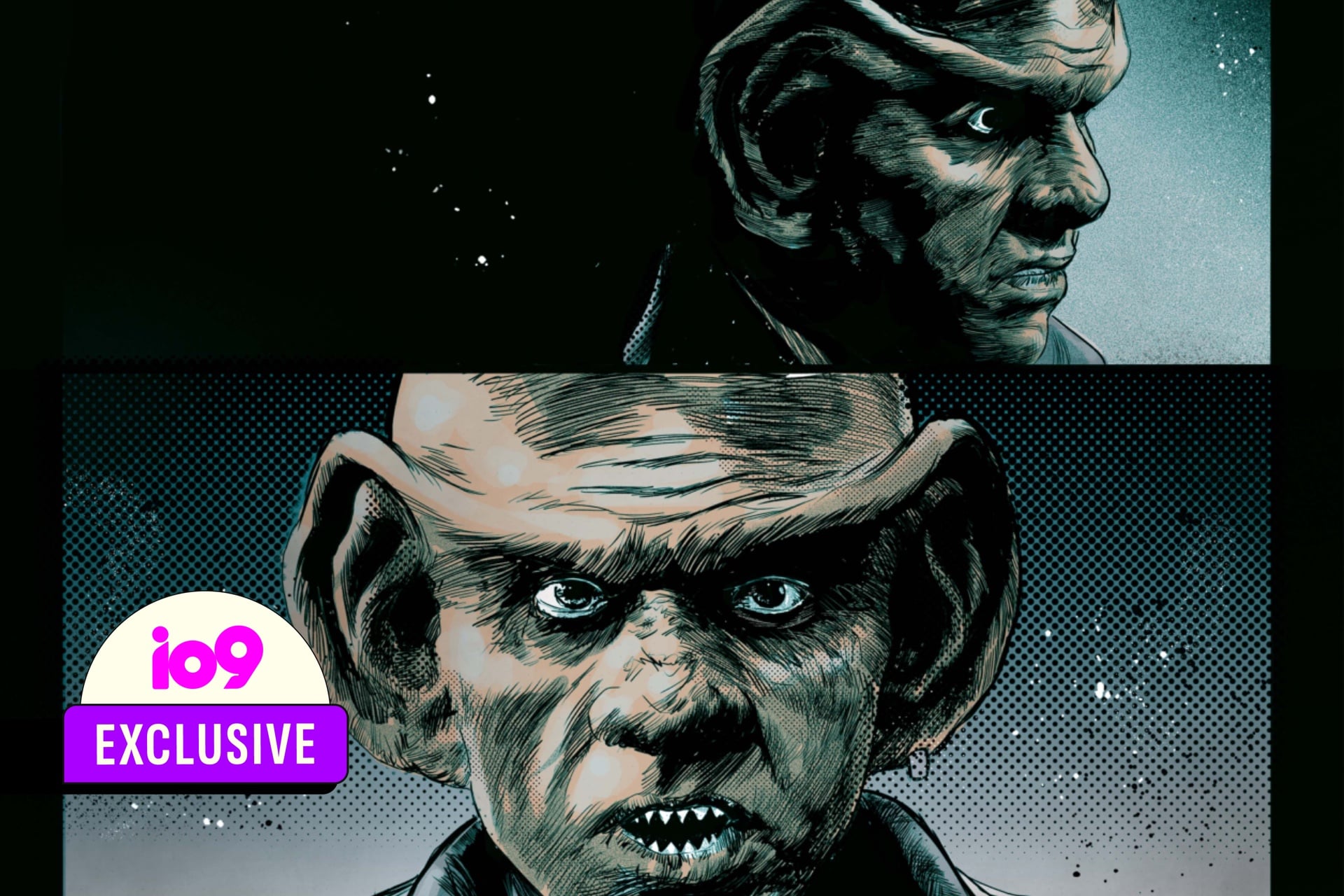
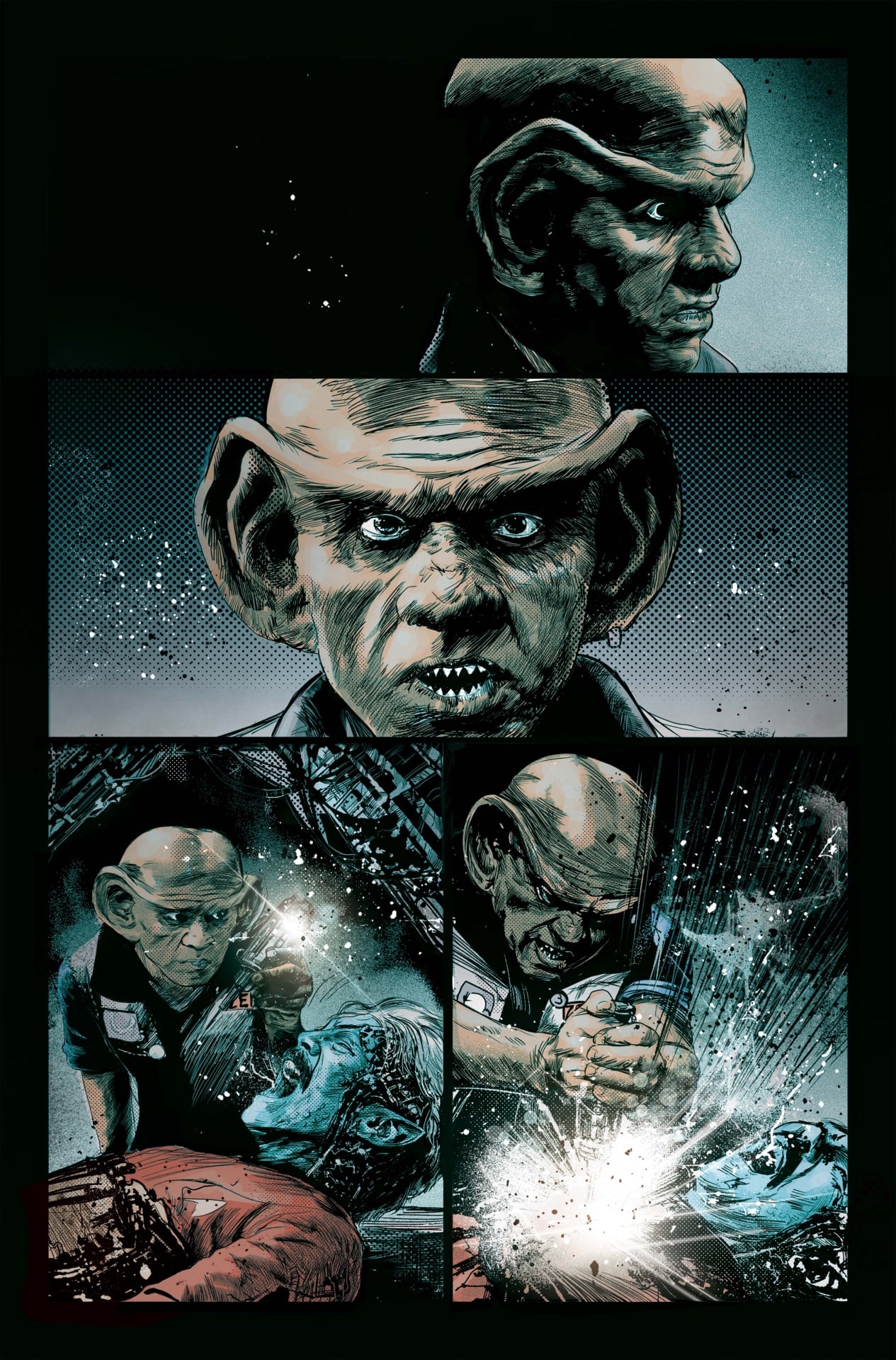
Issue #7 comes from writers Collin Kelly and Jackson Lanzing, artist Hernan Gonzalez, colorist Lee Loughridge, and letterer Clayton Cowles and hits shelves today, May 20. io9 has an interview about the new issue with Kelly and Lanzing, and we also have an exclusive peek at the artwork for issue #8 to boot.
io9: Issue #7 kicks off the third chapter of Last Starship, and things are only getting worse for the Omega and the Federation. How would you describe the way the tone shifts as we enter this new arc for the book?
Lanzing: We’re going full cosmic horror.
Kelly: “Stare into the abyss and shudder as it stares back” kind of stuff.
Lanzing: Honestly, it’s more of a horror than we’d even intended when we first outlined. This chapter demanded it. This story has been a survival thriller (in Chapter I, “The Burn”) and a political drama (in Chapter 2, “The Chain”), but Chapter 3 is called “The Hope”—and that’s because it’s the story where we dash all hope for an easy solution against the rocks of the burning universe. This is the story of how everything falls apart for the USS Omega—and it’s a moment we’ve been leading to since issue #1.
Kelly: Back at the start of things, the Federation had a two-part plan: the Omega was meant to hold the universe together… while Deep Space Hope was meant to discover the true nature of the Burn and how to stop it from ever happening again. And for decades of real-time, they’ve been hard at work… but communication has all but dried up. Now the question is simple: what happens when the most brilliant minds of a traumatized galaxy are left alone at the edge of the void… with nothing but the void staring back…
io9: The Transwarp drive lets you play at covering a large swath of time for the universe in between issues. What have been the challenges of balancing the passages of time that take place across the series?
Kelly: It was a choice that was vital to the series, but yes, it has come with challenges. The primary hurdle to overcome, however, was really just getting everyone on board with the concept itself—that Omega [is] moving at relativistic speed, and thus massive swaths of real time can be covered as the universe moves on without them. But after the last chapter, hopefully those mechanics have become clear… and now we can focus on the opportunities it presents. These time jumps let us essay what it’s like when everything you’ve loved has been left behind. Our heroes are, by the nature of their mission, saving a future by cutting themselves off entirely from their past. And rest assured, this is a concept that we’ll be stretching to its limit.
Lanzing: We have 12 issues and 100 years—it would be a shame not to use them.
io9: The book so far has played with a very dire air, but issue #7 makes a much more explicit leap into a horror vibe. Why was now the time for that shift in focus?
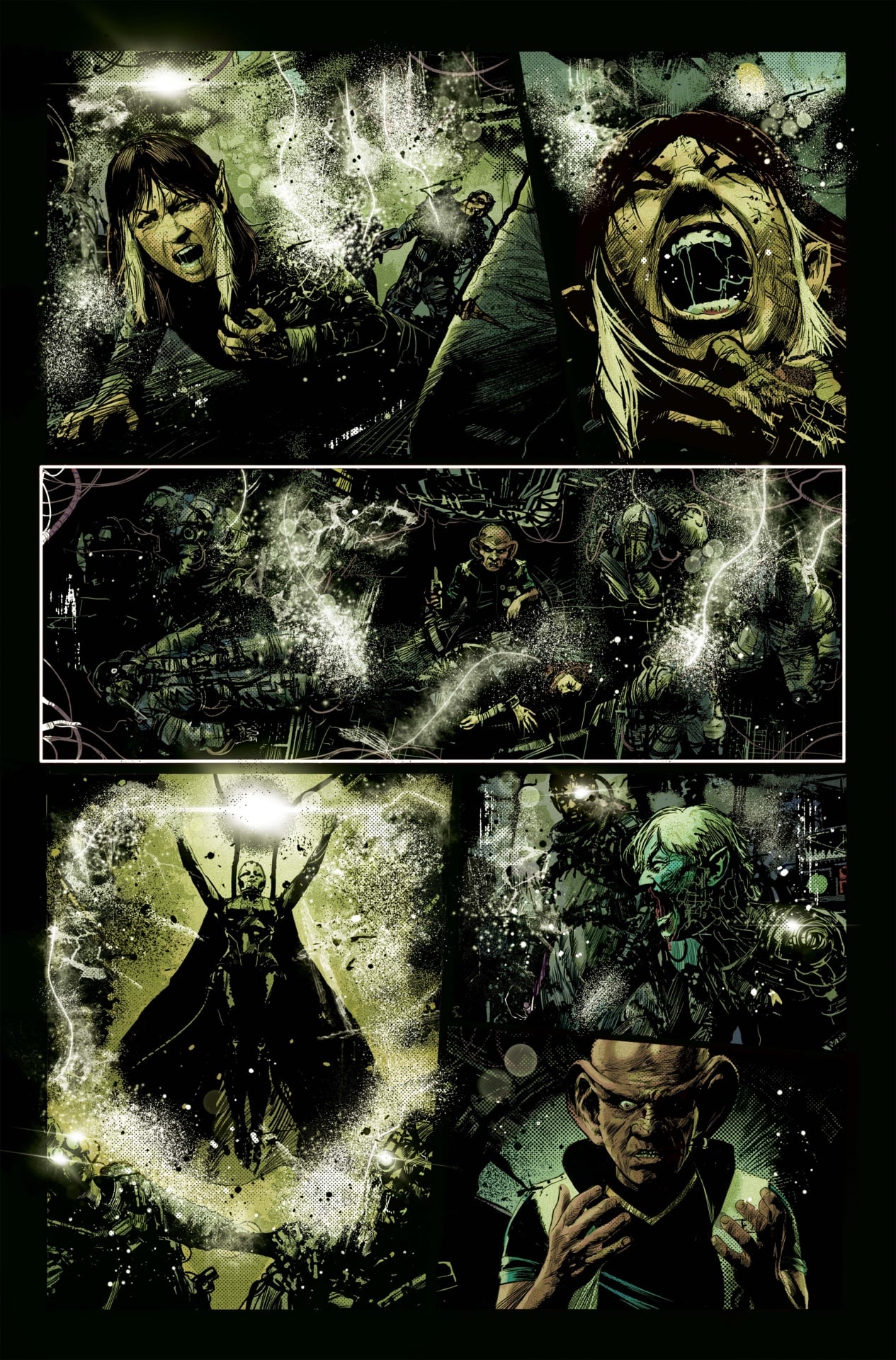
Lanzing: Our mission statement with the Last Starship is to tell the kinds of stories that Star Trek normally can’t or won’t—to push the envelope and the format, if you’ll forgive the reference, where no one’s gone before. But because we’ve been telling Trek stories for a good eight years now, we also have Roddenberry’s North Star in our mind at all times. In his words, “to make the unknown known.” So most Trek stories are about encountering something we cannot possibly understand and then learning that it’s secretly a scared child or a mourning parent or a reflection of our own pain. At Deep Space Hope, the Omega will discover a creeping dread that does not negotiate, that has no intention, that simply feeds and feeds and whispers into the minds of all those who can hear. Not a being, not an intention… but something truly unknowable, shaped by minds that have long before gone insane.
Kelly: Some of our favorite horror comics in the past few years have been Gou Tanabe’s adaptations of classic Lovecraft stories—his Shadow Over Innsmouth is particularly haunting—and we wanted to really embrace the idea of telling a story filled with that same sense of deep, abiding dread. Fortunately, we’re also bringing in a guest artist for this chapter—Hernan Gonzalez—whose work drips with atmosphere, dread, and darkness. Chapter 3 should feel like drowning… and with Hernan’s vision, it really does.
io9: We start seeing the ramifications of Ni’var (and the Romulans in particular) experimentation into other forms of FTL travel in this issue. That’s an element we’ve known about in some form from Discovery, but why did it make sense to be the focal point for the new arc?
Lanzing: Answering this is going to require us to take you into the deep end of the Trek pool. But if you’re ready to swim…
Kelly: There’s a very interesting question that sits at the heart of the post-Burn galaxy: if the Romulans use singularity drives instead of dilithium to achieve warp, they could have taken control of the galaxy while everyone else was still in shock… but they didn’t. Why? That question has scratched at our brains—and certain corners of the Trek fandom—for years. Luckily, part of the joy of this book is that we get to tell the untold stories that take place during this mysterious century…
Lanzing: …and answering that question is the hook on which this arc hangs.
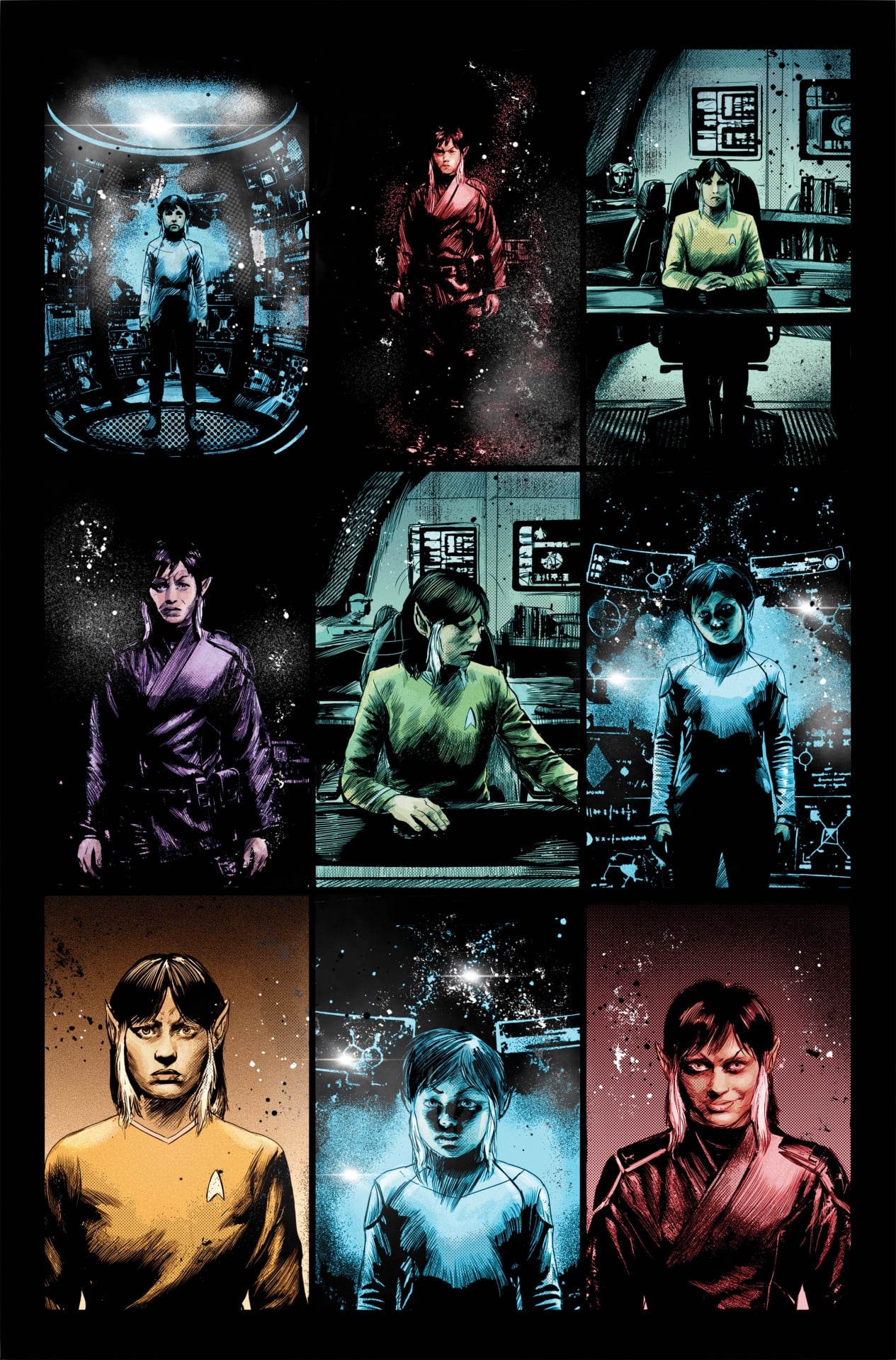
io9: The discovery of the singularity drive experiment finally sees Agnes make her move. Why was now the time to challenge her wary status among the Omega crew? What can you tease about the ramifications of her decision to act here, especially for Kirk’s mindset?
Lanzing: Like you said, Agnes has been waiting and watching—and the reader’s been in the dark as to her intentions. In fact, by the end of issue #7, they still are—even after she’s made her move. That’s because issue #8 has always been designed as the story to unpack her past, her motivation, and her intentions… not a villain speech, but a true transformation of the way we see her and the way she interacts with the story moving forward. And it’s all anchored on her relationship with Kirk, which could either be one of master manipulation or something much more… human.
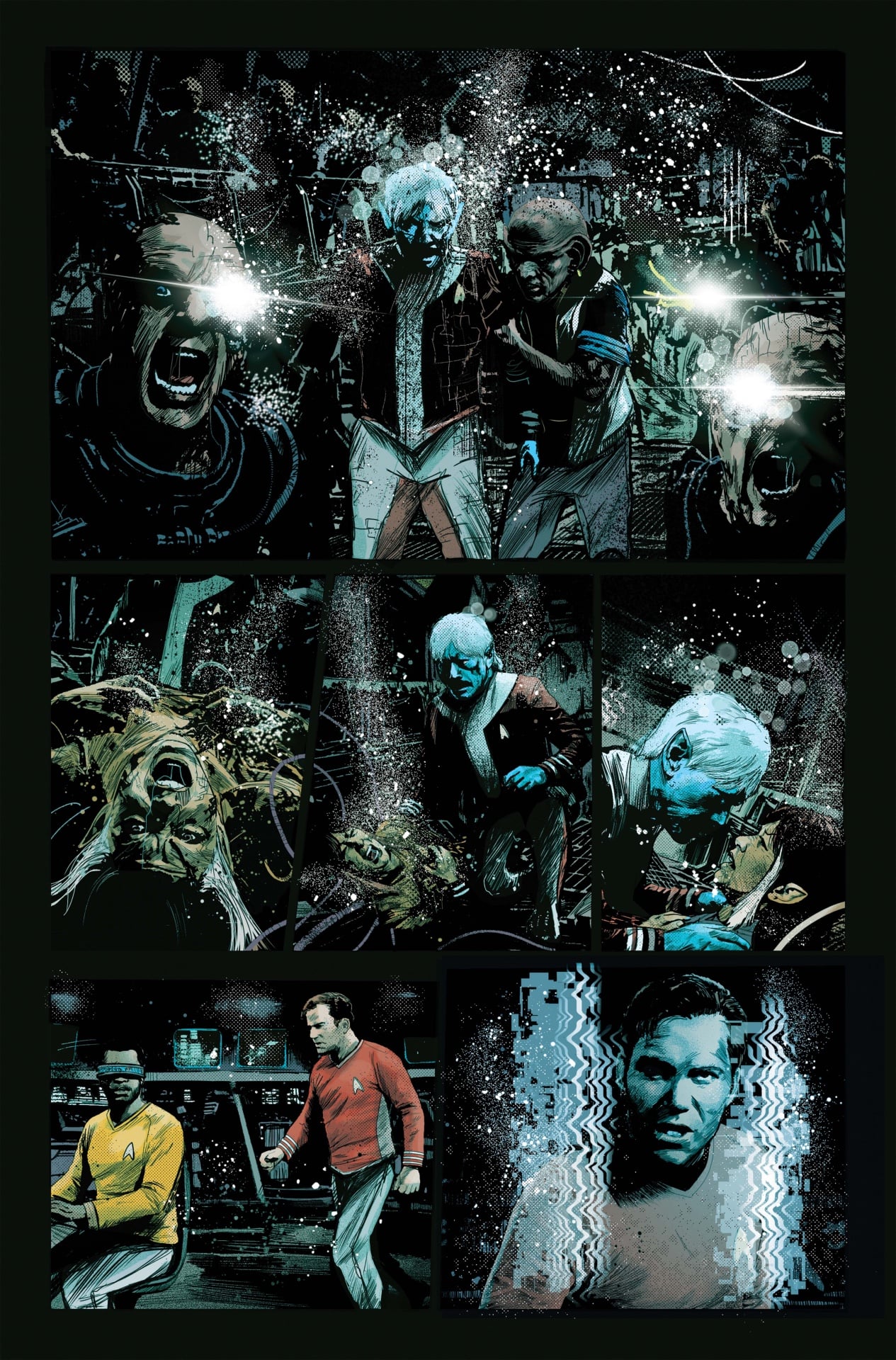
Kelly: I know that’s all pretty vague, but that’s because the answers are all coming in issue #8. Readers may have seen that teased image of James Kirk, the Borg King. What that is and how it comes about—that’s all coming up next.
io9: Star Trek fans already know a lot of Last Starship has to have things go badly no matter what the Omega does. We know the Federation and Starfleet will endure all this thanks to Discovery, but what’s been the biggest challenge for you in trying to keep an element of hope at the core of the book’s increasingly darker turns?
Kelly: How to maintain hope in a hopeless world? That *is* this book. We navigate that challenge just like Sato. Just like Kirk. We remember the core ideals of the Federation—of unity, of curiosity, of kindness—and hold on to them, even as every element of the plot hammers our characters to give in. Some will stand; some will break. But we believe in Star Trek… and that means hope is the one thing you can never lose.
io9: We’re in the back half of Last Starship now. What do you want to tease to fans about where things are going from here?
Lanzing: In the immortal words of Thomas Fuller—or the Batman, whichever you prefer: it’s always darkest before the dawn. Where we’re going by the end of issue #9 is a total shattering of the book’s status quo. If you’ve been comfortable on the Last Starship… don’t be.
Kelly: If you thought arc three was a big change, just wait for arc four.
Want more io9 news? Check out the best movies and TV shows to stream this month and all the upcoming sci-fi, fantasy, and horror books that should be on your radar.