It’s the elephant in the room, but season one put it right out there, so you must know going into Sugar season two: the main character of Apple TV’s neo-noir private detective series is, in fact, a blue-skinned alien.
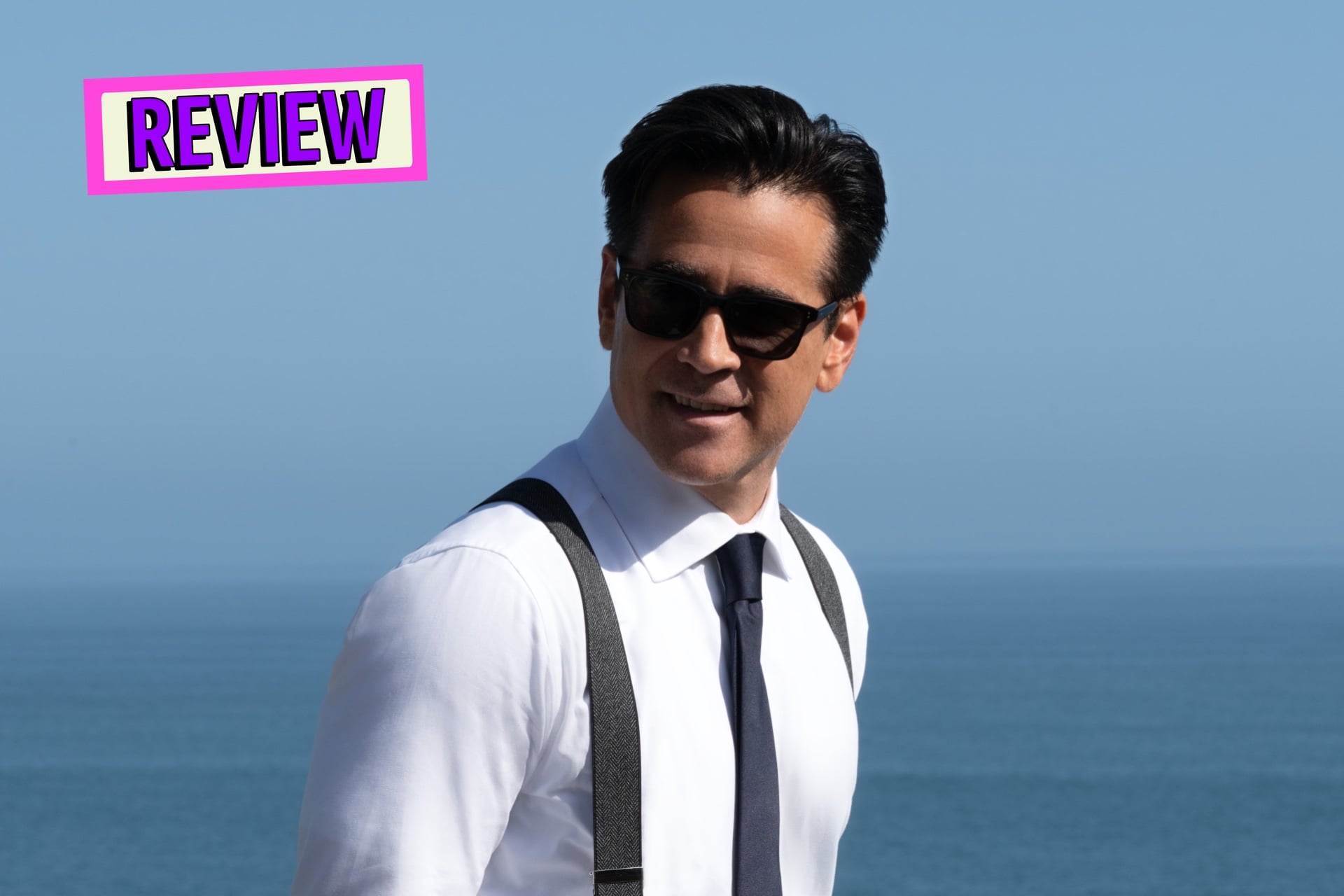
That said, John Sugar, played with a sort of mournful yet optimistic curiosity by Colin Farrell, blends in thanks to his flawless human disguise. But the longer he stays on Earth, the more he’s in danger of some major mental side effects, as well as something his culture dreads more than anything: assimilation.
That’s a growing concern because Sugar is stuck on Earth, probably forever. In season one, the broader extraterrestrial mission Sugar was part of came to an abrupt end. The other aliens fled in a hastily organized evacuation, but he decided to stay, hoping to unravel the truth behind his sister’s disappearance.
A portion of that unfinished business is resolved within the opening moments of season two. (io9 watched all eight episodes for the purposes of this spoiler-free review.) But that doesn’t mean Sugar is suddenly purged of his ghosts. If anything, he becomes even more haunted. If the use of “Mr. Lonely” as an early needle drop doesn’t clue you in, a big theme this season is Sugar’s existential agony at being the only one of his kind left on the planet.

But again, he chose to stay behind. Occasionally he allows himself to regret this. “It’d be nice to talk to someone” is one of his frequent refrains, and he makes a habit of sending messages with his personal contact device, hoping that someone who’s also an extraterrestrial might still be within range.
We’re privy to his melancholy inner thoughts because Sugar’s narration keeps us informed—a film noir-style flourish that carries over from season one, even though he’s no longer jotting extensive notes as part of his “observe and report” assignment. That’s done now. Ruby (Kirby), his handler, is deeply missed; she kept the nuts and bolts of his private-eye business on track, but more importantly, she was a sympathetic fellow traveler.
In life and work, Sugar has to find his own way now. Fortunately, he still has access to a seemingly unlimited bank account; the sleek suits, vintage Corvette, and swanky hotel with pool and room service are all secure. He has enough connections of his own to pick up a new case, which he does soon after season two kicks off. He doesn’t need the money, but he desperately needs something to occupy his time.
That chance comes with Danny Moon (Only Murders in the Building’s Jin Ha), a rising star in the boxing world. Danny’s originally from Korea, which makes him “an immigrant like me,” Sugar muses. He and Danny have another thing in common: a missing sibling. In Danny’s case, it’s his older brother, Ji (Raymond Lee, star of the overlooked Quantum Leap remake), a former athlete who’s lately been spiraling into drug use.

Ji suddenly dropping out of sight isn’t too surprising, considering his lifestyle. But his last phone calls to his younger brother were a worrisome array of scuffling sounds and paranoid ramblings about witnessing something unimaginably awful.
The first season of Sugar also dealt with an addict gone AWOL, but Sugar’s client then was a famous Hollywood producer with a sprawling mansion and a namesake film studio. This time, Los Angeles takes on a far grittier hue as Sugar chases leads into unhoused encampments, neighborhoods plagued by gang violence, and after-hours clubs. The perpetual threat of violence that goes along with his job is heightened by frequent visits to Danny’s boxing gym, and Sugar himself sets up a punching bag—partially to get perspective on the Moon brothers’ world, but also as an outlet for his own inner turbulence.
Speaking of, Sugar may have a new case, but he’s still got some lingering questions. His fellow aliens scrambled to leave because someone very powerful was threatening to expose their presence on Earth. Sugar would very much like to know the identity of that person, as well as their motivations, so he adds that to his docket. It’s like taking on a second assignment, but “I’ll make time,” he assures us.
As Sugar works through his puzzles, the show reminds us that he isn’t always miserable on this planet. He loves dogs (and they love him), and he adores movies, especially from Hollywood’s golden age. Sugar season two also takes time to build out an engaging supporting cast. Sasha Calle (The Flash) comes aboard as Sugar’s resourceful new assistant. Shea Whigham (Mission: Impossible – The Final Reckoning) plays a former client turned friend who becomes a straight-talking source for intel and advice. And Tony Dalton brings menace as a character from the darker side of law enforcement.

Sugar also chances to spark with Charlotte (Laura Donnelly), a fellow guest at the Hotel del Corazon who reminds him of Rita Hayworth’s seductive character in Gilda. In keeping with the classic film theme, Sugar season two retains the first season’s stylistic quirk of inserting shots from old movies to add context and set the mood. We’re also often reminded of how much movies have become part of Sugar’s personality; at one point, an awkward interaction with a security guard turns into a bonding moment over Casablanca.
While Sugar season two’s dueling cases—one’s personal, one’s professional, though the latter inevitably also turns personal for Sugar—dole out plenty of intrigue, the main character’s complicated identity crisis is its true center.
But, again, it’s not all cosmic despair. Sugar’s been on Earth for a while now, but he still finds immensely pleasurable moments of wonder and discovery amid all the grime and alienation, pun intended. So does the audience, watching this moody, intriguing, stylish twist on divergent genre tropes.
Sugar was created by Mark Protosevich; season two is showrun by Sam Catlin. It returns to Apple TV starting today, June 19, with a weekly rollout of episodes.
Want more io9 news? Check out the best movies and TV shows to stream this month and all the upcoming sci-fi, fantasy, and horror books that should be on your radar.