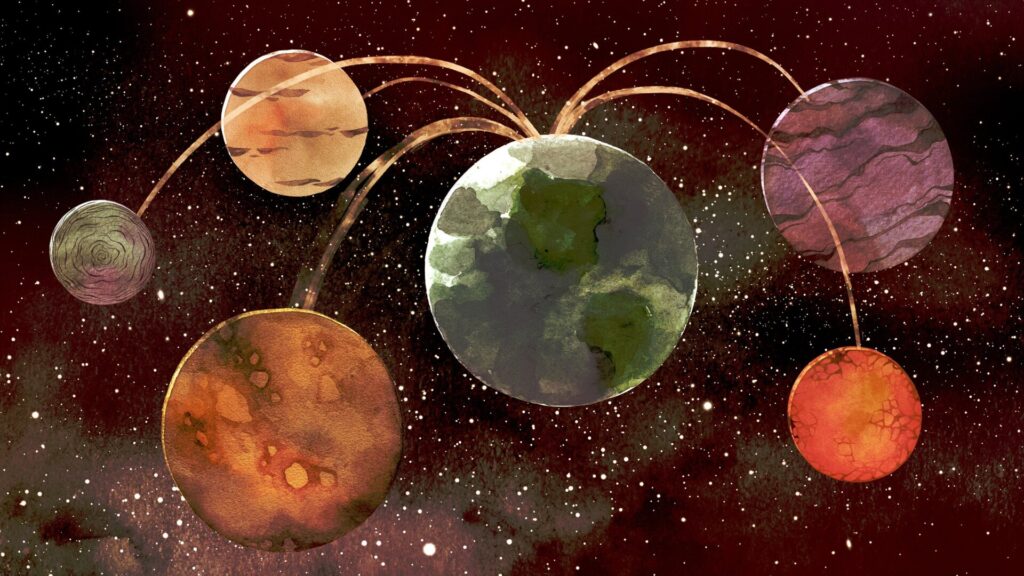
What if we’ve been looking for worlds like ours in the wrong places?
The 27 radio antennae will look for technosignatures emitted by intelligent civilizations.
New telescopes will help us get to the bottom of dark matter, the evolution of the young cosmos, and the dynamic universe.
The moon's clouds and a bit of its surface are visible in new views from the space-based observatory.
A resilient microbe is boosting researchers’ hopes for life on Mars.
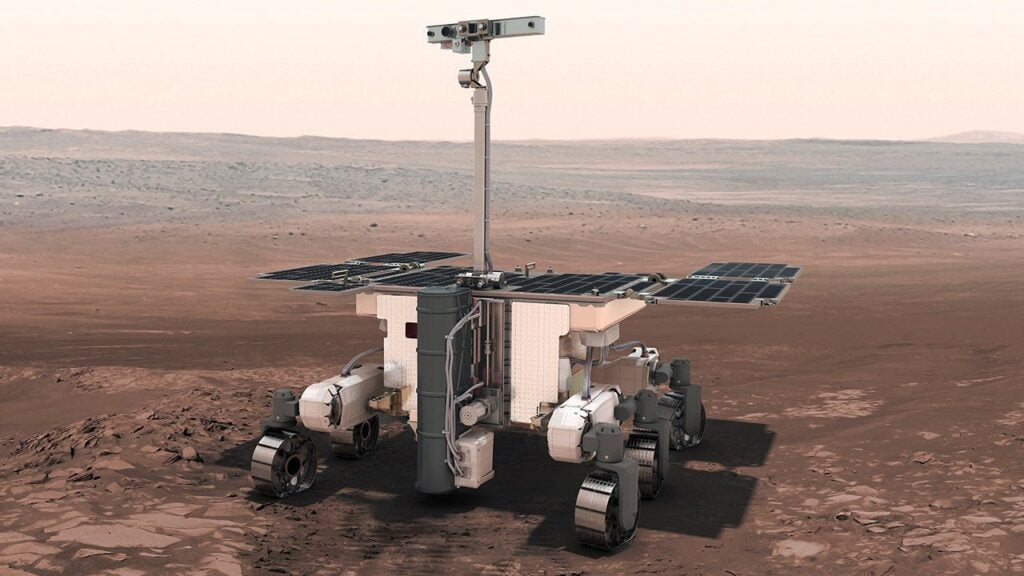
Russia won't be providing ESA with a lander for its Mars rover, so the space agency wants to build one itself and acquire the needed funds to make it happen.
This is the first of three scheduled launches from Australia, in which NASA will attempt to study habitable conditions around distant stars.
Observations from a radio telescope almost certainly aren't evidence of aliens, but we'd love to know more about these alleged signals.
Hours of audio indicate that the Red Planet stifles sound, especially lower frequency noises.
A new decadal survey outlines planetary defense and science goals through 2032. Top of the list: sending spacecraft to Uranus.
The new message is really cool, but we need to have a serious discussion about whether we should be trying to contact extraterrestrials.
The European Space Agency is looking for another way to get the rover to Mars after it cut ties with Roscosmos.
Sound travels slower on Mars compared to Earth—but it gets even slower at low frequencies.
Distant features in Yellowstone National Park are connected by underground hydrothermal networks, new research reveals.
Webb will be a "game changer" in our understanding of distant worlds, scientists say.
Invasion ecologists make their case for planetary protection needing an upgrade.
Microorganisms were found nearly 4,000 feet below the seafloor, at temperatures close to the presumed upper limit for life.
Discovered in Antarctica in 1984, the meteorite kindled a debate that’s been raging for decades.
New models of Venus's atmosphere suggest it may not be as inhospitable as previously believed—though no life as we know it could survive there.
With laser-detecting devices in California and Hawaii, SETI researchers will be able to scan an unprecedented amount of sky.