Uber is moving forward with yet another robotaxi partnership.
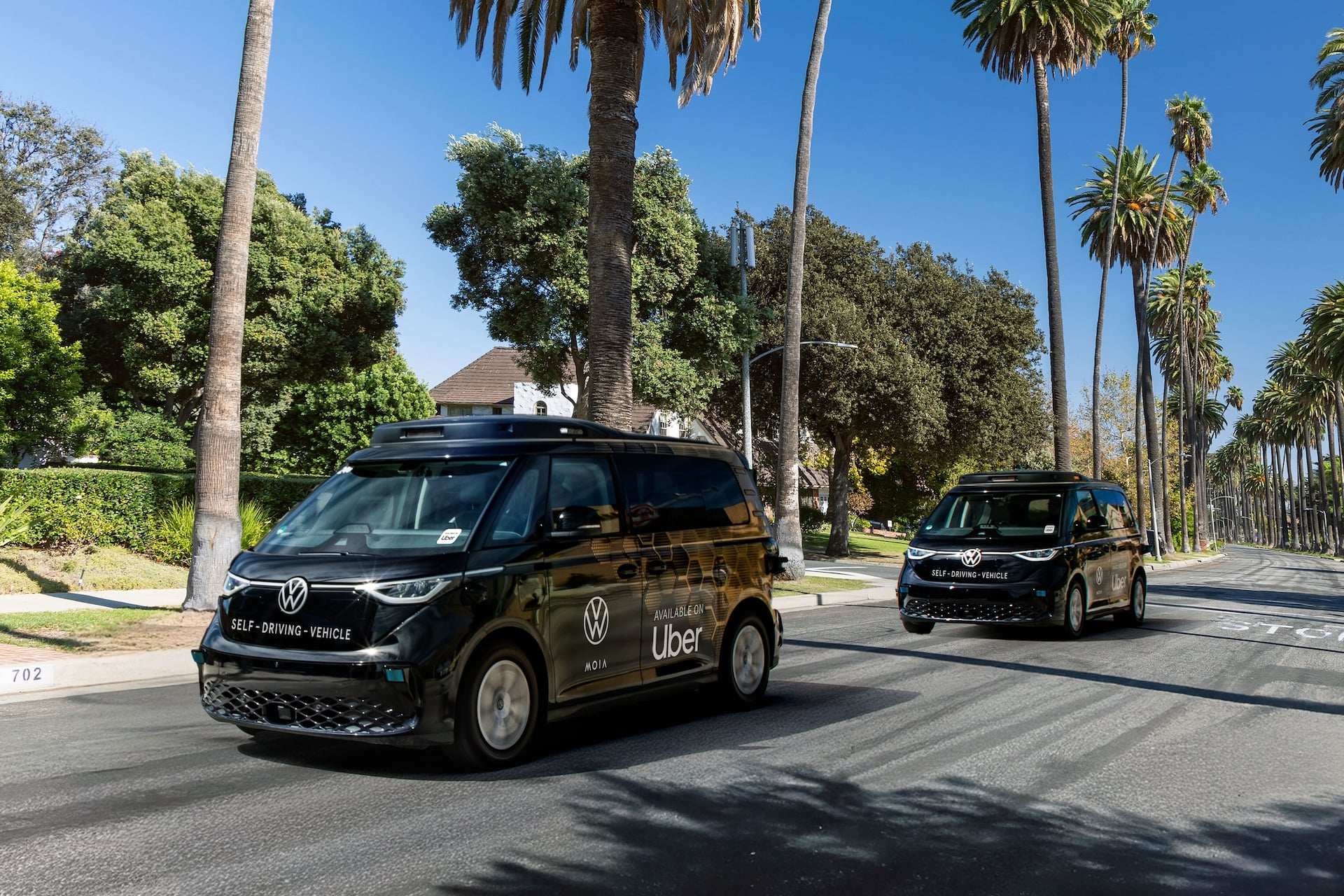
The company announced today that it has begun testing robotaxis in Los Angeles with MOIA America, the autonomous mobility subsidiary of Volkswagen.
Uber and Volkswagen first unveiled their long-term partnership last year, but are now kicking off on-road validation testing using custom-built autonomous ID. Buzz vans. The ID. Buzz is an electric reboot of Volkswagen’s iconic 1960s hippie-friendly microbus.
In a press release, the companies said they plan to scale up this robotaxi fleet to over 100 ID. Buzz vehicles during the testing period. Rides with human safety operators supervising the autonomous tech are expected to begin later this year. Uber and MOIA have also opened a joint facility in Los Angeles to support day-to-day fleet operations.
“By combining the autonomous-ready version of Volkswagen’s iconic ID. Buzz vehicle with MOIA’s advanced autonomous technology and Uber’s global platform, we’re setting the foundation to bring autonomous rides to more riders in Los Angeles and, over time, cities around the world,” said Uber’s Global Head of Autonomous Mobility & Delivery Sarfraz Maredia in the press release.
The announcement is the latest sign that Uber is going all-in on robotaxis, with a growing list of partnerships with varius autonomous and electric vehicle companies.
Just a few weeks ago, Uber announced a deal with Rivian to deploy up to 50,000 robotaxis by 2031, starting in San Francisco and Miami in 2028.
Last July, the company partnered with luxury EV maker Lucid and robotics firm Nuro, with plans to deploy at least 20,000 Lucid Gravity SUVs equipped with Nuro’s self-driving technology over the next five years.
Meanwhile, riders in Austin and Atlanta can already order trips with Alphabet’s Waymo vehicles through Uber.
Beyond the vehicles, Uber is investing heavily in the infrastructure needed to support driverless fleets.
In February, the company said it would invest more than $100 million to build autonomous vehicle–dedicated charging hubs. These hubs are set to roll out in the San Francisco Bay Area, Los Angeles, and Dallas, with more cities to come in the future.
The sites will include fast-charging stations at what Uber calls “autonomous depots,” where the company will handle fleet operations like cleaning, maintenance, and inspections.
Uber also plans to build fast-charging “pit stop” stations across priority cities to keep vehicles on the road longer.
All of this suggests that by the end of the decade, many Uber riders could find themselves being picked up by a car with no driver behind the wheel.