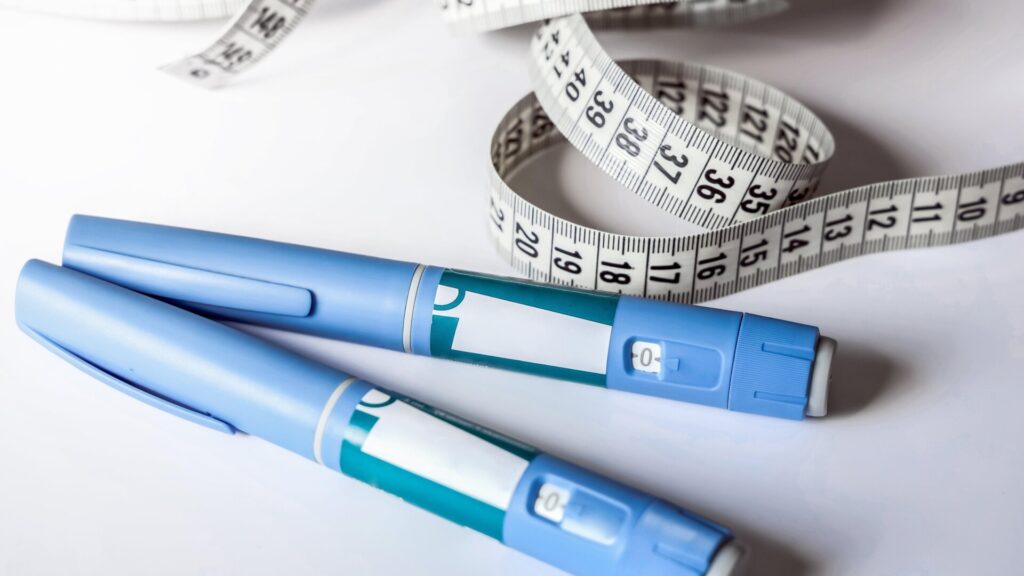
Researchers investigated why some people don’t respond as well to GLP-1 drugs and found that the reasons behind their overeating might play a role.
Chronic wounds in diabetes can take months to heal. In a diabetes mouse model, this new gel led to a 90% wound closure rate in just 12 days.
A proof-of-concept study finds that donated insulin-producing cells can be genetically modified to avoid provoking the recipient's immune system.
A new review of clinical trial data finds evidence that GLP-1 drugs can meaningfully reduce dementia risk in people with type 2 diabetes.
In a small randomized trial, people who took capsules containing donated gut microbiomes experienced fewer gastrointestinal symptoms than those taking a placebo.
Several recent studies have found a possible connection between semaglutide use and a rare condition that causes sudden vision loss.
A groundbreaking Harvard study reveals that semaglutide could benefit more people in the U.S. than ever imagined.
Researchers have found that people exposed to less sugar in the womb and as infants are less likely to develop health problems like diabetes decades later.
The 25-year-old woman is still making her own insulin a year after having gotten a transplant of her modified stem cells, scientists say.
New research has found a potential link between semaglutide use and a rare eye condition called NAION, though more work is needed to prove causation.
Dozens of obesity and diabetes treatments are in the pipeline, some of which may help people lose even more weight than existing drugs like semaglutide.
Critics claim that drugs like semaglutide and other GLP-1s can dangerously sap away our muscle mass, but what does the current science actually tell us?
New research suggests that endurance exercise can make us much better at storing and then burning off saturated fat.
The results of the longest-running trial of semaglutide, the active ingredient in popular drugs Ozempic and Wegovy, are here and looking positive.
Users are being told to closely monitor their insulin pump battery levels before bed.
Researchers have found evidence that a substantial majority of older adults in Flint, Michigan are living with painful nerve damage along their legs.
It's the second recent investigation by health regulators to clear GLP-1 drugs of causing suicidal thoughts.
The country is set to provide artificial pancreas devices to tens of thousands of people living with type 1 diabetes.
In a new Oscar-themed commercial, the drugmaker is telling people to stay away from its blockbuster medications if they’re only looking to lose a few pounds.
Patients who took GLP-1 drugs were less likely to be diagnosed with depression and anxiety afterward compared to non-users.