The Rotational Poles Are Shifting
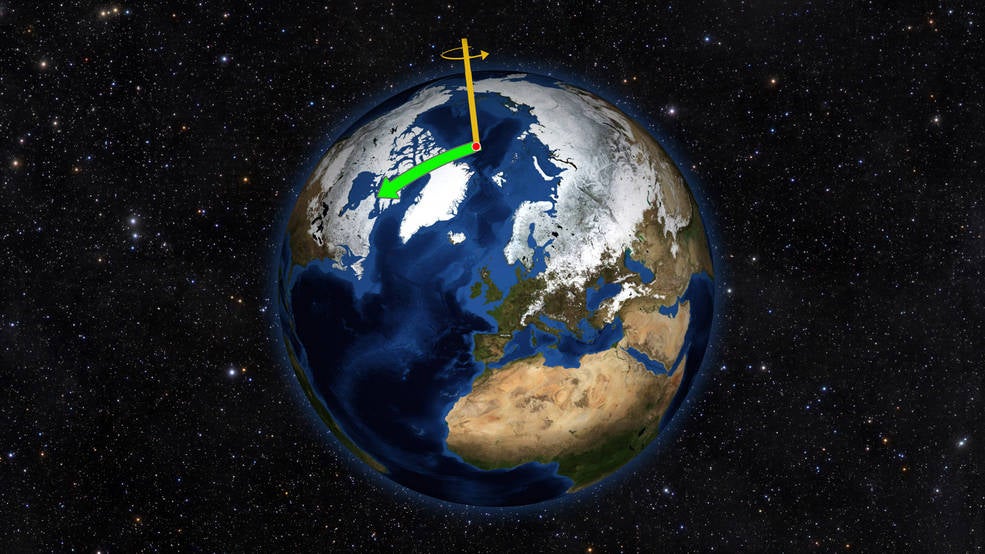
Earth isn’t just getting dimmer. It’s getting wobblier, too. Multiple studies have documented what’s called “polar drift.” Using satellite data from NASA’s GRACE mission, researchers have seen an unmistakable shift in the rotational poles of the Earth. And by unmistakable, I mean a shift that, since 2000, is 17 times faster than the rotational poles were moving in 1981.
The reason: Land ice disappearing on Greenland and Antarctica at an increasingly rapid pace. Groundwater loss is also playing a role. So now you can worry about the loss of ice at the poles, the rotational poles shifting, and the north magnetic pole shifting.