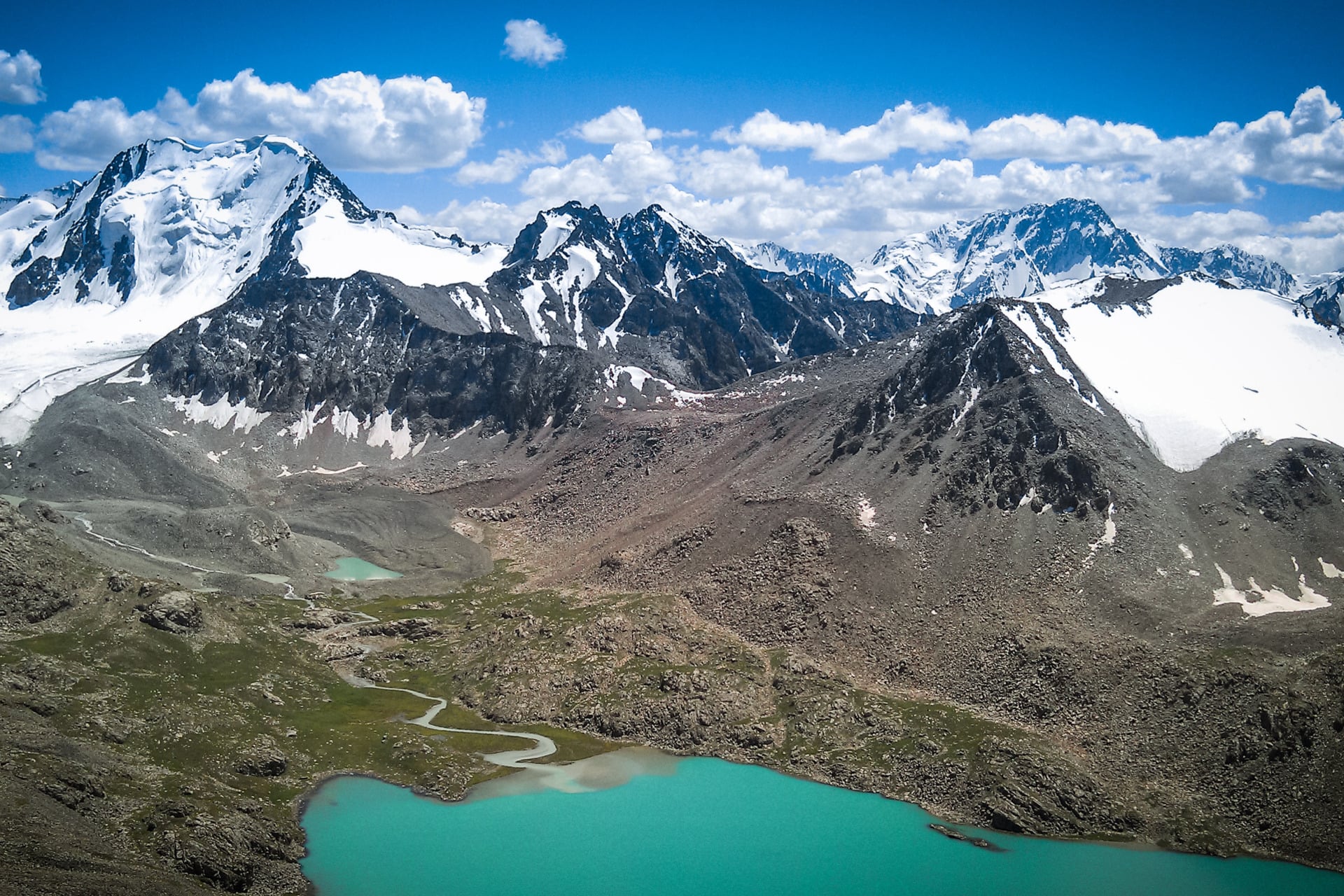
Over 5,130 people are still missing and at least 1,386 more are confirmed dead in Nepal since a collapsing glacier high atop Langtang Lirung in the Himalayas cascaded into devastating flash floods on August 26, 2026—washing away entire towns and flooding hydroelectric power plants. With hundreds more missing and dozens dead across the border in China and relief crews scrambling to locate an estimated 900 utility workers trapped in Nepal’s wrecked hydroelectric tunnels, a new report warns that the Himalayas’ icy peaks are just beginning their deadly thaw.
The roughly 1439 cubic miles (6,000 cubic kilometers) of glacial ice capping Asia’s towering mountain range is now melting 65% faster than it was a decade ago, according to a private industry report conducted with technical assistance from the Indian government. Sustainable development consultancy Systemiq collaborated with India’s Govind Ballabh Pant National Institute of Himalayan Environment and other groups focused on the mountains to produce its assessment.
The report warns that the entire region is facing a tipping point of “peak water” by mid-century, a phase of increasingly cataclysmic floods before nearly dry Himalayan peaks cut off fresh water to rivers, reservoirs, and agriculture across large swaths of south Asia.
“The Himalayas are the Third Pole,” as economist Nicholas Stern, chair of the London School of Economics’ Grantham Research Institute on Climate Change and the Environment and a member of the UK House of Lords, explained to the BBC. “Unlike the Arctic or Antarctic, this pole has hundreds of millions of people living beneath it.”
Slippery slopes
If anything, Stern’s analysis vastly undersells the scope of the potential consequences. For one thing, Systemiq’s new report notes that rivers sustained by the Himalayas’ historic hydrological cycle of seasonal glacial growth and melt are ultimately responsible for the food and water security of about 2 billion people.
“On current trajectories, the Hindu Kush Himalaya could lose up to 80% of its present glacier volume by 2100,” according to the report, echoing increasingly more dire estimates from the International Centre for Integrated Mountain Development. (Like the Indian government, ICIMOD contributed technical information for Systemiq’s report.)
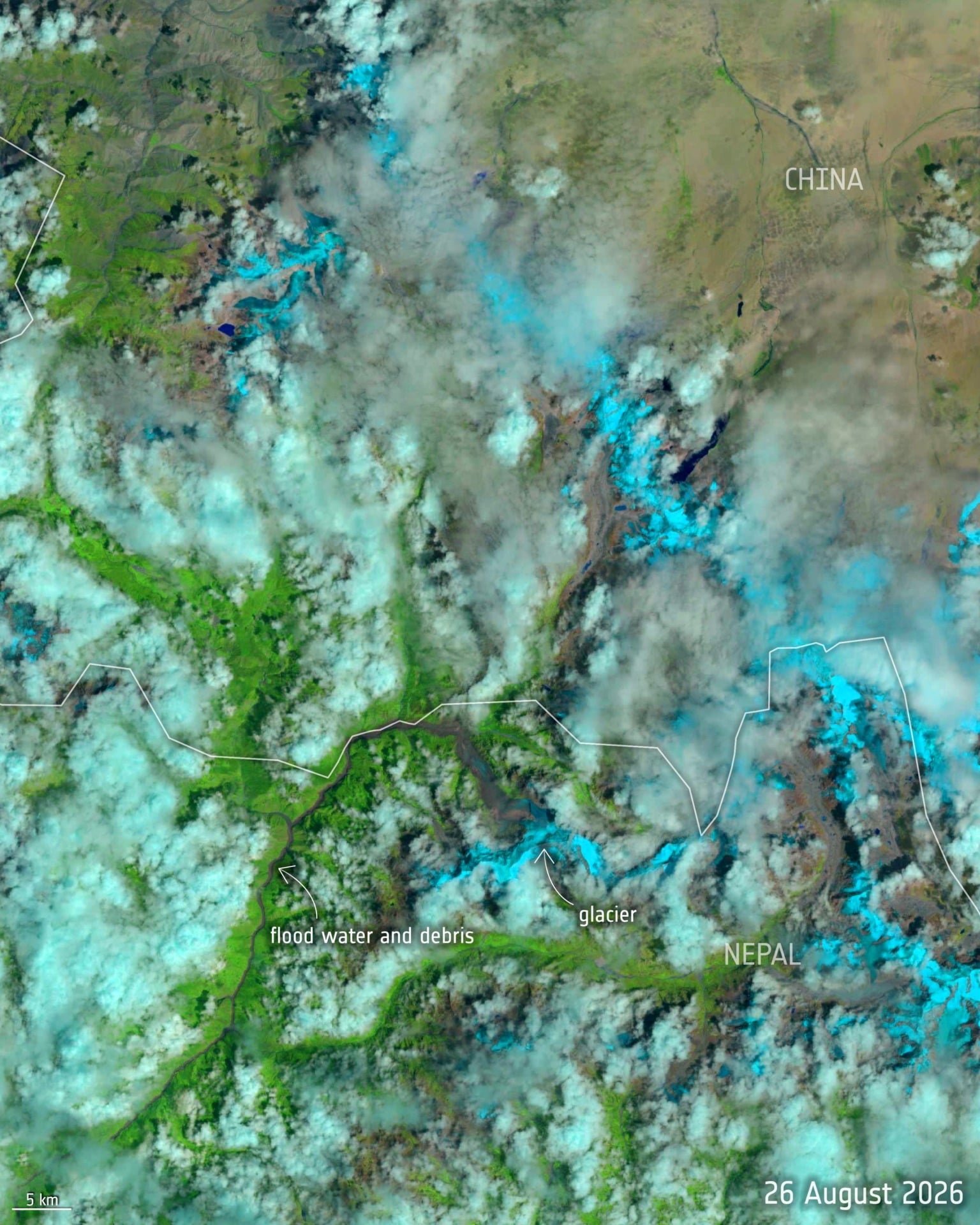
Perhaps the most alarming aspect of these findings, however, is the room for mass-casualty surprises. Only about 21 of the estimated 40,000 glaciers across the Himalayas—and the Karakoram mountain range to its northwest bordering Pakistan, China and India—are monitored by scientists in any sort of detail. Similar concerns plague China’s neighboring Tien Shan mountain range.
An unknown tally of unstable glacial lakes are quietly swelling, in other words, with no early warning systems in place for their almost inevitable breach, some on the border between two regional nuclear powers who don’t especially get along. But even with these large unknown variables, what’s known about the meltwater pooling into these makeshift natural dams of loose rock is concerning enough.
“India now has close to 200 glacial lakes identified as high risk and almost a quarter being ‘very high risk,’ leaving millions exposed downstream,” Systemiq’s report found.
Tipping points
India is already feeling the deadly impact of this threat. Although Himalayan land constitutes only about 18% of Indian territory, the region now accounts for as much as 35% of the country’s natural disasters, based on Systemiq’s analysis, which was also conducted in coordination with the Integrated Mountain Initiative (IMI).
One notably lethal flash flood in India’s northeast busted dams, buried traffic in mudslides, and killed at least 70 people when the glacial lake South Lhonak ruptured in 2023. But beyond the immediate spectacle of such damage, the report notes that the protracted economic fallout will be no less extreme: Himalayan water supports about 20% of India’s annual GDP, providing hydropower and irrigating wheat, rice, and tea crops, among other basic needs.
“The Himalayas are one connected system,” the researchers noted, “but its benefits and its risks are distributed far beyond the mountains themselves, with ripple effects felt in South Asia, and potentially the entire world through supply chain disruptions, climate migrations or geopolitical risk.”