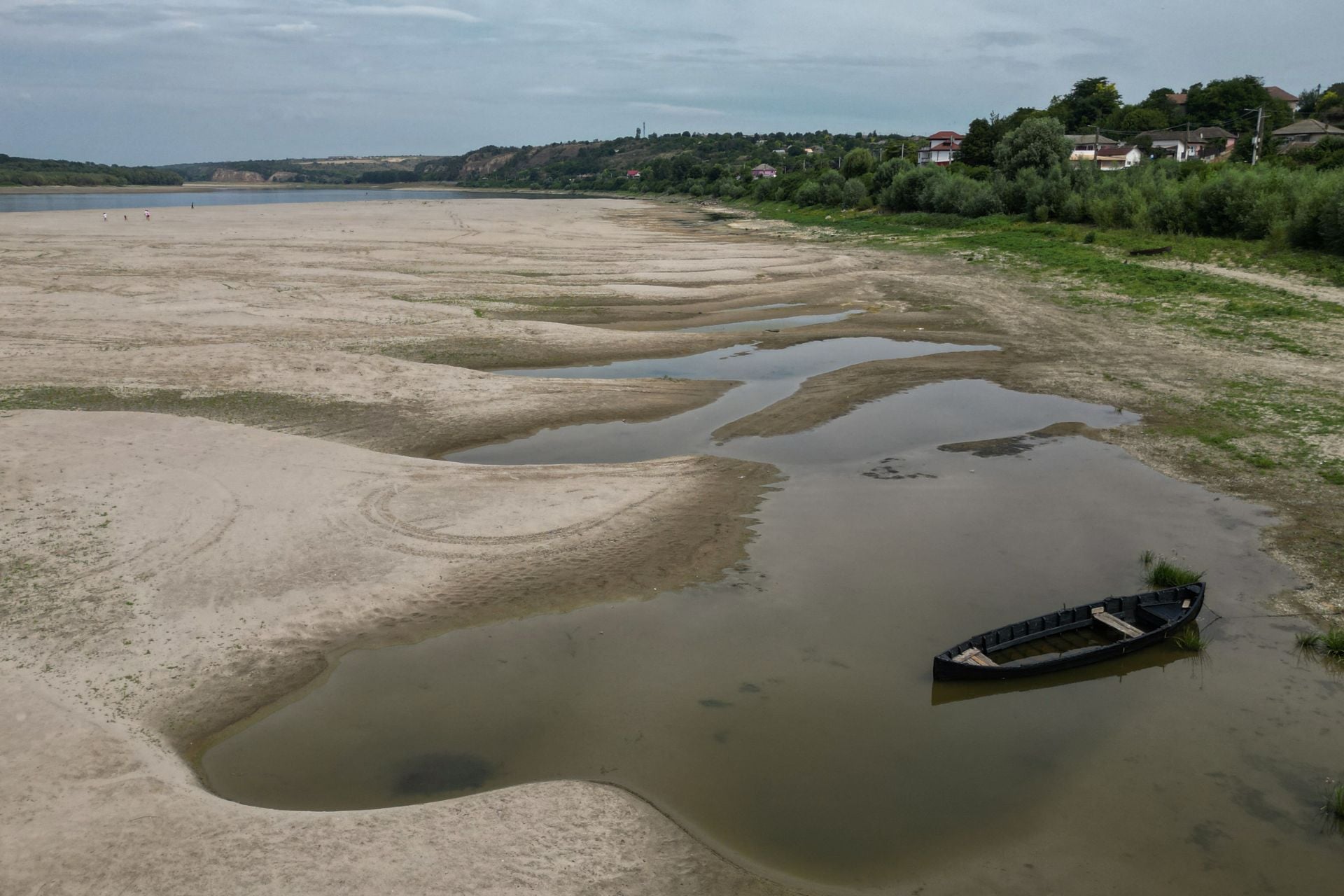
Amid an unprecedented summer of extreme heatwaves, drought, and wildfires, several of Europe’s major rivers are drying up. Among them is the Danube, where record-low water levels are exposing long-sunken historical treasures and forcing officials to take drastic action to mitigate impacts to infrastructure and the economy.
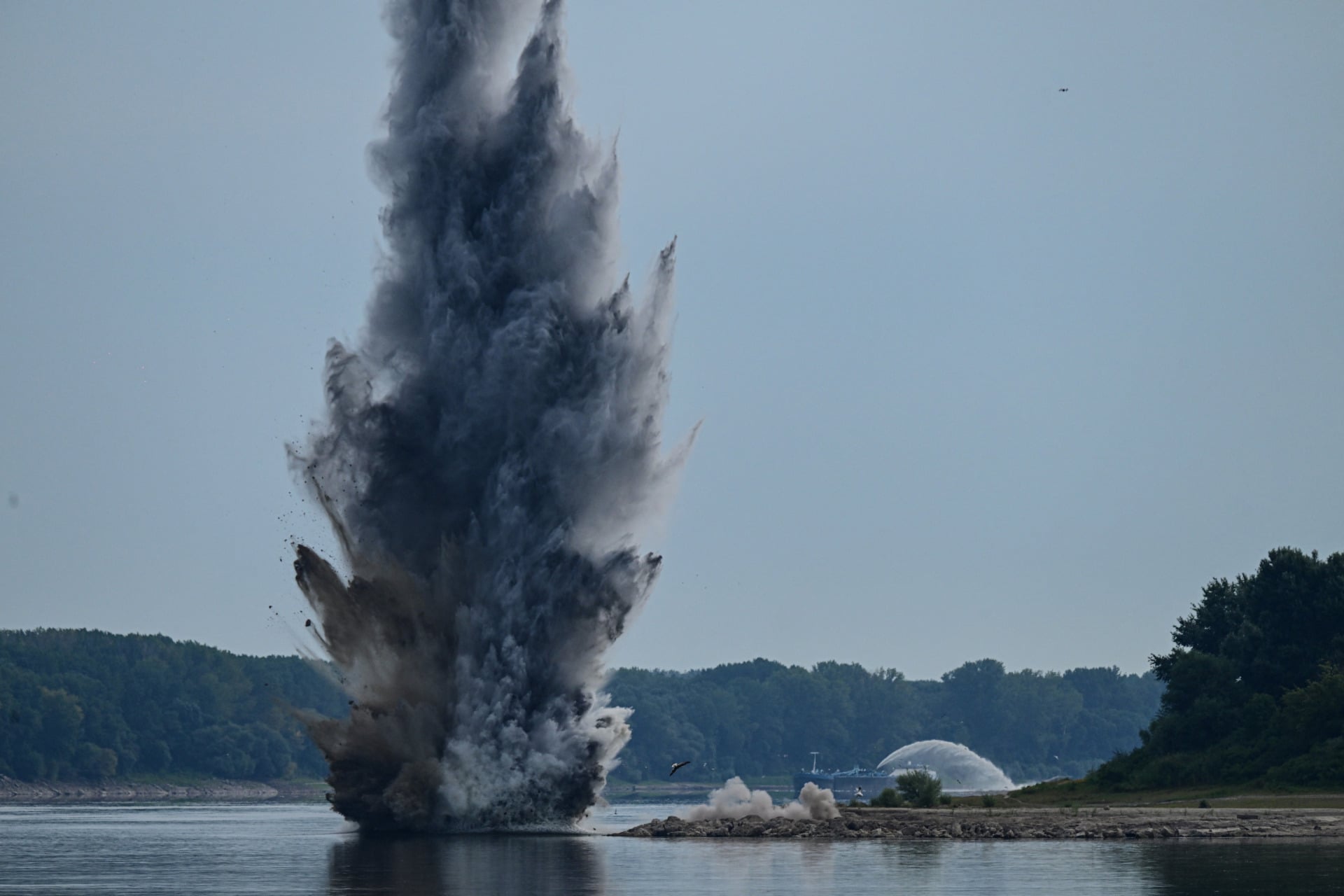
Water levels have fallen so low that dozens of World War II battle ships are breaching the surface. Last week in Bulgaria, the bones of a woolly mammoth turned up. And on Monday, the Romanian navy blew up a rock outcrop to help redirect cooling water to the nation’s only working nuclear reactor. Romania and Hungary have been forced to shut down reactors cooled by the Danube for the first time, stoking concern about a looming, drought-driven energy crisis.
Scientists point to climate change as the driving force behind Europe’s summer of extreme weather. “As the climate continues to warm, the hydrological extremes we are now experiencing will only be the tip of the iceberg,” Richard Allan, a climate science professor at the University of Reading in England, told CNN. “Managing water resources will become progressively more challenging.”
Drought threatens industry and energy
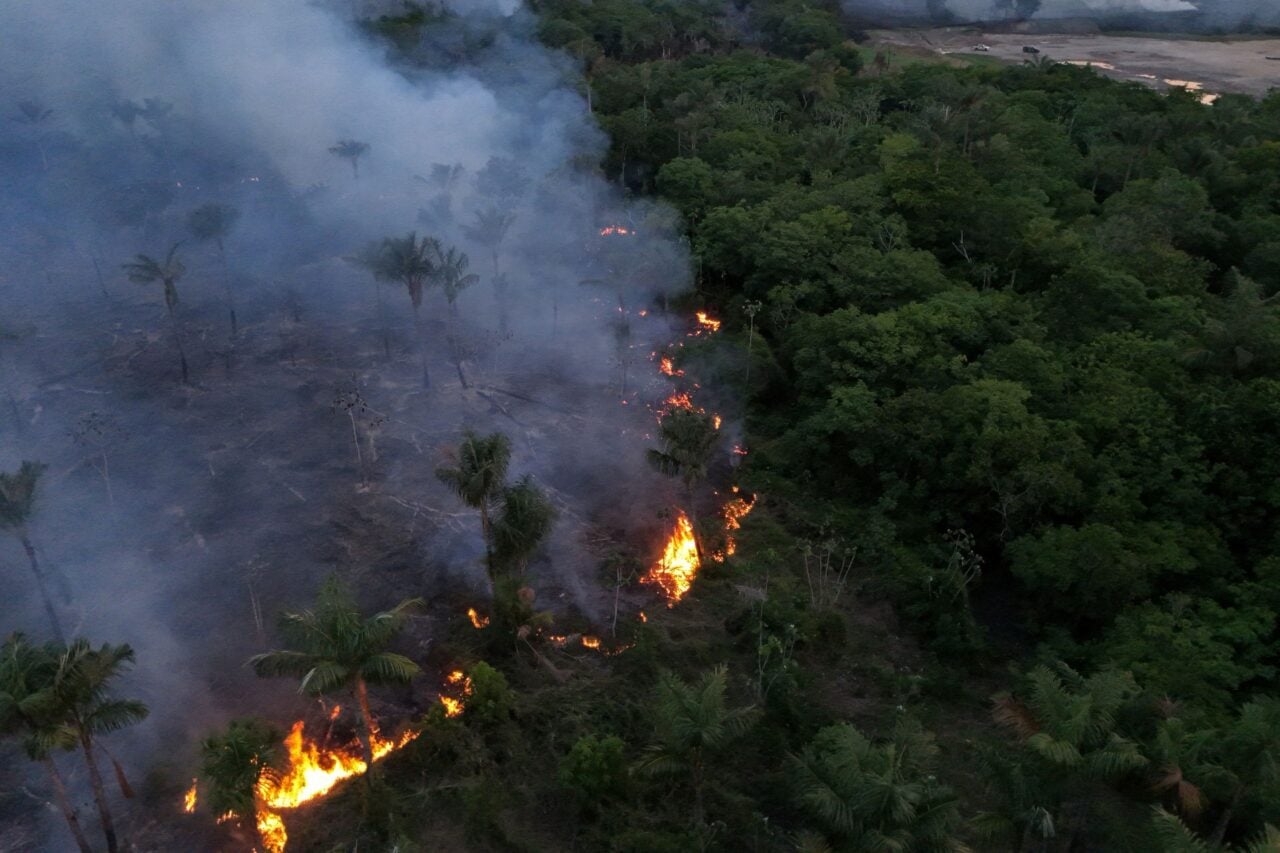
Since late May, Western Europe has been grappling with repeated extreme heatwaves. The region logged its hottest June on record and the second-warmest globally. Scorching temperatures returned in July, sparking historic wildfire crises in France and Spain.
Now, Western Europe is in the grip of yet another heatwave. Today, the average high across the region is forecast to be 82.5 degrees Fahrenheit (28 degrees Celsius), which is 8 degrees F (4.4 degrees C) above the historical norm for August 5, according to Reuters Climate Monitor.
Sections along four of Europe’s longest rivers—the Loire near Saumur in France, the Po near Cremona in Italy, the Rhine near Boppard in Germany, and the Danube near Paks in Hungary—are exceptionally low, satellite data shows. The Danube flows from the Black Forest mountains of Germany through 10 countries to the Black Sea, connecting four national capitals and serving as a major trade route. It is also an important source of hydroelectric power and cooling for nuclear power plants.
“Major rivers like the Rhine and Danube are critical trade corridors and sources of water for industry and energy generation, so when water levels fall, the effects extend far beyond the waterways themselves,” Liz Saccoccia, water security lead at the World Resources Institute, told CNBC.
The controlled explosion carried out by Romania’s navy earlier this week will clear the way to build a temporary dam that will divert water to the river channel that cools the Cernavoda Nuclear Power Plant, Reuters reports. In Hungary, where the only nuclear power plant in the nation has been shut down, voluntary reductions in electricity use by households and more than 300 companies are easing pressure on the grid, according to Reuters.
History resurfaces
While it’s difficult to overstate the gravity of this ongoing drought crisis, there’s a silver lining for history buffs. World War II relics, including Nazi warships and bombs, are surfacing for the first time in decades. Treasure hunter Zsolt Horváth told Fortune that he pulled an old radio amplifier and bullet casings from the exposed riverbank using a powerful magnet.
But in a competition to find the oldest object, residents living along the Danube in Bulgaria have Horváth beat. They stumbled upon the remains of a woolly mammoth, a species that went extinct in Europe some 4,000 years ago. Experts called to the scene identified a jaw bone, fragments of tusks, part of a shoulder blade, and a femur with its articular head, Nikolay Nenov, director of the Regional Historical Museum, told France24.
While undoubtedly cool, these discoveries do little to distract from the significant, far-reaching consequences of severe drought in the Danube and other important European waterways. If global temperatures continue to rise unabated, these conditions could become a regular feature of summer.