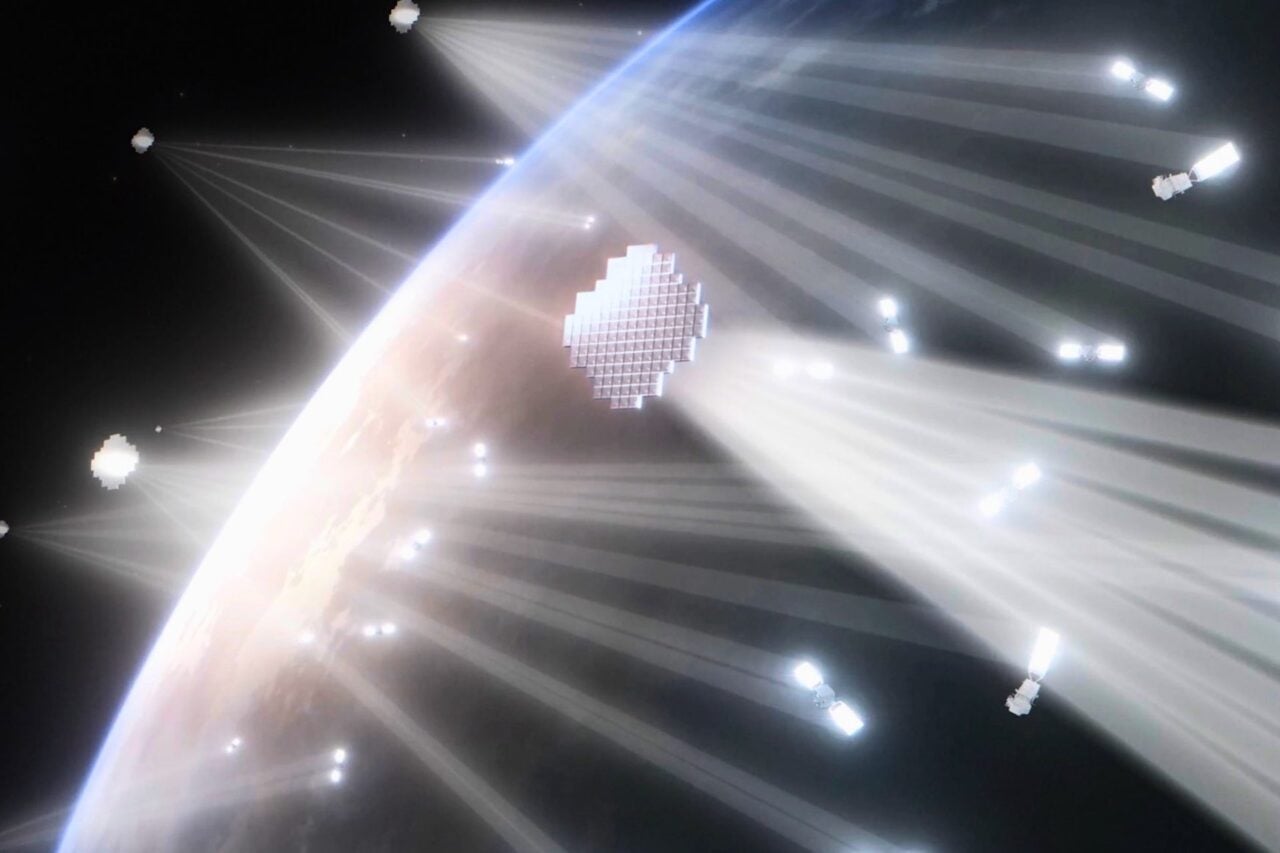
Engineers at MIT have developed a two-in-one propulsion system that can fuel both traditional chemical thrusters and electrical thrusters, combining speed and power with slower, more precise maneuverability for small satellites.
The key to their research is a type of green monopropellant that was originally developed by the U.S. Air Force for use in chemical propulsion. In a new paper published in the Journal of Propulsion and Power, the researchers show that this propellant can also power tiny electrospray thrusters.
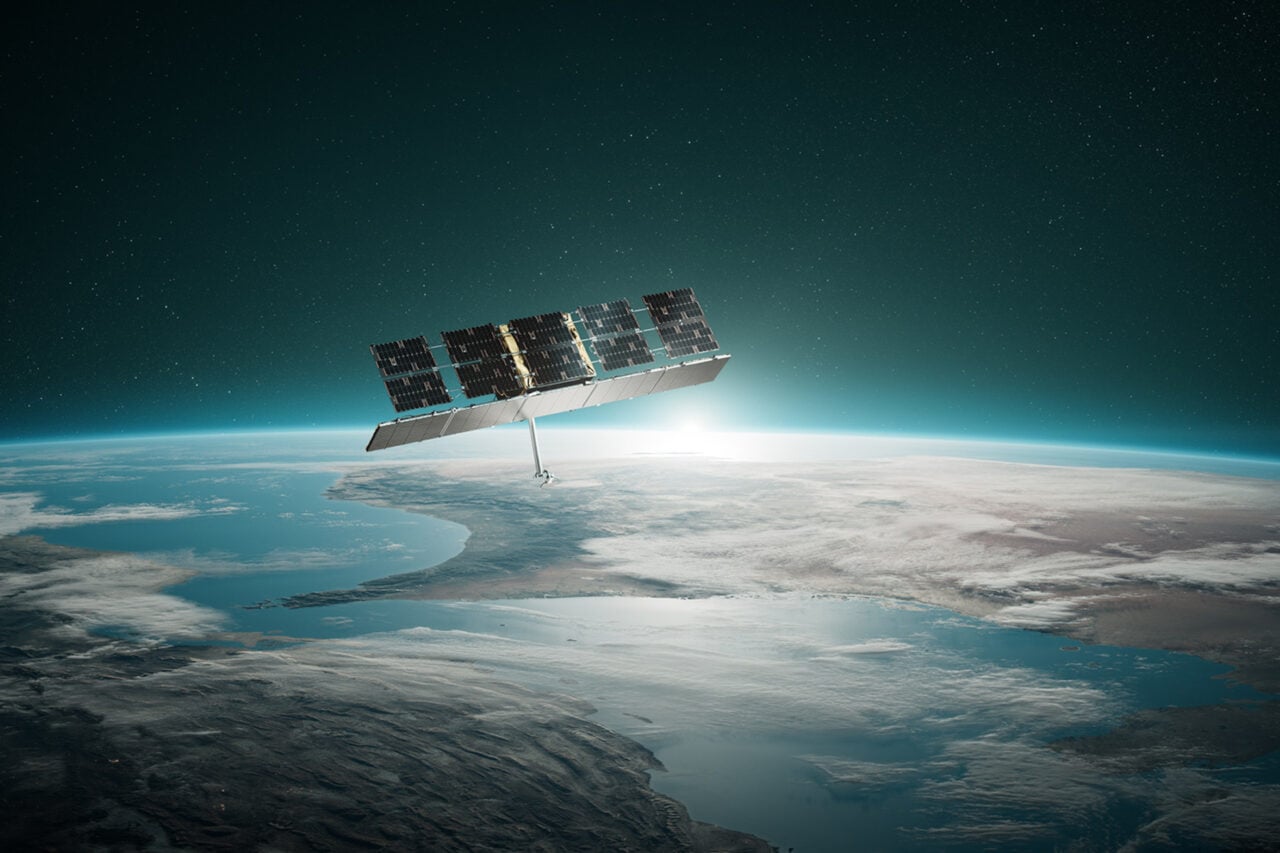
The MIT team is working with NASA to launch a briefcase-sized cubesat that will carry a chemical thruster and four electrospray thrusters, which will all be fueled by a single propellant tank. The experimental technology could allow small satellites to travel beyond Earth’s orbit without being weighed down by two separate propellant tanks.
“If you can have chemical and electrical propulsion in one small package, it’s the best of both worlds,” Amelia Bruno, a former postdoc in MIT’s Department of Aeronautics and Astronautics and lead author of the paper, said in a statement. “This opens the door for small satellites to do even more science, more observations, and more interesting missions, all on a smaller and cheaper platform.”
Two birds, one stone
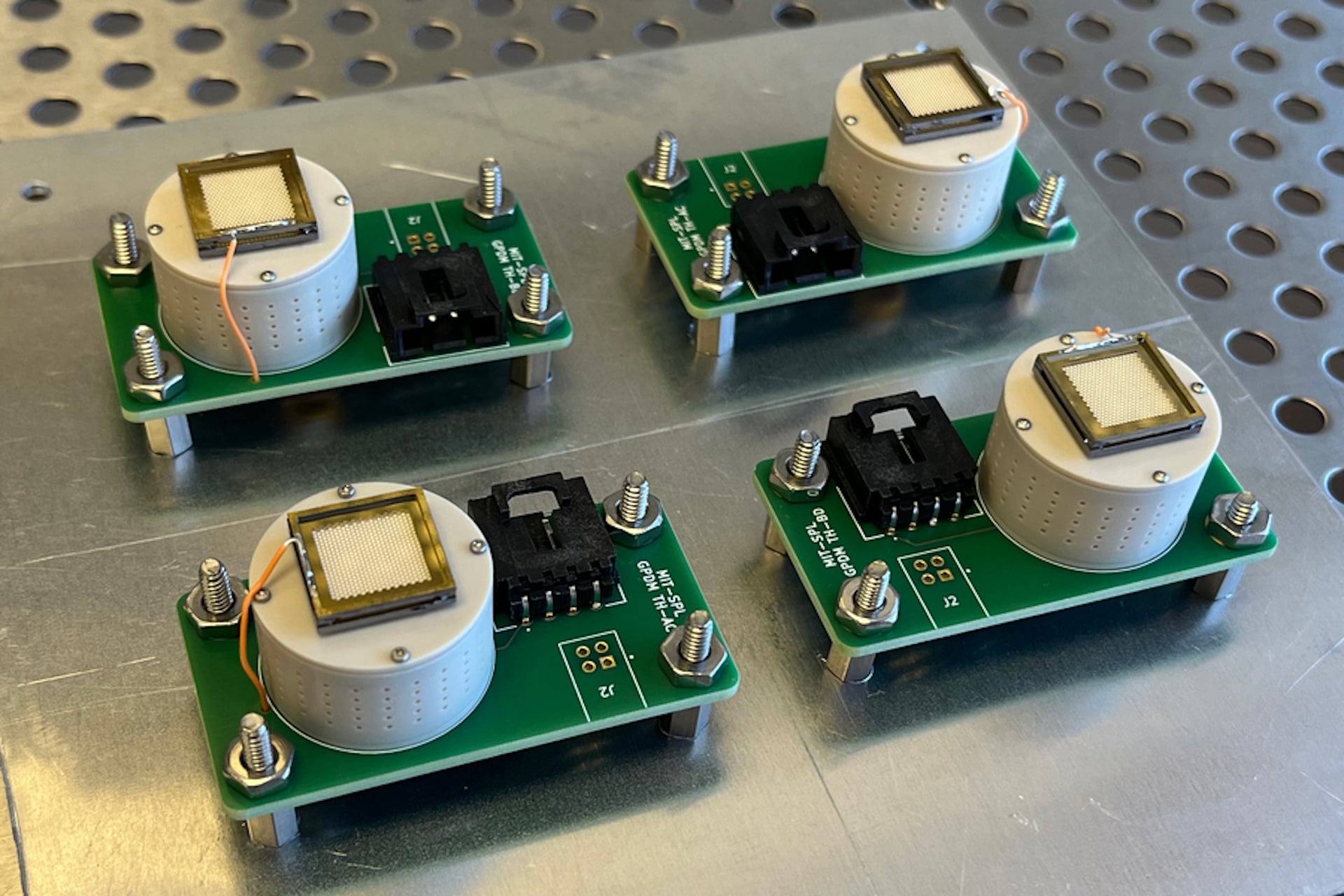
Chemical propulsion uses a large fuel supply and an oxidizer, converting energy stored in the chemical bonds of the propellants to expel hot gas and produce a short, powerful thrust. Electrospray thrusters, on the other hand, are much more efficient. The dime-sized rockets use electric fields to charge up a liquid propellant’s particles, which are then shot into space as a thrust-generating spray.
While chemical thrusters provide short and fast bursts, electrospray thrusters are used to perform slow and precise maneuvers. If combined, chemical thrusters would allow a spacecraft to speed up or slow down and quickly ascend or descend, while electrospray thrusters can help it slowly trek along on a long interplanetary journey.
The new propulsion system would allow small satellites to carry both thrusters using the same propellant, opening the door for cheaper, smaller spacecraft to explore beyond Earth orbit. “We could send CubeSats to Mars, or the asteroid belt, where they could make the journey slowly, using electrospray thrusters,” Paulo Lozano, a professor of aeronautics and astronautics at MIT and co-author of the study, said in a statement. “You could then use your chemical thrusters to quickly move to look at interesting features. You could have a lot more flexibility to do a lot more things.”
A better fit
The team of engineers behind the study designs electrospray thrusters for small satellites that range from the size of a lunchbox to a carry-on suitcase. These tiny guys are much cheaper to make and launch to space, but they also require smaller propulsion systems.
Over the years, the engineers have tested different thruster designs using various types of ionic liquid propellant, a fuel that is essentially made from salts and can remain a liquid in space. “It’s basically a sea of ions, which is why we base our technology around it, so we can pull those ions out into an electrospray,” Bruno said.
That’s when the team turned to a new kind of ionic liquid propellant developed by the U.S. Air Force. The Advanced SpaceCraft Energetic Non-Toxic propellant (ASCENT), a less toxic alternative to hydrazine, was being tested in chemical thrusters. “We said, hey, that’s the stuff we typically use,” Bruno said. “Theoretically, this should work. Let’s go figure out how.”
For the new study, the engineers tested the use of ASCENT for electrospray thrusters. The thrusters were attached to a small cube-shaped reservoir the size of a Lego brick, and the engineers remotely applied varying levels of voltage to activate the thrusters. The thrusters produced a spray that spun the cubesat around, like a floating, spinning top, according to the researchers.
Over several experiments, the team found that ASCENT was not able to successfully fuel each electrospray thruster; it was just as efficient as other conventional ionic liquids. “Now that we know our thrusters work with ASCENT, we can start thinking of all the ways we can make them even better,” Bruno said.
The team will test the idea with NASA’s Green Propulsion Dual Mode mission, which is scheduled to launch in November. The cubesat will be outfitted with a single tank of fuel that is designed to power both types of thrusters with a compact, two-in-one system.
“This will be the first time that a satellite will have a shared propellant tank,” Lozano said. “Say there’s a storm coming, and you’d want to deploy your constellation of small satellites to observe over one location. You could choose to send them quickly or slowly depending on the nature of the observation. And the only way to do that is if you have two propulsion systems, which is now possible.”