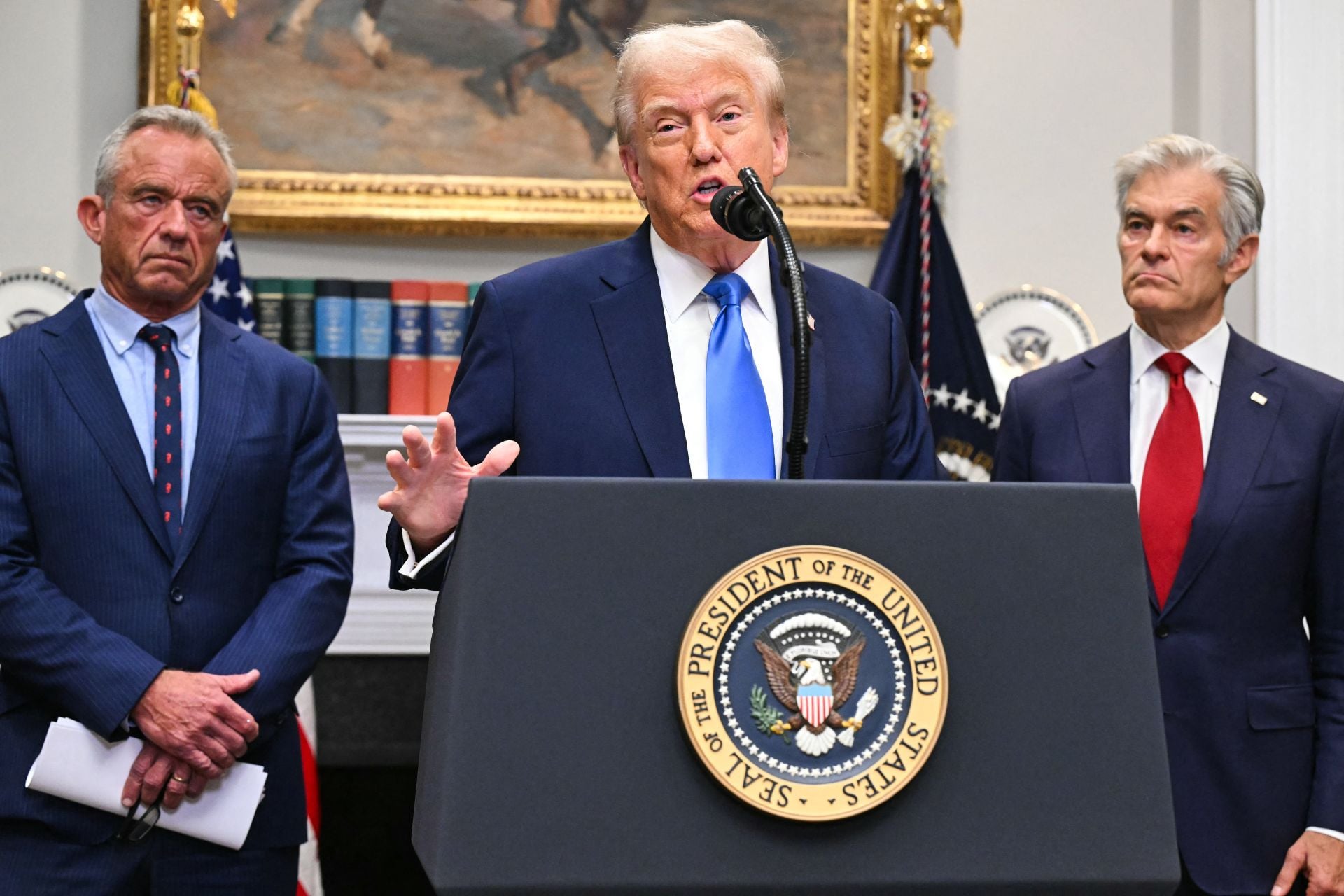
Last September, President Donald Trump, Robert F. Kennedy Jr, and other health officials declared they had uncovered a new, potentially groundbreaking treatment for autism spectrum disorder (ASD): the existing medication leucovorin. A study out today shows that plenty of families believed them.
Researchers at the University of California, San Diego examined nationwide prescription trends of the drug last year. The prescription rate of leucovorin among children with autism skyrocketed by late 2025, particularly following the September announcement, they found. The results indicate that Trump’s endorsement had significant influence on these families, the researchers say, despite the lack of data supporting the drug’s effectiveness.
“Families of children with ASD are often searching for therapies that might improve quality of life, especially when treatment options are limited,” the study’s lead author Joshua Rothman, a clinical assistant professor of pediatrics at UCSD’s school of medicine, told Gizmodo. “While some small studies have shown promise, we don’t yet have convincing evidence to recommend this treatment to all children with ASD.”
The Trump bump
The announcement last September largely focused on acetaminophen (Tylenol). At that time, Trump and other officials proclaimed to have uncovered a link between women taking acetaminophen during pregnancy and a higher risk of autism in their children. Many experts disagreed with this assertation, and more recent studies have continued to find evidence against it. During that same press conference, Trump officials touted leucovorin as an autism treatment.
Leucovorin is a form of folate, or B9, a vitamin important to many functions, including the healthy development of a fetus. Though traditionally used to offset the side effects of certain cancer treatments, it’s also become a standard treatment for cerebral folate deficiency—a condition where folate can’t be transported to the brain through normal means. Unlike other forms of folate, like folic acid, leucovorin can reach the brain, allowing it to reverse this deficiency.
Limited studies have suggested that children with autism are likely to have low levels of folate in their brain, and some of the symptoms of cerebral folate deficiency can also resemble severe autism. Based on these tenuous connections, RFK Jr. claimed in September that leucovorin was an exciting therapy that might benefit “large numbers of children” with autism. Former FDA Commissioner Marty Makary, who resigned last week, even stated that leucovorin could possibly help “hundreds of thousands of kids.” At another time, he implied that leucovorin could treat up to “50% of kids with autism” who might have this deficiency.
Given the widespread attention that the September announcement drew, Rothman and his team wanted to see how it might have changed the use of leucovorin. They analyzed medical records from EPIC Cosmos, a database containing over 300 million patient records collected from health care systems across the U.S. They specifically tracked prescription rates of leucovorin among more than 800,000 children diagnosed with autism between January 2023 and January 2026.
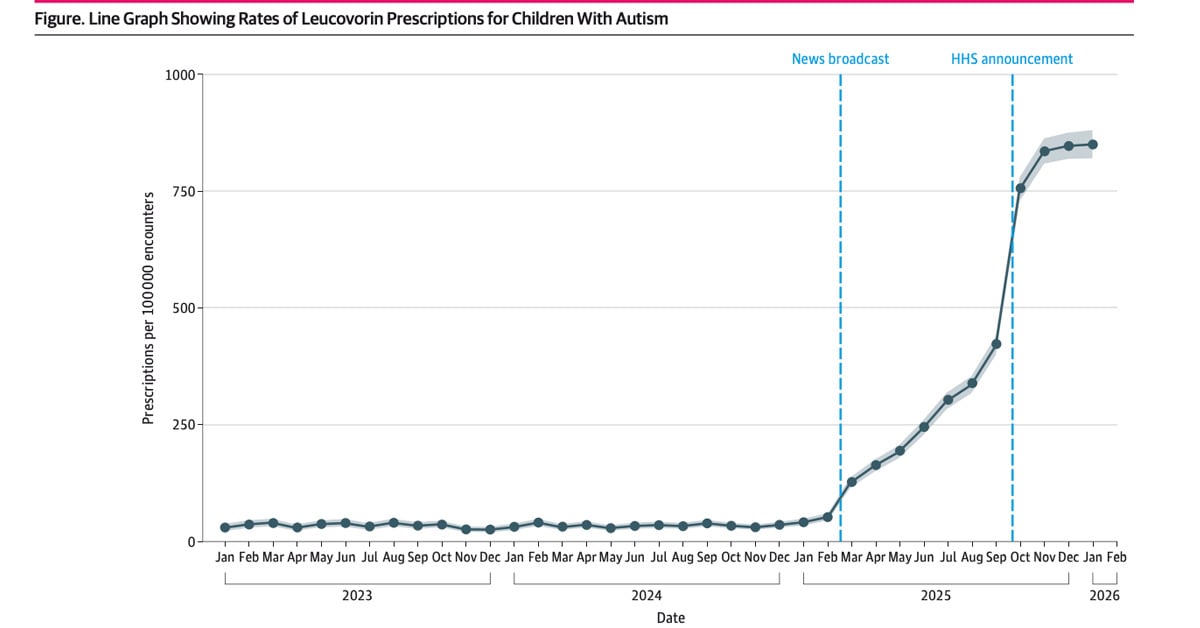
The Trump announcement wasn’t the only major thing in 2025 to potentially boost the popularity of leucovorin. A Fox News report in February 2025 detailed several families who believed the drug had improved their children’s symptoms, particularly their speech deficits.
Rothman and his team saw a clear bump in the prescription rate of leucovorin in the wake of the Fox News report, followed by an even larger spike after the Trump announcement. The rate in 2023 and 2024 was around 34 prescriptions per every 100,000 outpatient visits among children with autism. By November 2025, though, it had surged to 835 prescriptions per 100,000 visits.
“We found that leucovorin prescriptions for children with ASD increased over 2,000% after widespread media attention and public statements from White House officials,” Rothman said. The team’s results were published Monday in JAMA Network Open.
A drug without strong data
Since the September announcement, the Trump administration has stepped back from its bombastic endorsement of the drug.
In early March, the Food and Drug Administration officially approved the expanded use of leucovorin to treat cerebral folate deficiency. But the agency notably declined to endorse it as a treatment for autism, with FDA officials explicitly citing a lack of strong evidence that would support the decision.
Credible data supporting leucovorin for autism has always been weak, and it’s gotten weaker lately. This past January, a journal yanked a positive trial testing leucovorin supplements in children with autism after outside researchers discovered numerous “errors” and “concerns” with the data, according to the retraction notice. It was the largest trial of the drug conducted so far, with 77 children, and one of only five trials total.
The study by Rothman and his team isn’t intended to weigh in on the usefulness of leucovorin for autism. But given how many families have now been prescribed the drug, there should be more research done on the topic, Rothman argues.
“Because leucovorin prescriptions have increased so significantly for children with ASD, it would be worthwhile to assess outcomes and share these results,” he said. So the team hopes that other researchers will be able to track the long-term outcomes of the families and children who have taken leucovorin for autism.
“It is our duty as scientists and clinicians to generate the rigorous data needed to help families and clinicians make informed decisions,” he added.