The public backlash to the growing prominence of artificial intelligence has really coalesced around opposition to data centers in a way that has transcended national politics. Data centers are local; people view them as disruptive and destructive to their local environment, and there is increasing opposition to the projects regardless of political affiliation. Basically, if you’re looking for easy political points, oppose data centers.
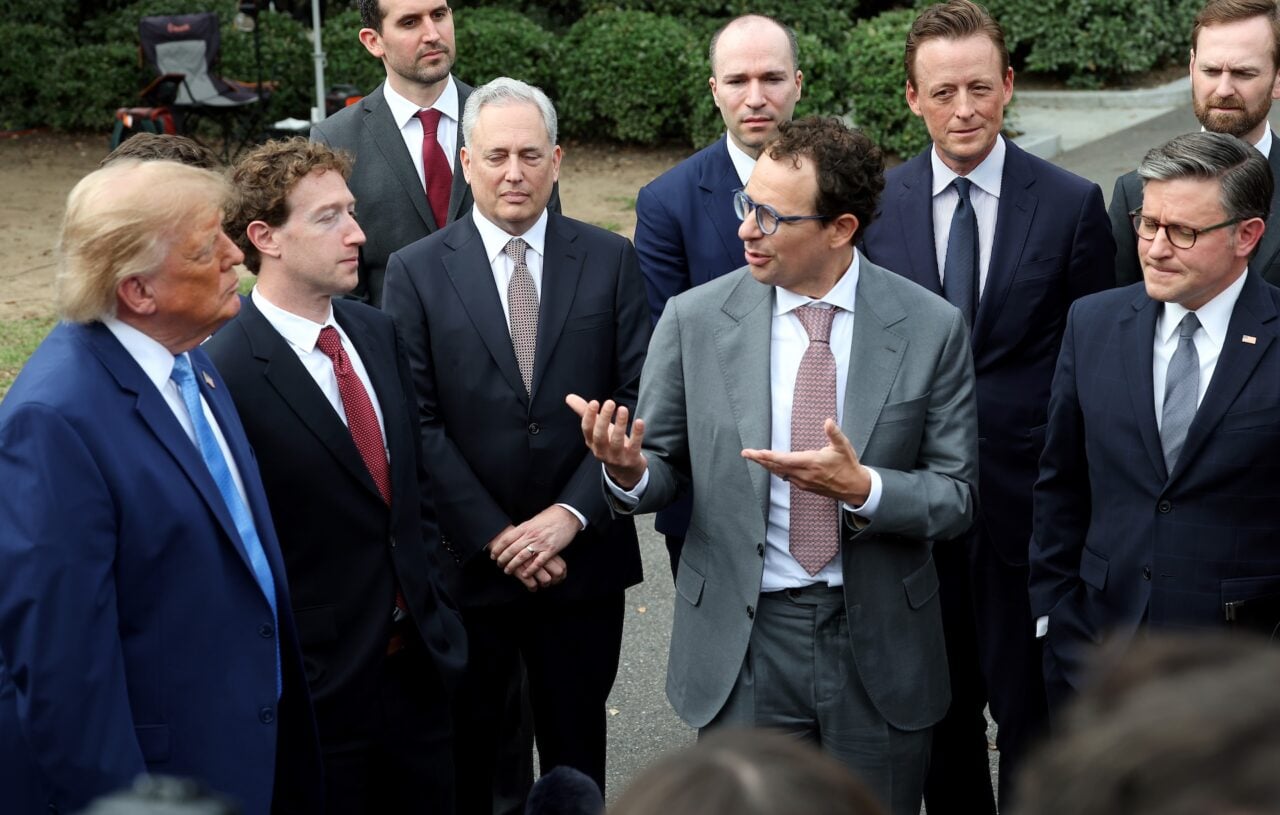
Donald Trump has a different message for communities trying to push back against the construction of these massive farms of CPUs and GPUs: Stop fighting and take it. In a press conference meant to promote his Ratepayer Protection Pledge, a non-binding and entirely voluntary commitment to shield residents from having to foot the bill for rising energy costs generated by data centers that 23 Republican governors have now signed on to, Trump dismissed political opposition to data center construction as foreign interference and told Americans to just accept that these things are going to be built in their backyard.
In Trump’s telling, there’s actually a lot of demand for these projects. “You have communities that really want the data centers. Frankly, those are the smart communities because it means tremendous numbers of jobs, very little actual disruption,” he said. That’s not true: data centers create short-term jobs in the construction phase but produce very few long-term employment opportunities.
He also argued that the opposition to these projects largely comes from foreign actors like China. “These companies are spending tremendous amounts of money on communities. I think it’s important that we tell the communities that because other nations are trying to get us to slow down and they are spending a lot of money on propaganda, on press trying to convince everybody that this isn’t a positive thing,” he said. “If we don’t do this, we’re going to be left behind.”
Trump’s insistence that the pushback to these projects comes from foreign influence campaigns is a page out of Kevin O’Leary’s playbook. “Mr. Wonderful” tried to make the case that China was behind the protest groups trying to stop construction of his massive data centers in Utah—a claim that he eventually backed away from once it became clear he had zero evidence to support it. The founders of two organizations that oppose data centers in Utah sued O’Leary last week.
Trump is unfazed by the lack of evidence, though. Instead, he advised governors and other political leaders to just try to force these things down the throats of their residents. “You have to convince your communities how great these things are,” he said of data centers. “You can’t fight it. You have to go with it.”
He also had a… let’s call it a unique perspective on how to pitch data centers to people. “There is very little disruption; they’re just large, they go on for miles. Frankly, if you like certain types of things, they are incredible to look at, to see,” he said.
And he’s got a point there. If you like certain types of things—like, say, wasteful projects that take up tons of land and resources and will likely be sitting abandoned in a decade when either the AI bubble bursts or the chips are deemed obsolete—then they are indeed incredible.