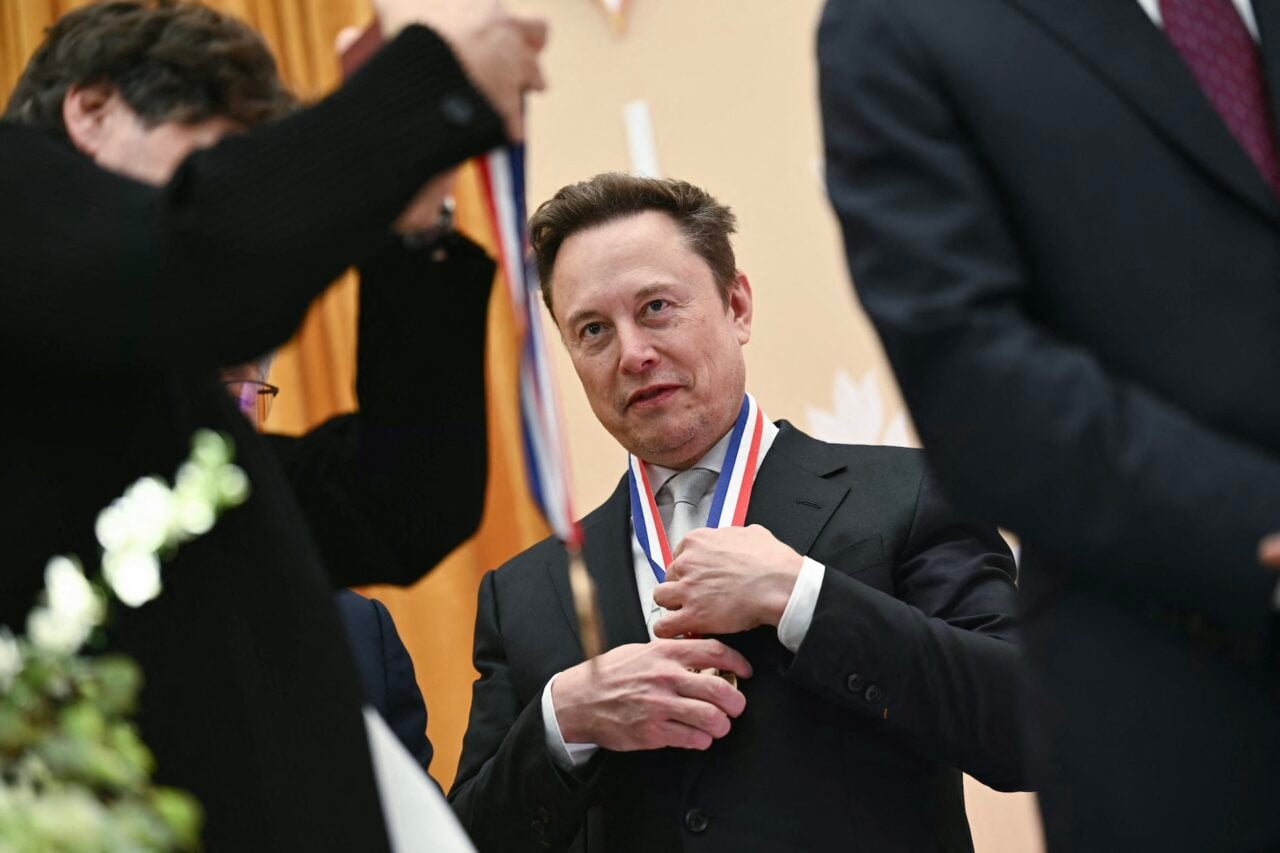
U.S. Treasury Secretary Scott Bessent has “the ability to sanction,” and he is not afraid to use it.
In an interview with Fox Business on Tuesday, Trump’s Treasury chief said that Chinese open-source AI models should expect increased scrutiny from American authorities. Over the last few months, American frontier AI labs and the Trump administration have accused Chinese open-source providers of IP theft related to advanced AI models developed in the U.S.
“We’ve seen a lot of talk about open source models coming and threatening the large language models in the US,” Bessent said. “This administration supports open source models, but what we do not support is IP theft. If we see, especially, that overseas models are stealing from our great companies, we have the ability to sanction them.”
The fight over models
China and the United States have been locked in a contest for global AI domination, and it has been heating up as of late. The U.S. is still the leader in artificial intelligence, holding a commanding position not just on the frontier AI models through industry leaders like OpenAI and Anthropic, but also on AI chip technology through Nvidia, AMD, and Intel. But Chinese models are quickly bridging that gap. The first signs of this came in January 2025 in the form of DeepSeek’s R1, which was as good at some common AI tasks as OpenAI’s then-best model, and which didn’t require the latest—and most expensive—Nvidia GPUs to run, making it significantly more cost efficient. Its release led to a trillion-dollar market freakout that drove the Trump administration to impose export bans and overall stricter trade restrictions on China.
Then last week, Alibaba-backed Chinese AI startup Moonshot unveiled Kimi K3, its latest soon-to-be-open-weight model that ranks close to or above some of the most advanced closed-weight offerings from OpenAI and Anthropic on several benchmarks. The release and its incredible online reception challenged the long-standing assumption that Chinese AI labs were still several months behind American competitors. According to independent testing from Artificial Analysis and Arena.ai, Kimi K3’s capabilities are competitive with both Anthropic’s Fable 5, which was released last month, and OpenAI’s GPT-5.6, which was released just a week prior.
Back in February, though, Anthropic accused three Chinese AI companies —Moonshot, DeepSeek, and Minimax— of violating Anthropic’s terms of service and regional access restrictions to “illicitly” extract the capabilities of its Claude model and use that to improve their own. Around the same time, OpenAI sent a memo to the House of Representatives, accusing DeepSeek of a similar tactic, claiming that it is trying to “free-ride on the capabilities developed by OpenAI and other U.S. frontier labs.” Then, last month, Anthropic accused Chinese tech giant Alibaba of the similar behavior.
Theft or standard-practice?
This “illicit” “theft” process is by no means new, and is actually fairly common in the AI industry. The practice is called distillation, and put very simply, it’s when one “teacher” model’s output is used to train another “student” model.
But in a memo from April, Trump’s chief science and technology adviser deemed the China-led “industrial-scale” version of the practice “adversarial,” and vowed to crack down on it by helping U.S. AI labs identify and thwart attempts at such distillation.
On Tuesday, Bessent said that watermarks of American LLMs were found on many Chinese AI offerings, adding that the administration would be looking into the matter in “the coming days or weeks.”
Tensions rise ahead of U.S.-China AI talks
Also on Tuesday, Reuters reported that the United States and China would have their first bilateral talks regarding artificial intelligence. Similar working-level talks between the two governments had taken place under the Biden administration, but this is the first such meeting of Trump’s second term. Many of the details for these long-anticipated talks are undetermined, according to the report citing unnamed sources familiar with the matter, except that it will take place in September and be led by Bessent on the U.S. side.
Bessent Will likely bring up the AI distillation concerns in the talks, if they take place, while the Chinese authorities are expected to raise their concerns regarding Mythos, Anthropic’s scary new AI model that can allegedly hack into even the most secure systems. The Trump administration has only allowed Anthropic to share the model with a handful of companies and government agencies around the world, and Chinese companies and agencies almost certainly didn’t make the cut considering Washington’s national security concerns with sharing advanced AI technologies with Beijing.
In a key speech at China’s top AI conference last week, Chinese President Xi Jinping voiced his disapproval of the United States’ approach, calling for open AI cooperation between nations.
“We should seize this rare, historic opportunity to encourage open source, openness, collaboration, and sharing,” Xi said. “In the meantime, we should jointly oppose overstretching the national security concept in the field of AI and placing one country’s security over that of others.”