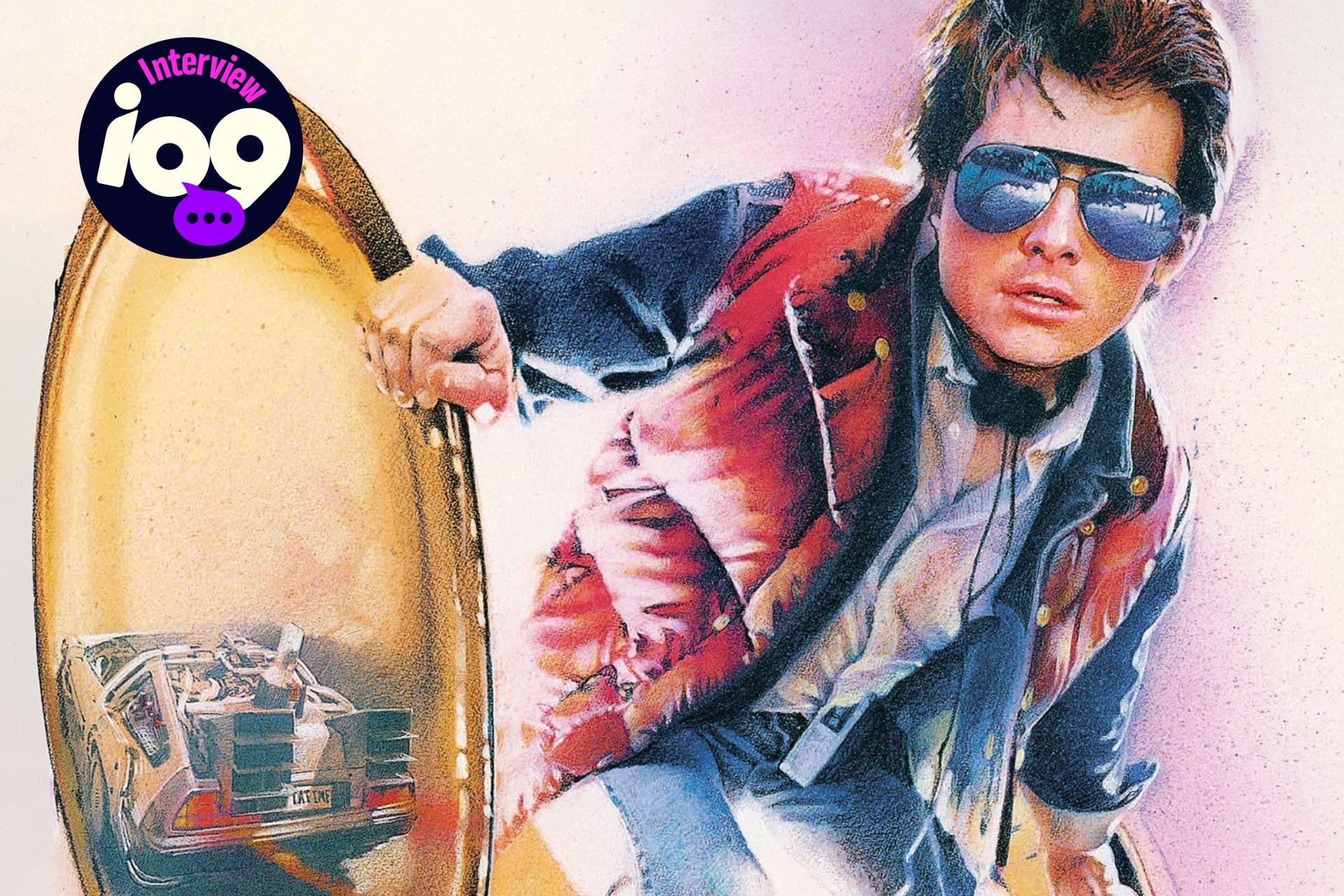
Filmmaker commentaries are great, but there is one small problem. Often, you’re watching a movie with the filmmaker talking over it and you wish that you could pause it and ask them a question. Well, a new Back to the Future book doesn’t offer that option specifically, but it does the next best thing. And we chatted all about it with the author.
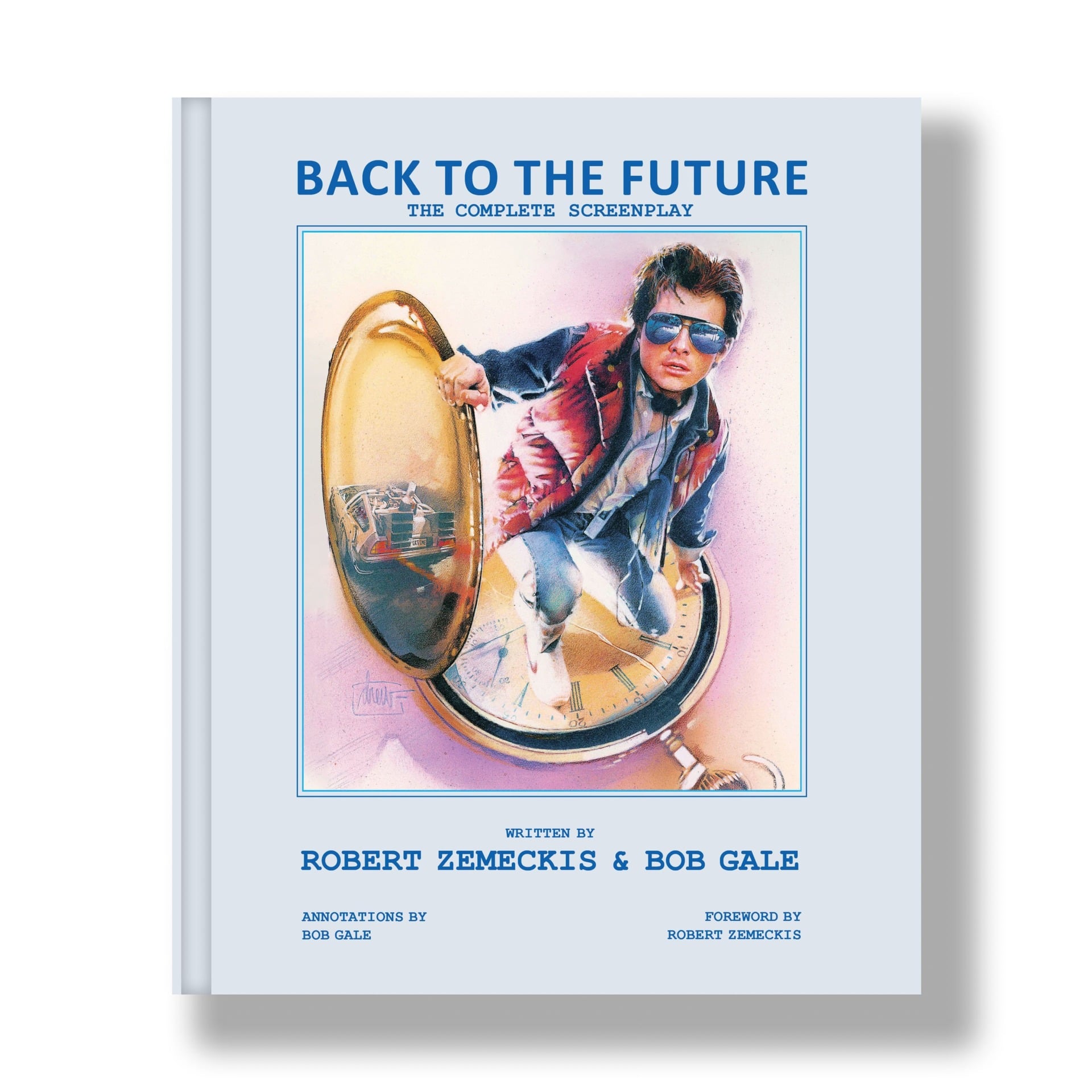
Back to the Future: The Complete Screenplay by Robert Zemeckis and Bob Gale will be released on October 20 from Insight Editions. It comes in multiple versions (all of which you can explore at this link), and presents the shooting draft of Back to the Future in a dynamic, colorful way, along with running annotations by Gale, who wrote the screenplay with Zemeckis. Basically, you read the screenplay on one page and, on the opposite page, Gale tells stories and provides context for what’s happening in the movie, at that very moment. It’s as close to dissecting a film with a filmmaker as you can get.
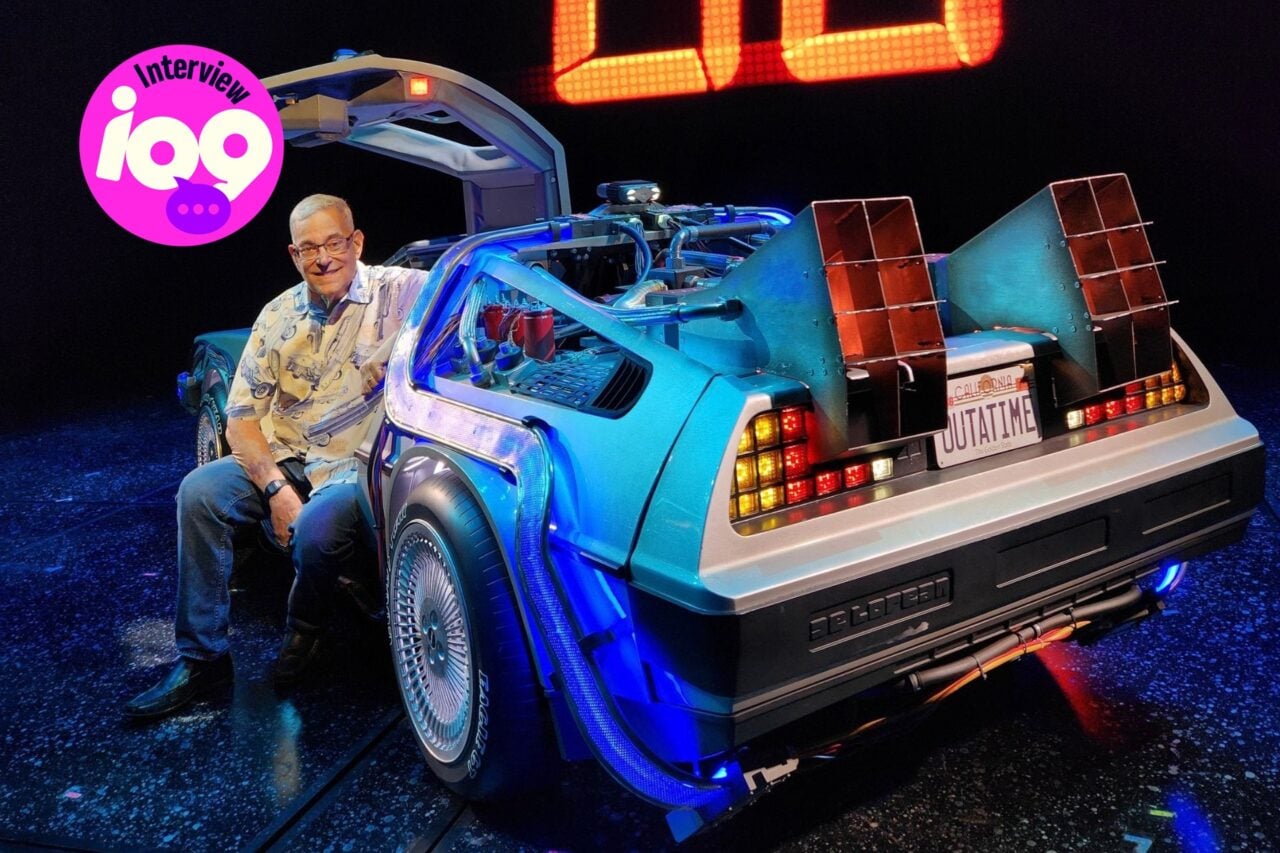
Recently, io9 sat down with Gale over video chat to discuss not just the book, but geek out over Back to the Future as well. Below, you can read a few of the highlights, including an incredible moment where we uncover how the film’s iconic final line was changed.
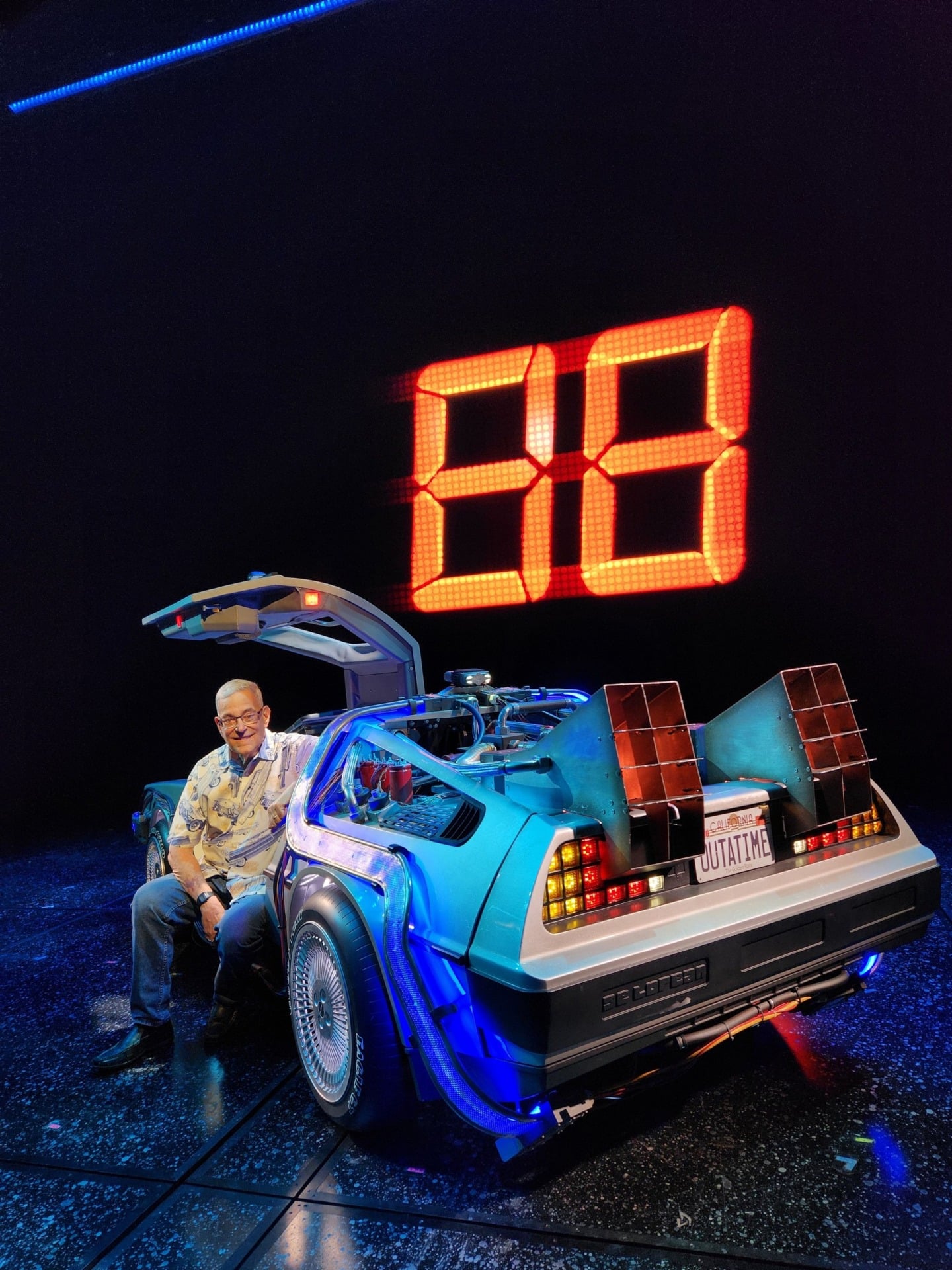
The version of the script in Back to the Future: The Complete Screenplay is the fourth draft. The one the studio greenlit to go into production. So, after that, lots of changes happened, not just during filming, but all the way to release. The book makes that clear by including multiple different variations and changes. Plus, it explains that Zemeckis and Gale got over two dozen rejections before the script was finally picked up.
So, with all that in mind, I asked Gale about the biggest changes throughout that process, from the very earliest ideas and even this shooting draft.
Bob Gale: The biggest change was… the refrigerator time machine into the DeLorean. Universal put the movie into pre-production before we changed that. The story is told in the book, but that was Zemeckis just saying, “It’ll be easier to shoot if we put it in a car.” It was just a pragmatic directorial decision.
[Another] big change was at the end. The 1985 in the first two drafts that Marty comes back to was a slightly altered future. It looks more like Sky Captain. And, of course, the nuclear test sequence [ending] was a big thing, and it’s talked about in the book. That was a budgetary thing. We couldn’t afford to go on location and do that. So, as is fascinating in the creative process, sometimes having limits on what you can do makes you more creative, and those limits are what inspired the clock tower sequence. We hadn’t even [touched] the courthouse [on the Universal lot] yet until we came up with that idea. We said, “Hey, instead of taking a company on a location to the desert, it’ll be a whole lot cheaper to build a clock on top of the courthouse.”
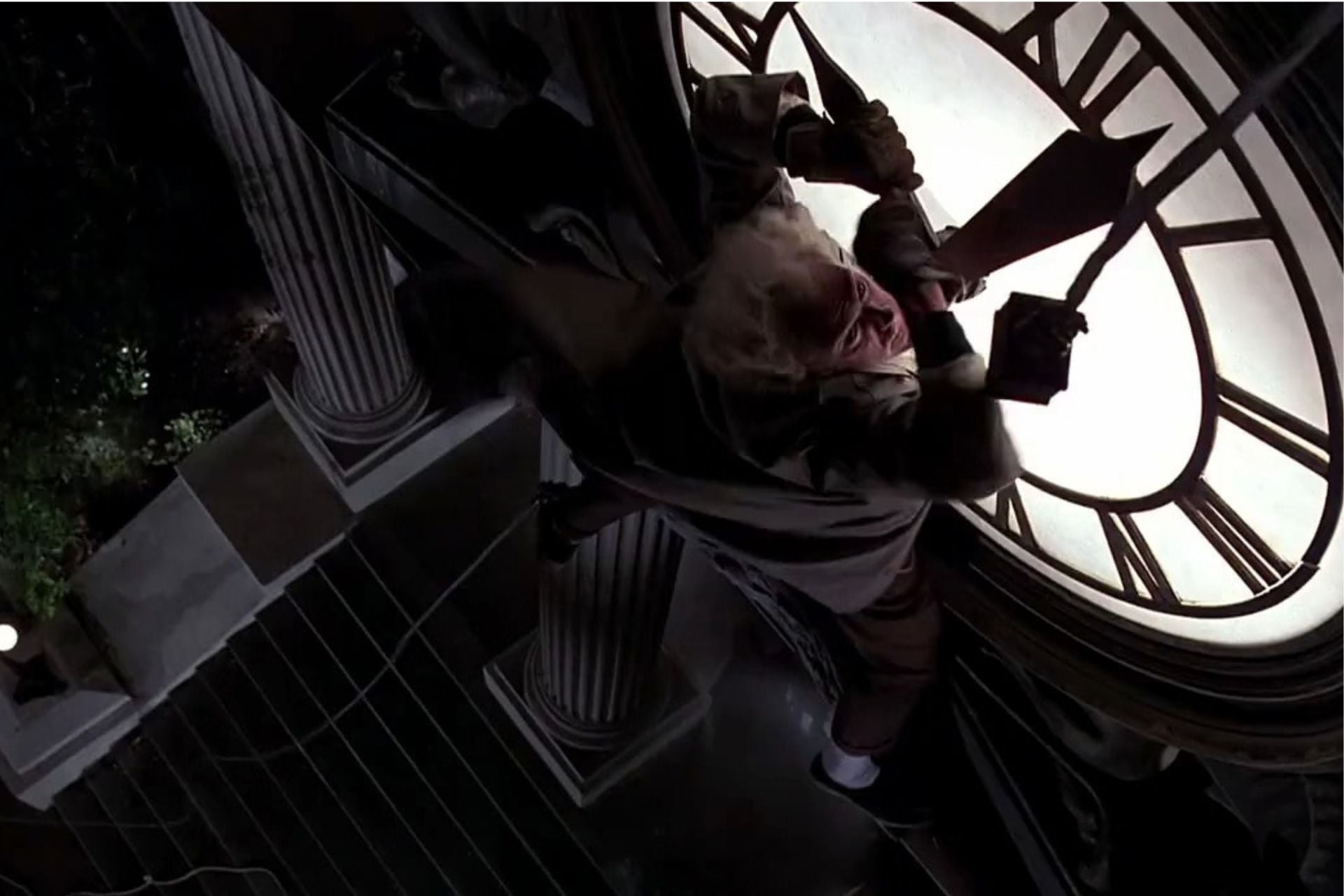
Jumping off that, I wondered just how similar the original ending at a nuclear test facility (where Marty would somehow repower the DeLorean via a nuclear blast) was to the clock tower ending in the film.
Gale: It’s quite a bit different. The thing about the nuclear test site scene was that Doc Brown wasn’t active. He can’t detonate the bomb. He’s sitting there witnessing this from his truck parked miles away, watching through binoculars, but the nuclear test is going when a nuclear test goes, and he’s in walkie-talkie communication with Marty saying, “You’ve got to drive to that bomb site now! You’ve got to go!” So yeah, it’s exciting because any time a bomb is going to go off it’s exciting, but it’s not anywhere near as exciting as what we put on the screen.
The book doesn’t shy away from the fact that filming for Back to the Future began with Eric Stoltz playing Marty McFly. There are even some never-before-seen photos of that. But when asked about creatively inspiring moments, Gale mentioned how that decision was important on a few other levels.
Gale: [Recasting Eric Stoltz] turned out to be an amazing luxury and advantage to kind of look at things that we had done and say, “How do we do that better?” And some of the things were totally serendipitous. I tell the story in the book of my just happening to see somebody wearing an orange down vest in the couple of days between when we knew we were going to replace Eric Stoltz and get Michael J. Fox. What if I hadn’t been on that street and seen that guy? What would the wardrobe have been? Our original idea was that he would be wearing a jacket where he could wander around through the ’50s and nobody would pay him much attention. And we said, “No, that’s not funny enough.” We realized we’d made a big mistake by doing that, and so we had a second chance and rectified that.
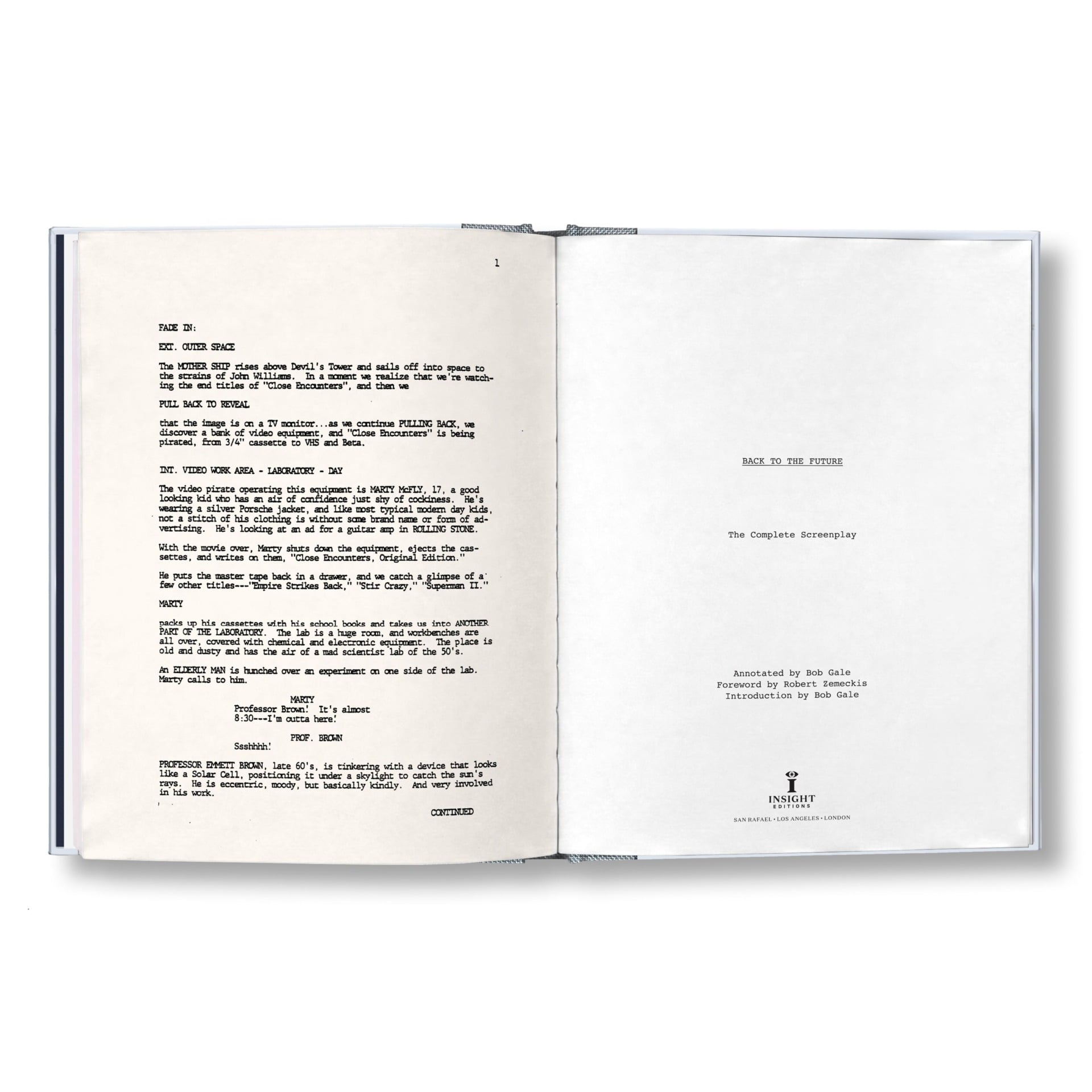
The book also begins with an alternate opening for the film, in which Marty McFly is pirating movies on VHS in Doc Brown’s lab (see above). That led to a story about another alternate opening that was cut from the movie. One that had ramifications from beginning to end.
Gale: By the time we were shooting with Eric Stoltz, there was this elaborate sequence where Marty was given detention for taking a phone call from Doc Brown at school. Doc calls him at school to tell him to meet him at Three Pines Mall [Editor’s Note: more on that in a second], and he gets detention for taking a personal call during school hours, so he’s gonna miss his audition. So what he does is he sets off the fire alarm in the detention class, which sets off the sprinklers and floods the classroom. That’s his excuse to get out of detention and make it to his audition.
That was the original beginning that we were going to do with Eric Stoltz. We actually started construction on that classroom, but it hadn’t been finished at the time that we replaced him. And so the dictum came down from the studio, and of course they were right: “You guys got to figure out everything that you can cut because you’re going to add weeks of shooting, and we got to pay Michael J. Fox, we got to pay off Eric Stoltz’s contract, so anything that you don’t have to do, don’t do it. Anything you don’t have to build, don’t build it.”
So what we did was we looked at that sequence and said, you know what? Way back when we started this, we didn’t see Doc’s lab in 1985. There is that little excerpt in the book that shows Doc has an RV, and it’s just tooling around, so that was an early version of that, and we said: “We’ve already got the lab. All we got to do is dress it for 1985 and put this dog food machine in there and that will be the way that we start the movie.”
And again, as so many of these things work out, that turned out to be a much, much better way to start this movie. And then part of [the original opening] was also a setup for the nuclear test scene because in class, before he gets a phone call, Marty is watching a documentary about the nuclear tests that they did out in Nevada. So we see the towns that they would build and blow up, which, of course, Steven Spielberg appropriated in Indiana Jones and the Kingdom of the Crystal Skull.
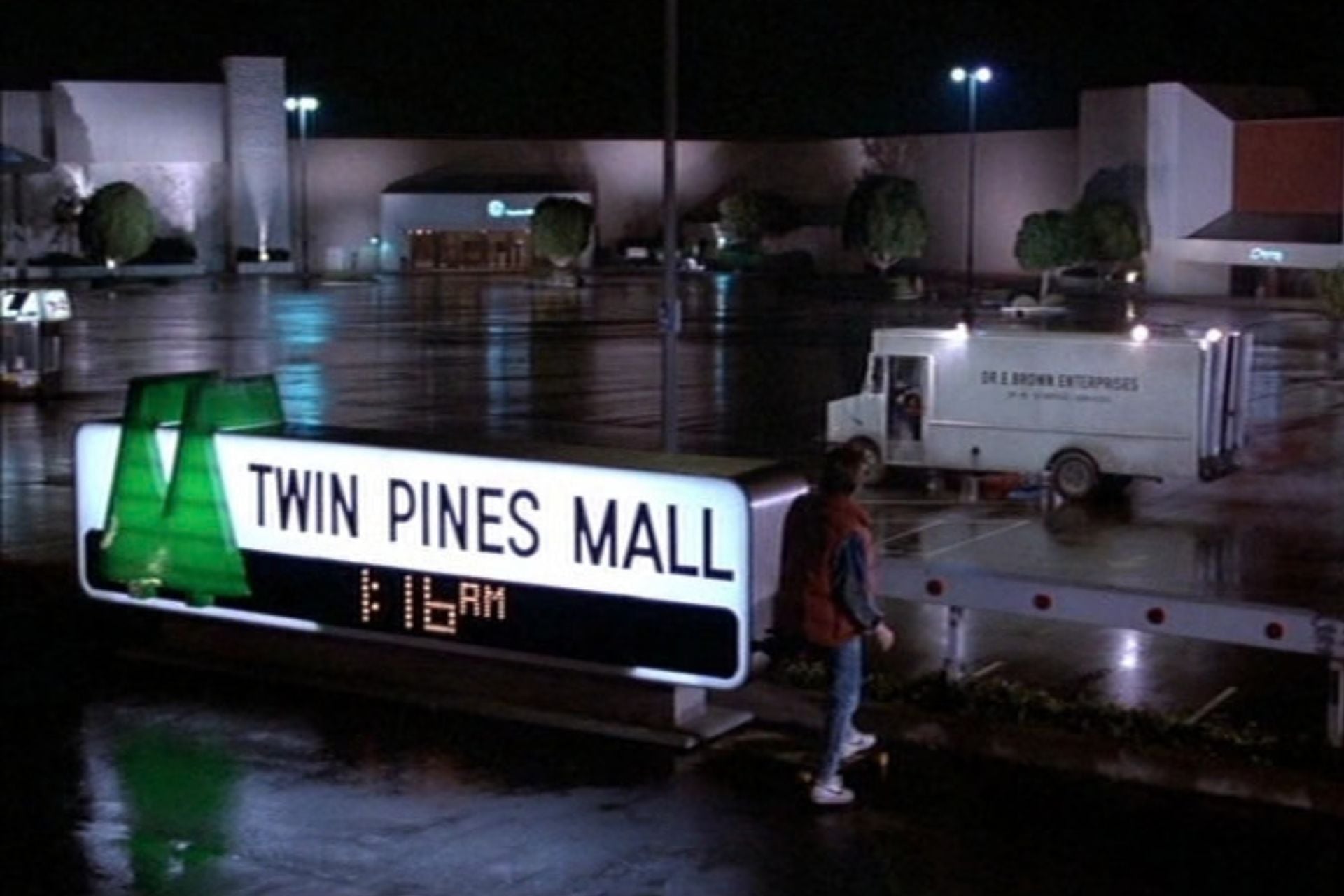
The switch of Twin Pines Mall to Lone Pine Mall, because Marty runs over one of Old Man Peabody’s pines, is one of those visual jokes you may not catch the first time you watch Back to the Future. So, I was surprised to see that the joke was actually written into the screenplay. I asked Gale how that came to be.
Gale: Actually, on one of the early pages that is reproduced in a smaller form [in the book], it was “Three Pines Mall” in earlier drafts, so we saved some money and cut down a pine.
But yeah, we were always going through, saying, “Okay, what are the other little details that we can sneak in here and let’s not make a big deal out of them. Let’s throw them in there.” [And] this one was absolutely figured out because we needed to explain, of course, before there was a mall, there had to have been open land, and what would that open land have been. And, of course, we make a much bigger deal about that in Part III, but it would have been farmland. It would have been this open space. So let’s make something out of it. The Peabody family would have sold the property to developers, and maybe in the deal it said, “You’re going to call it Twin Pines Mall because this was Twin Pines Ranch,” or everybody in Hill Valley knew, “Oh yeah. Farmer Peabody’s got his Twin Pines Ranch out there, so we’re going to identify this mall with a landmark that everybody’s already familiar with.”
Gale gets a lot of questions about minutiae in Back to the Future, and he welcomes all of them. But one thing he says he rarely gets asked about is the platonic friendship between Doc and Marty, which he believes would not be the case if the film were made today.
Gale: One of my favorite things that we’ve managed to pull off in Back to the Future is that no one has any question about the fact that Marty and Doc have this relationship. And I know that if I were trying to pitch this movie today, the executive would say, “What’s the deal with this old man and this kid? Is there pedophilia involved in this?” But it’s like “No, no, no, no, no!” You see it, and you say, “Okay, look at all this great equipment that the guy’s got in his lab in his garage. Who wouldn’t want to hang out with a guy that had all that stuff?” And when Strickland says to Marty, “If you hang around with him, you’re going to get into a lot of trouble,” my answer to everybody is, “Well, if you’re a normal red-blooded American kid and somebody says, ‘Whatever you do, don’t go to that guy’s house,’ you’re going!”
Speaking of “going,” the last line in The Complete Screenplay is different from the one in the movie. In the movie, it’s very famously, “Roads? Where we’re going, we don’t need roads.” But in the book, it’s, “Where we’re going, we don’t use roads.” I asked when and how that changed, and here’s a transcript of what happened next.
Gale: You know what? While we’re here, I happen to have in this box right here the line script. The script supervisor’s script.
Germain Lussier, io9: Oh wow, okay.
Gale: So actually, that’s a good question. I hadn’t thought about that, so here is the whole thing, and let’s go to the last page and let’s see what it says. So this is an exclusive for you, Germain. Let’s just see what we’ve got here.
io9: So that would have the difference between each take, right?
Gale: Yeah. Wow, okay. “Bring her along, this concerns her too.” It’s on page 131a. And then we go to [he’s reading the pages] yeah. So it was changed on the set. “Yeah, there it is. Scratch out “use,” and she wrote “need.”
io9: Wow.
Gale: We decided that it sounded better. Whether it was a Christopher Lloyd idea, a Zemeckis idea, my idea, I have no idea, but it was something that we did when we shot it.
Featuring tons of stories like that, the regular edition of Back to the Future: The Complete Screenplay is out October 20. Read more here. There’s also a limited edition, which you can read more about here, as well as a collector’s edition. More on that here. We’ll have more from our interview with Bob Gale next week.
Want more io9 news? Check out the best movies and TV shows to stream this month and all the upcoming sci-fi, fantasy, and horror books that should be on your radar.