Saturn’s Moon Enceladus
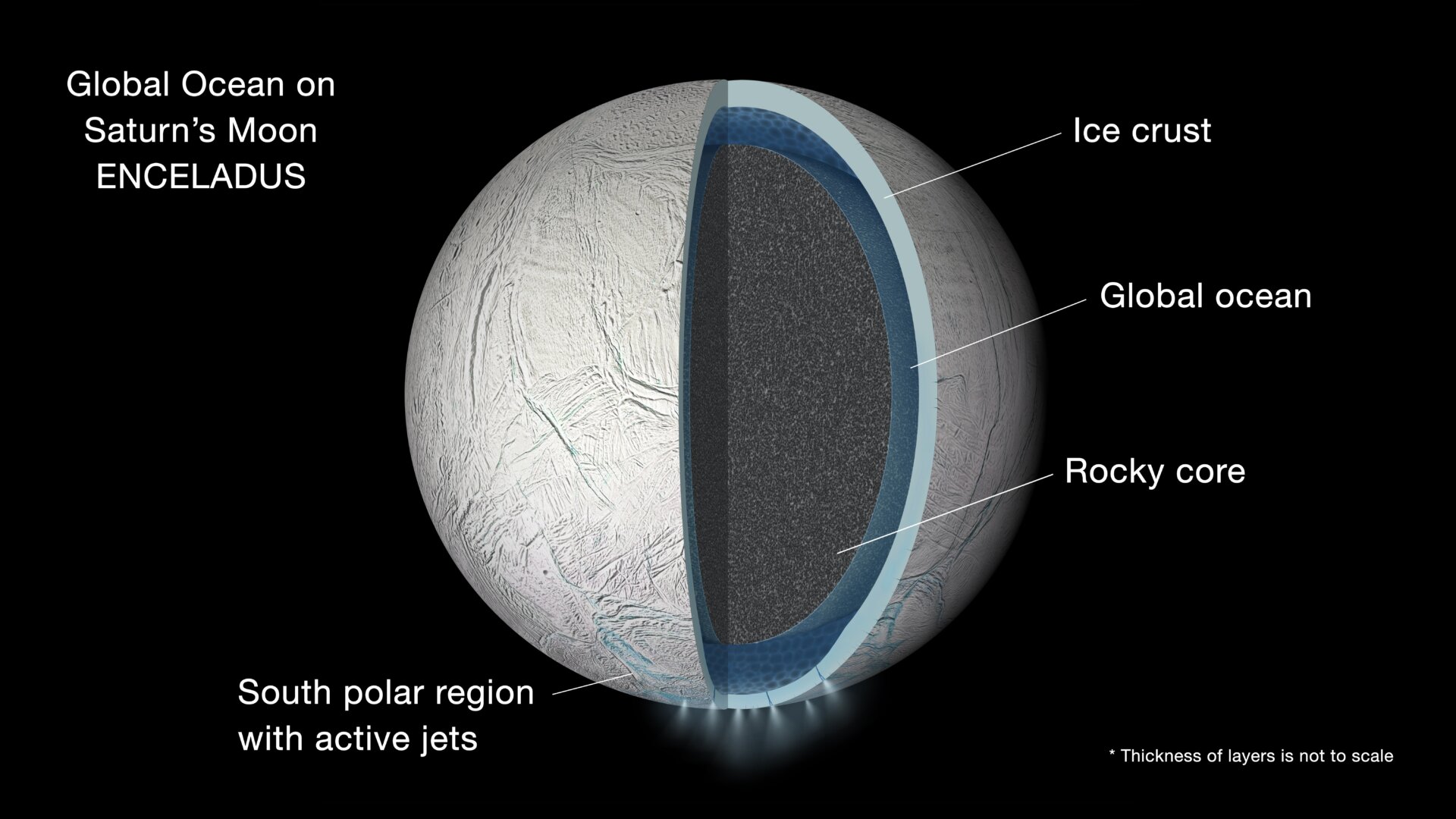
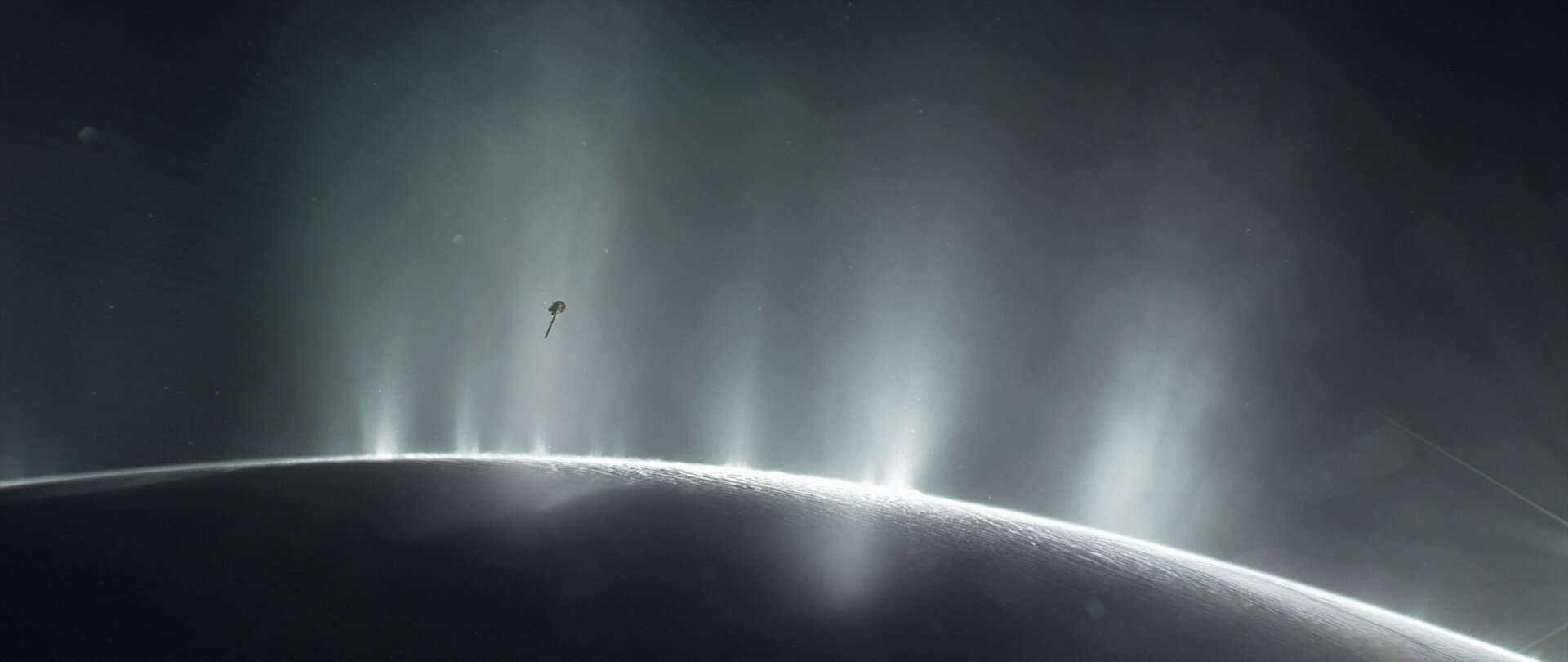
Another subterranean ocean exists on Saturn’s moon Enceladus. Like Europa, this snowball-like moon occasionally spurts plumes of water into space. NASA’s Cassini orbiter detected traces of salt and silica dust coming from these geysers, pointing to complex chemical processes beneath the moon’s icy shell. Enceladus also features fractures on its surface called tiger stripes, which often leak water.
Liquid water has existed on Enceladus for potentially billions of years, and it’s concentrated in the moon’s southern hemisphere. The moon’s sandwiched liquid layer is roughly 5 to 6 miles deep (8 to 10 km), and it contains about as much water as Lake Superior, the largest of the Great Lakes.
The moon’s highly elliptical orbit around Saturn and the ensuing tidal forces keep its rocky core toasty warm. Enceladus’s hot and highly porous core is made from silicates, which are conducive to complex chemical reactions—the kind that could support life. And indeed, organic molecules have already been detected on this fascinating moon, which should be studied further for evidence of microbial life.