Dwarf Planet Ceres
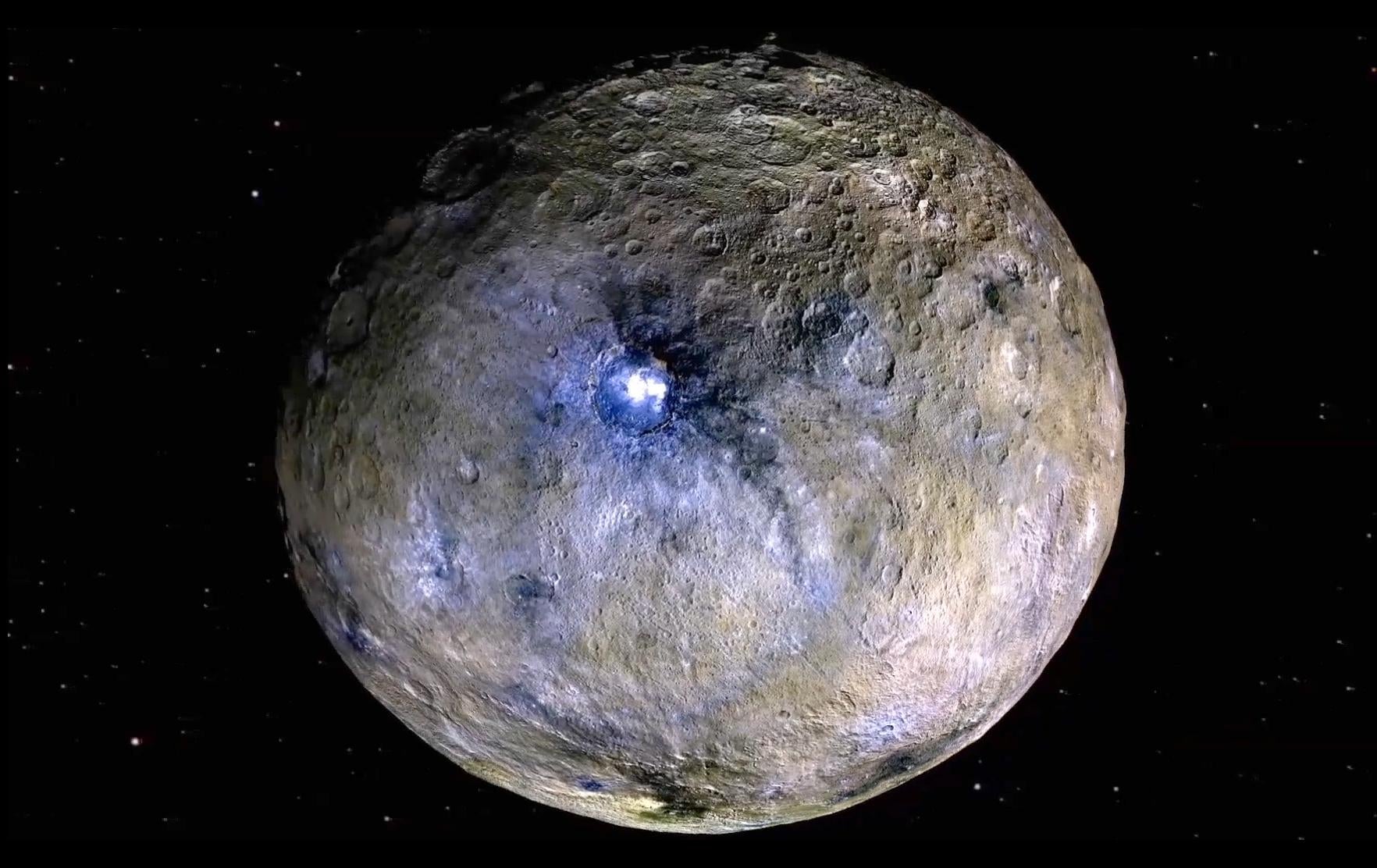
Dwarf planets in the asteroid belt aren’t typically associated with liquid water, but such is the case for Ceres, which was recently revealed to be a watery world. Unlike the icy moons around Jupiter and Saturn, however, Ceres has no gas giant to keep its liquid interior warm. Its subsurface ocean likely formed after an asteroid struck some 20 million years ago, forming Occator Crater, which exhibits several prominent bright spots.
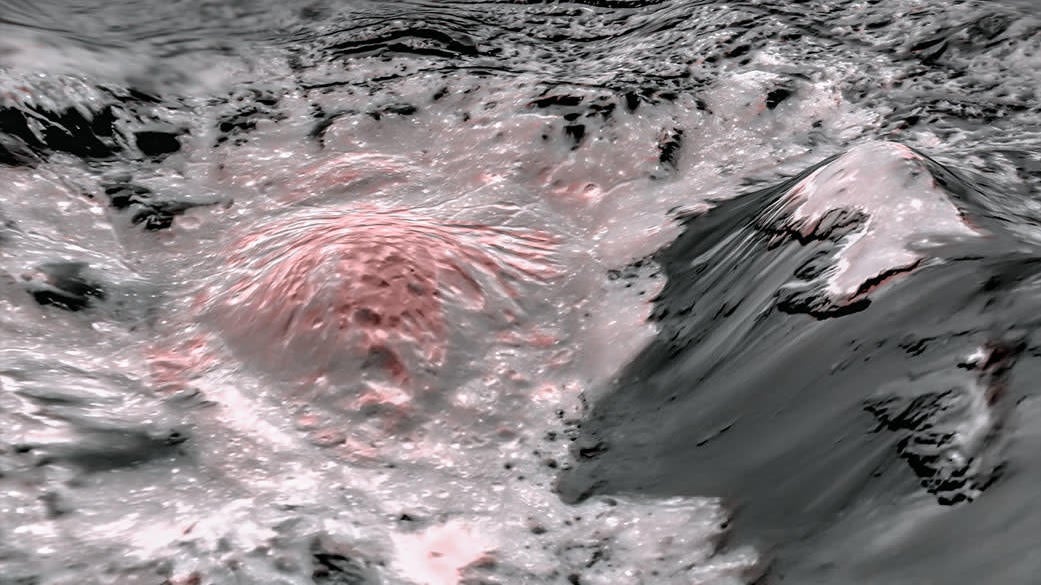
The heat generated from this impact is long gone, but the water on Ceres has remained in a slushy state owing to its high salt content. On occasion, this water is forced to the surface, leaving highly reflective deposits behind. The dwarf planet’s reservoir sits some 25 miles (40 km) beneath the surface, and it measures hundreds of miles wide—which is substantial, given that Ceres is just 590 miles wide (950 km).