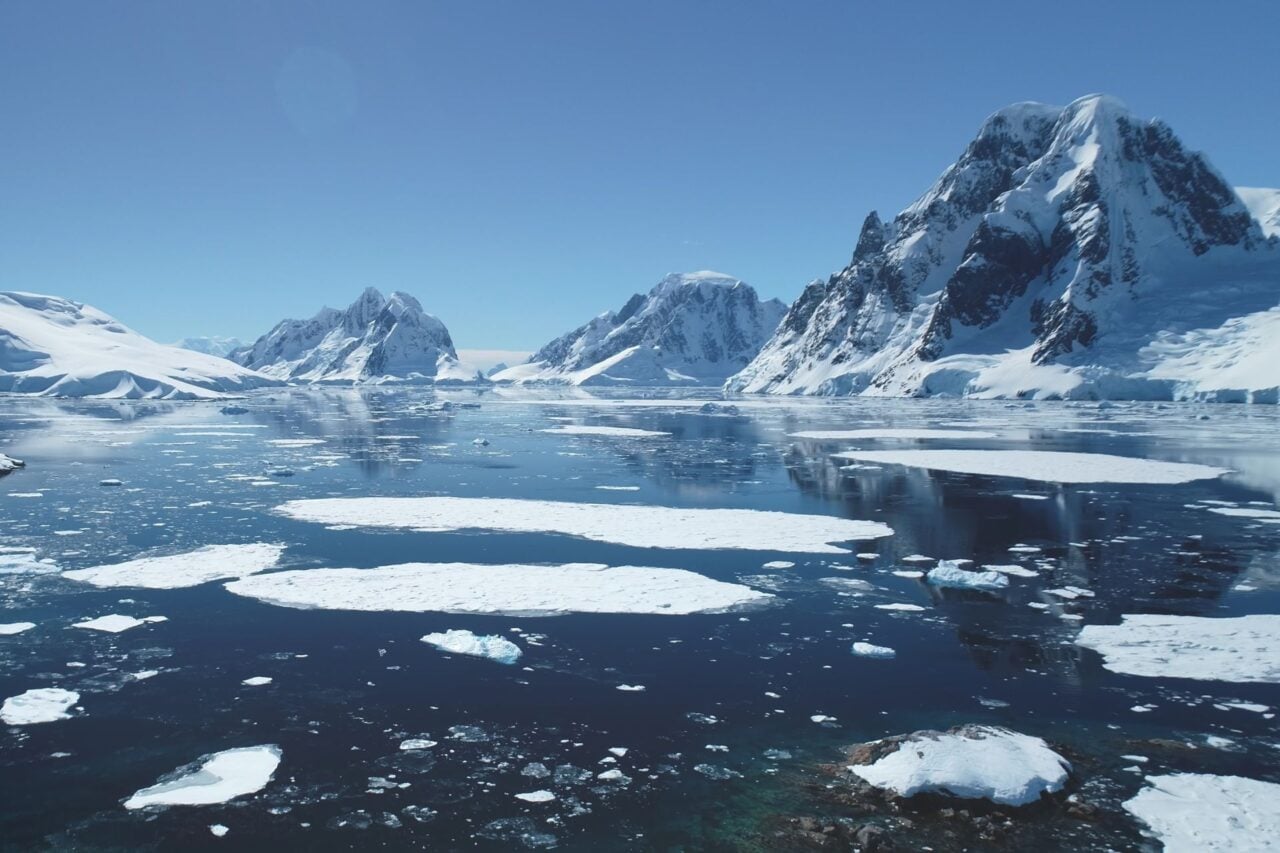
In August 2024, something extraordinary appeared in the middle of Antarctica’s winter sea ice: a vast expanse of open ocean where there should have been a frozen surface. The reason for the anomaly long remained unknown, but now scientists believe they finally have an answer.
New research suggests the hole was not the result of a single freak event but of an extraordinary convergence of atmospheric and oceanic conditions. In a paper published in Geophysical Research Letters, a team of researchers identified a series of extreme weather conditions that took place simultaneously, bringing relatively warm deep water toward the surface.
Open water
The massive hole in the ice was first spotted from space. Satellite observations showed a huge polynya—an area of open water surrounded by sea ice—emerging in Breid Bay, off East Antarctica. At its peak on August 8, 2024, the opening stretched across roughly 34,400 square miles (89,100 square kilometers). It then rapidly shrank and refroze in mid-August that same year.
It was an especially puzzling sight because Breid Bay had remained covered by sea ice during July and August throughout the satellite record dating back to 1979.
The researchers behind the new study suggest that the unusual event was caused by a number of factors. A succession of six intense atmospheric rivers—narrow corridors of warm, moisture-laden air sometimes described as “rivers in the sky”—swept toward Antarctica during July and August 2024. Those atmospheric rivers brought unusually warm air, heavy snowfall, strong northerly winds, and large amounts of heat toward the region, weakening the sea ice and making it harder for new ice to form.
At the same time, something was happening beneath the surface. Strong winds helped drive ocean upwelling, bringing relatively warm water from below toward the surface. The upper ocean around the developing polynya was warmer than usual, adding another source of heat that worked against wintertime ice formation.
Together, these forces created a remarkable chain reaction. Warm air and moisture weakened the ice from above, while unusually warm water supplied heat from below. The result was one of the most striking Antarctic sea-ice events observed in recent decades.
More to come
Polynyas are natural phenomena that take place under certain atmospheric and oceanic conditions. This particular event, however, demonstrates how extreme atmospheric events and ocean conditions can interact to produce sudden, enormous disruptions to Antarctic sea ice.
While the researchers emphasize that the 2024 combination of conditions was exceptionally unusual, they also predict that there will be more of these Arctic polynyas in the future as climate change strengthens atmospheric rivers and produces more frequent heat waves.
Sea ice serves as a protective buffer against ocean waves. If there were to be less sea ice during Antarctica’s winter season, most of its ice sheet would be exposed to increasingly warm ocean waters.