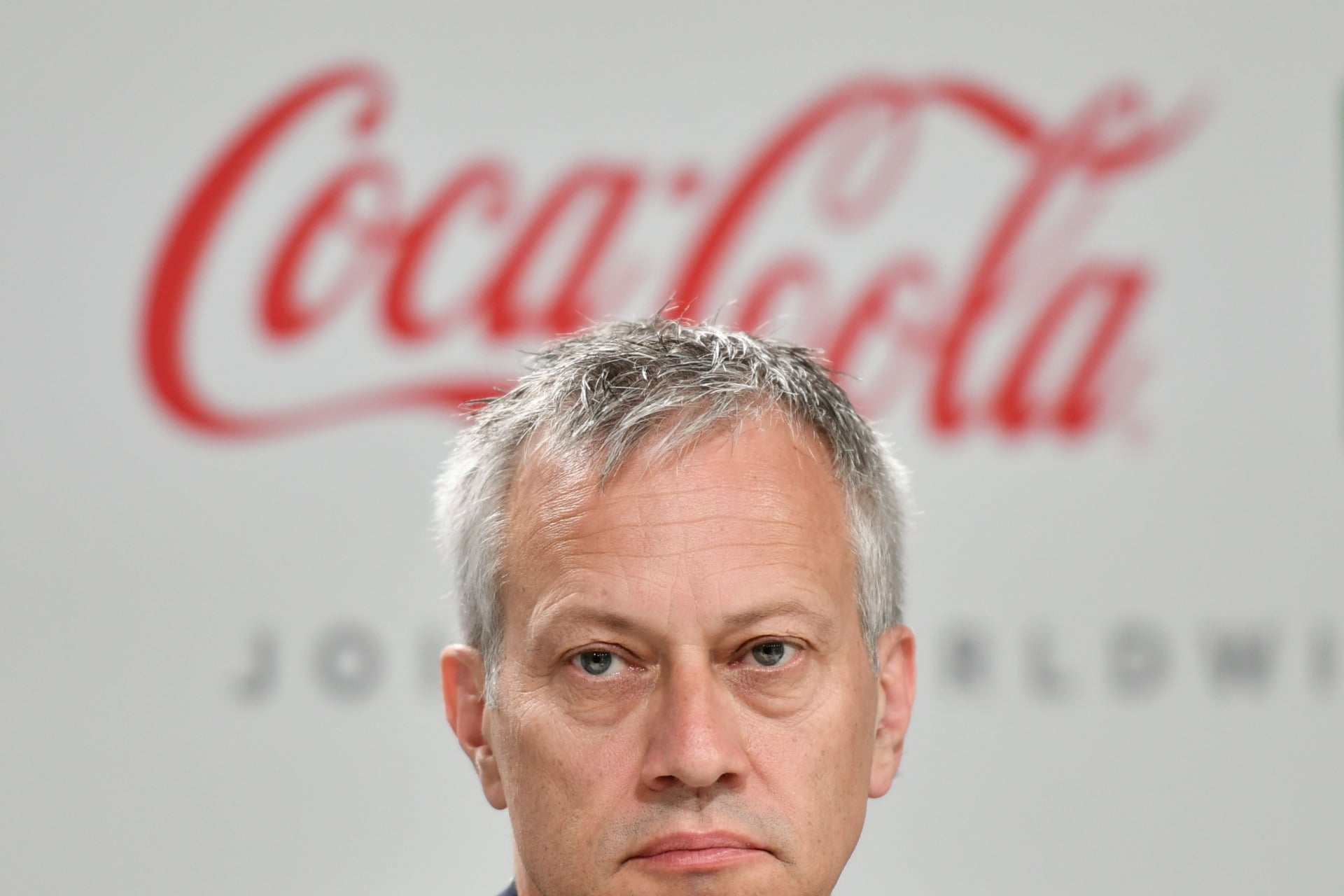
Most CEOs are using the embrace of artificial intelligence as a cover to lay off staff and cut payroll costs in the name of “efficiency.” But a couple are using it as an excuse to lay themselves off. According to a report from CNBC, Coca-Cola CEO James Quincey just joined former Walmart top executive Douglas McMillon in the group of guys who have decided to oust themselves and hand the reins over to someone better suited to keep up with AI.
In what was effectively his exit interview during an appearance on CNBC’s “Squawk Box,” Quincey basically acknowledged that he doesn’t believe he’s the guy to handle what is coming. “In a pre-AI, a pre-gen-AI mode, we made a lot of progress. But now there’s a huge new shift coming along,” Quincey said. “My job is also to think who’s the best team to put on the field to get the next wave done. And I concluded that, actually, it was time to put someone else on the field for the next wave of growth.”
Quincey has been in the driver’s seat over at Coca-Cola since 2017, and has been with the company since the 1990s, so his exit is a big deal for the beverage maker. But one has to wonder what exactly it is that he sees coming that led him to exit. It’s not like he’s afraid to be the cold, calculating executive—one of his first moves as CEO was to lay off 1,200 people. Another layoff, initiated earlier this year under Quincey’s leadership, saw 75 people axed as part of a restructuring focused on AI adoption.
He’s not the only one getting out of the executive chair earlier than expected. Walmart’s McMillon offered a similar explanation when he stepped down, telling CNBC, “With what’s happening with AI, I could start this next big set of transformations with AI, but I couldn’t finish.” He specifically cited what he saw coming in the next few years—”you could see what agentic commerce was going to look like, the vision for AI shopping”—and decided he wanted out.
That’s an unusual choice for a couple of executives who are taking home compensation packages in the $20 million range, sitting in front of a future with a technology that these guys all like to claim is going to be a profit multiplier while significantly cutting the cost of labor. So why the sudden decision to step back?
One way or another, they’re probably getting out ahead of the axe. Adobe CEO Shantanu Narayen stepped down earlier this month at the behest of investors who thought he was too slow to push AI initiatives. It seems boards are getting increasingly impatient with how long it’s taking for the big promises of AI implementation to come to fruition, and are starting to look for people to blame.
Then there’s the more existential threats looming in the air. Citi banker Jay Collins recently told Business Insider that he believes the rapid adoption of AI and robotics is an existential threat to capitalism, arguing, “Unless you’re going to go to an authoritarian-type capitalist regime, we’ve got to figure out how to make this work.” Let’s be real, most of these executives probably wouldn’t object to that outcome outright, so there must be something spooking them about the future. Seems they’re taking the golden parachute while it’s still an option.