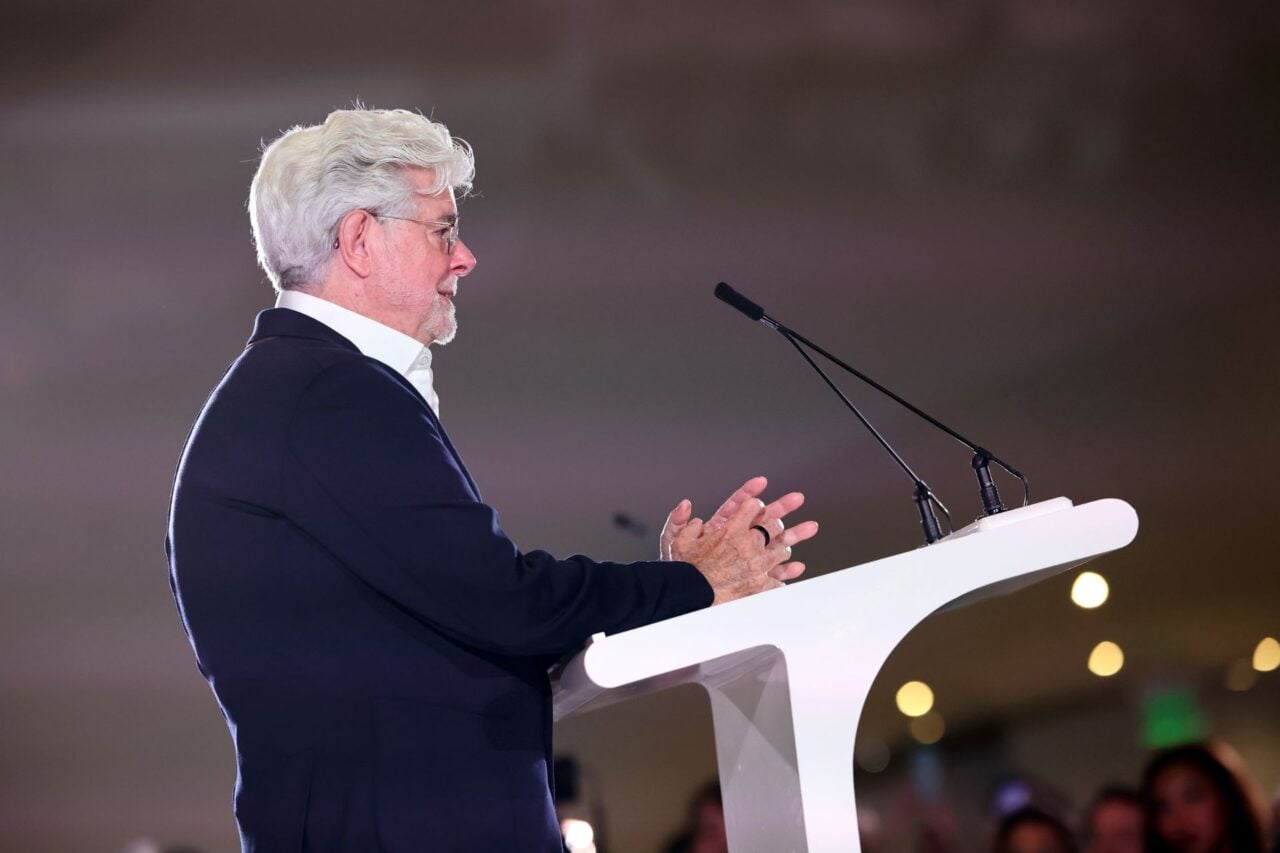
Andrew Stanton knows a thing or two about storytelling. A two-time Oscar winner best known for directing Finding Nemo and Wall-E, Stanton has been with Pixar since the very beginning, lending his expertise to not just his films, but most of the films the studio has released. In between, he’s begun to spread his wings and work more on television, directing episodes of Better Call Saul, Legion, Tales From the Loop, and For All Mankind. Most recently, he worked as a writer on the final two episodes of the Disney+ series Obi-Wan Kenobi which, us being us, we had to ask about in a new interview.
Stanton is currently promoting the fact his Oscar-winning masterpiece, Wall-E, is coming to the Criterion Collection later this month. And we’ll get much more into that soon. During our talk though, we asked about writing on Kenobi, especially the final two episodes, which featured hugely crucial moments to the fabric of the Star Wars franchise. Stanton has obvious reverence for the material but also some surprisingly frank thoughts about a potential problem writing in a galaxy far, far, away.
“That was the blessing and the curse of it,” Stanton told io9 when asked about being a part of two major episodes in the canon of Star Wars. “It’s like one, you’re geeking out that you get to type ‘Vader says’ this and ‘Kenobi says’ that. You pause and say ‘I can’t believe I’m actually getting paid to type this. I can’t believe these words may be said.’ But then another part of you, it has to go through such a rigorous like ‘Does that fit the canon?’ And I feel like it’s bittersweet. [The reason that happens is] because people care, but it also kind of doesn’t allow, sometimes, things to venture beyond where maybe they should to tell a better story. So it can sometimes really handicap what I think are better narrative options.”
“And so I was frustrated sometimes—not a lot— but I just felt it wasn’t as conducive to [the story],” Stanton continued. “So I love it when something like Andor is in a safe spot. And it can just do whatever the heck it wants. But I felt, you know, Joby [Harold, Obi-Wan Kenobi co-writer and executive producer], to his credit, kept the torch alive and kept trying to thread the needle so that the story wouldn’t suffer but it would please all the people that were trying to keep it in the canon. But I got some moments in there that I’m very happy with.”

Stanton’s trepidations seem to mirror what many Star Wars fans are starting to see, especially in light of the adoration for Andor. Andor can go anywhere. Do anything. All that needs to happen is, eventually, the character gets a tip about a big Imperial weapon which leads to the final chapter, Rogue One. How it gets there—save for bigger things, like the main character joining the Rebellion and meeting eventual sidekick K-2SO—is a completely blank slate.
With Obi-Wan Kenobi especially, and the other shows to a lesser extent, you’re using characters and a time frame that’s very well-explored, and telling stories that might be up against years of preconceptions or previous works. That can put huge shackles around your story, whereas, say, with a Pixar movie, there is no limit to where the story can go. And in the odd case that there are limits—like, for example, Lightyear—things don’t go as well.
We’ll have much more from Stanton on how Wall-E became the first Pixar movie in the Criterion Collection, and all the ways it was a little too accurate about its depiction of the future. You can pre-order the disc here.
Want more io9 news? Check out when to expect the latest Marvel,
Star Wars, and Star Trek releases, what’s next for the DC Universe on film and TV, and everything you need to know about James Cameron’s Avatar: The Way of Water.