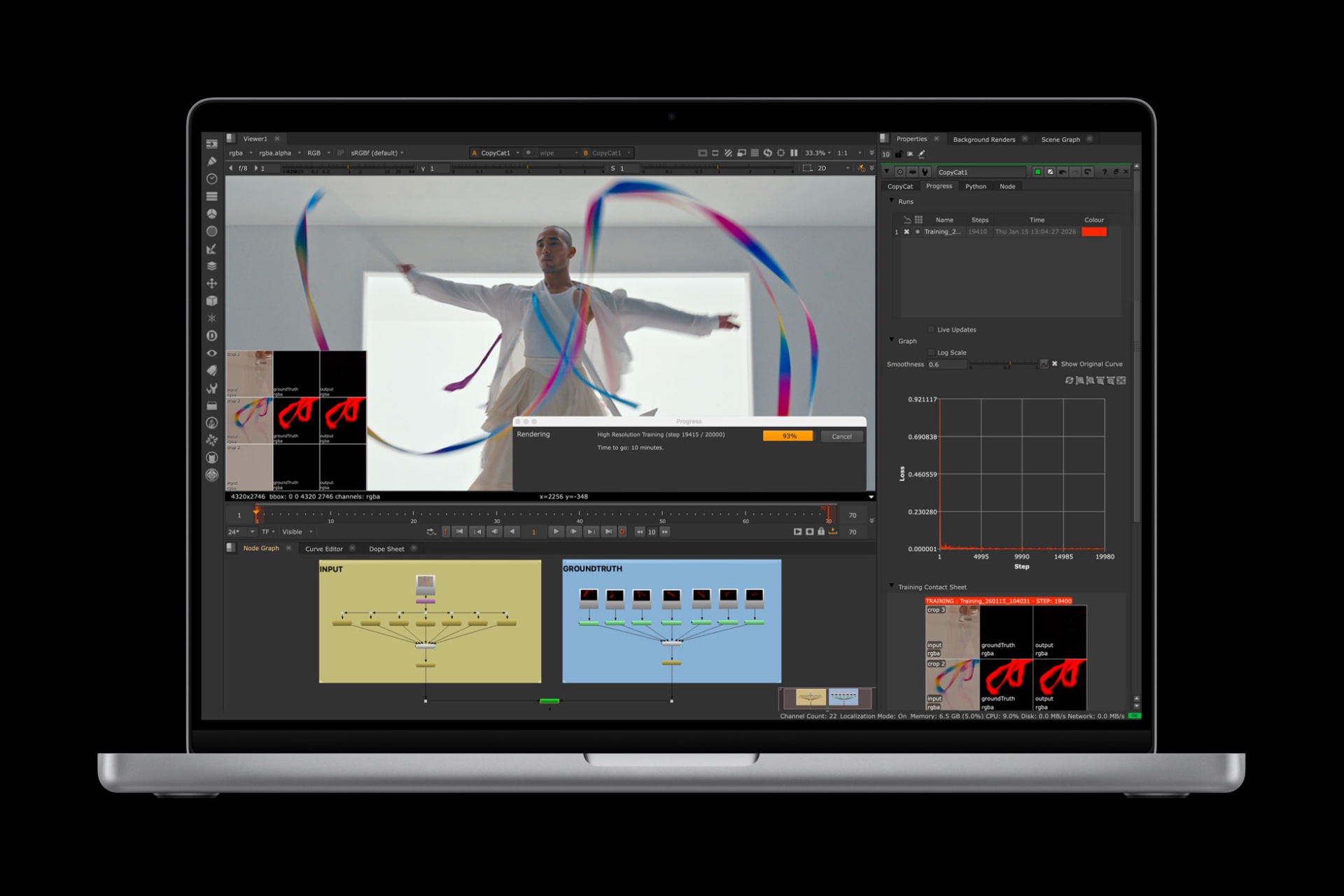
At long last, the more powerful siblings to the 14-inch M5 MacBook Pro have arrived. Apple is promising the M5 Pro and M5 Max chips in its new 14- and 16-inch MacBook Pros will make them its most powerful laptops yet.
There are a lot of numbers to digest, so let’s break it all down, starting with the 14-inch MacBook Pro. It can be configured with either the M5 Pro or M5 Max chip. The M5 Pro chip comes with a base 15-core CPU and 16-core GPU; a beefier version with an 18-core CPU and 20-core GPU costs an extra $200. The M5 Max chip has a base 18-core CPU and 32-core GPU; pony up an extra $300 and you can bump the GPU cores up to 40.
The 16-inch MacBook Pro also comes in M5 Pro and M5 Max variants. The M5 Pro chip comes with more CPU cores out of the box compared to the 14-inch version—an 18-core CPU and 20-core GPU configuration. The M5 Max version comes with the same 18-core CPU, but you get a 32-core GPU; $300 more gets you the 40-core GPU config.
See M5 Pro and M5 Max MacBook Pro at Amazon

Needless to say, these machines are built for high-end workflows, whether that’s running AI locally on-device, scientific simulations, or live graphics rendering tasks. The M5 Pro and M5 Max no longer contain “performance” and “efficiency” cores. Instead, the 18-core CPU/20-core GPU M5 Pro configs for both MacBook Pro sizes are centered around six “super” cores on top of another 12 “performance” cores. In reality, this is Apple renaming the M5’s performance core to “super,” which is the company boasting about its CPU’s single-core performance.
The new chips also include the updated 16-core neural engine for low-end or background AI tasks. While a base M5 MacBook Pro only had access to Thunderbolt 4, the M5 Pro and M5 Max MacBook Pros all have access to faster Thunderbolt 5 data transfer speeds.
The base unified memory starts at 24GB and can be configured with up to 128GB. MacBook Pros with the M5 Pro chip come with 1TB of storage, and M5 Max models with 2TB. Compared to the M4 Pro and M4 Max chips, Apple says the new MacBook Pros are up to 4x faster. AI workloads will benefit the most. The new MacBook Pros also come with an N1 chip for faster Wi-Fi 7 and Bluetooth 6. Just like the M5 MacBook Pro, the M5 Pro and M5 Max 14- and 16-inch laptops feature faster SSDs with read and write speeds promising 14.5GB/s.
The 14-inch MacBook Pro with M5 Pro chip starts at $2,199 and the 16-inch model at $2,699. Stepping up to the M5 Max chip, of course, costs more: starting at $3,599 for the 14-inch and starting at $3,899 for the 16-inch. Preorders start on March 4 at 9:15 a.m. ET / 6:15 a.m. PT and they’ll be available on March 11.
These aren’t the OLED MacBooks you’ve been dreaming of. The M5 Pro and M5 Max models still sport the same Liquid Retina XDR display, which is Apple’s variety of mini LED technology. There’s still a notch cutout for the 12-megapixel Center Stage camera that also supports desk view, which will help you do some tutorials on video calls for your aging parents who still don’t know how to copy and paste (it’s CMD+C, CMD+V, Mom).
Want even more MacBooks? Just wait.
Last October’s 14-inch MacBook Pro with M5 chip was a quick and contained package that offered the usual excellent battery life and performance in equal measure. It still manages to top our charts in some benchmark tests compared to Intel’s flagship Core Ultra Series 3 on Windows PCs. It’s easy to imagine the M5 Pro and M5 Max will claim the crown in terms of raw CPU performance once again.
However, there was one constraining factor with the base M5 chip. Last year’s 14-inch MacBook Pro proved to be constrained with thermal throttling. This means the Mac wasn’t pushing out enough heat, limiting the system’s top-end performance. The base 14-inch MacBook Pro models contain a single fan, whereas versions with a Pro or Max chip normally sport a dual-fan setup. Sure, Moore’s Law is certainly slowing down, but these laptops still need to accommodate ever-more-powerful chips if they want to compete.
Apple may have more MacBooks coming later this year. Multiple rumors from reliable sources claim the company could produce a cheaper MacBook with an iPhone chip and a revised MacBook Pro design with an OLED touchscreen. Organic light-emitting diode displays normally offer better color accuracy and contrast than mini-LED. Let’s hope Apple offers the same tandem OLED displays that have made Apple’s latest iPad Pro models so appealing.
See M5 Pro and M5 Max MacBook Pro at Amazon
Raymond Wong contributed to this report.