Today, it’s easy for us to feel repulsed by cannibalistic practices from thousands of years ago. But for prehistoric societies, as a new study shows, the reason behind cannibalism might have been far more complicated than “survival of the fittest.”
For a recently published study in the Journal of Archaeological Science, archaeologists revisited a thousand human remains retrieved from three different caves in Granada, Spain. These remains were already known to scholars as proof of cannibalism during the Neolithic (between 10,000 and 2,000 BCE). However, they had yet to be properly dated and categorized according to the nature, timing, and variability of human occupation. Doing so indicated to the team that each site seemed engaged in cannibalism for different reasons, not all of which had to do with simple survival.
“For decades, prehistoric cannibalism has tended to be interpreted as a single type of behavior,” Antonio Rodríguez-Hidalgo, a study co-author and a researcher at the Spanish National Research Council, said in a statement. “Our work shows that it is not possible to speak of a single form of ‘Neolithic cannibalism,’ because similar archaeological evidence may conceal very different social realities.”
Putting things in context
According to the study, archaeologists have long insisted that human cannibalism should be interpreted within the relevant cultural framework of each society. However, that’s been easier said than done, as this “inferential dimension” is largely unavailable to scientists, especially for societies from prehistoric times, the team wrote in the paper.
Recent efforts have made a general distinction between involuntary, necessity-driven cannibalism and voluntary cannibalism, often linked to ritualistic practices. Meanwhile, the Malalmuerzo, Carigüela, and Majolicas caves were known as a “cannibalism hotspot” in the Iberian Peninsula since as early as 1973, according to the paper. For such a shocking revelation, however, archaeologists hadn’t taken the time to properly date and categorize this evidence of cannibalism.
Three caves, three stories
For the study, the team first studied each sample under a microscope and recorded physical features such as cut marks, fractures, or tooth marks, also noting down whether the injury was incurred before or after death. The researchers also measured the respective ages of the remains, as well as an estimate of the age of each individual, via radiocarbon dating. Finally, the team ran statistical tests and machine learning analysis to determine whether the fractures were accidental or intentional.
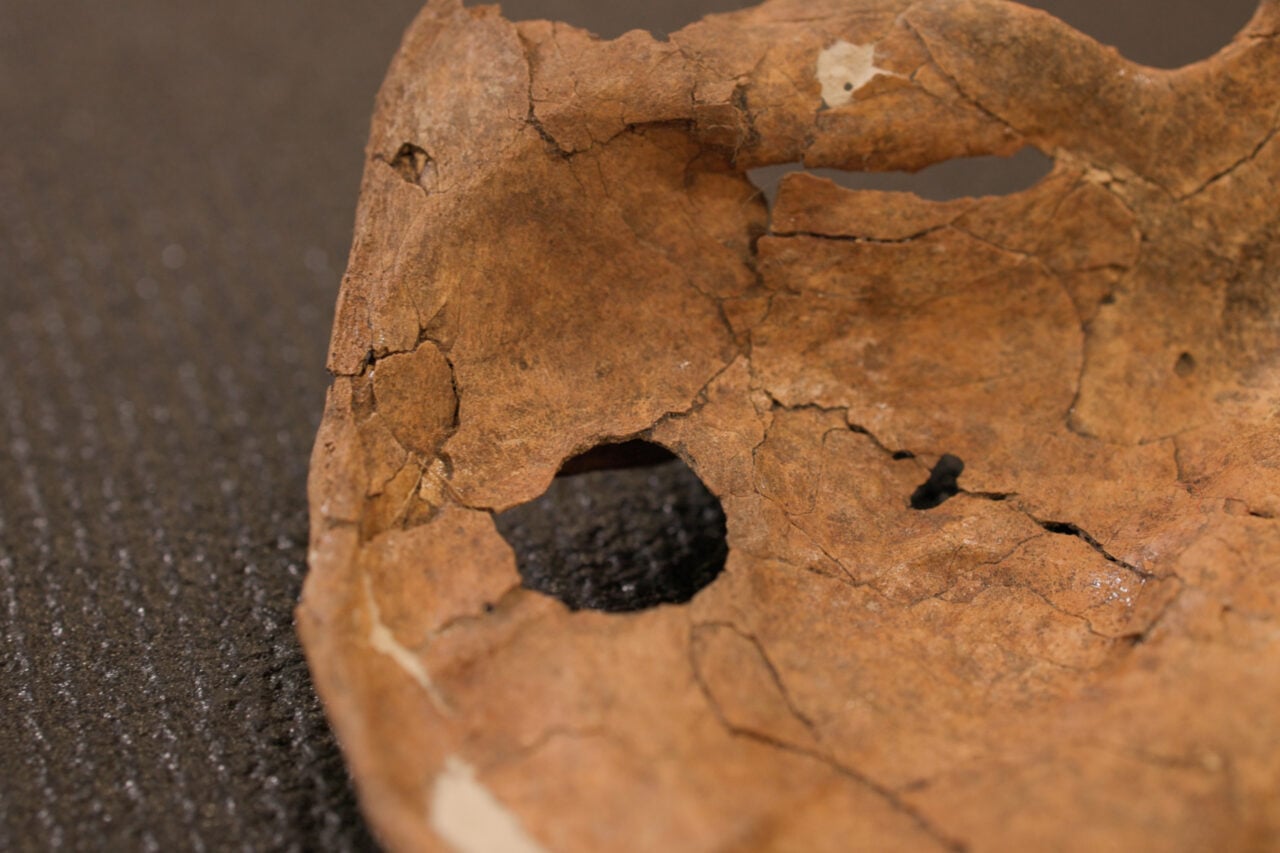
The researchers found that the way in which the bodies were processed was similar across the three sites. However, there were slight, yet significant, differences in the broader, site-specific contexts. For example, in Majolicas Cave, the bones—from about 3800 BCE—were stained red, perhaps with cinnabar, a mineral associated with ritual and mortuary practices. The sample dates from Carigüela indicated there were recurring episodes of cannibalism during the Neolithic. It was at Carigüela that the team also identified very unusual skeletons, such as a cup-like object forged from a human skull.

Then there were the remains from Malalmuerzo Cave, dated to 5000 BCE. These fractures pointed to “violent deaths,” Rodríguez-Hidalgo explained. “In addition, our analyses indicate the presence of remains from all age groups, which would suggest a violent event in which all or almost all the individuals in a group were killed and subsequently consumed.”
Gruesome patterns

That said, the team noted in the statement that although the findings are consistent with other known patterns of cannibalism in the European Neolithic, the “ultimate reason” for this pattern is still up for debate. For now, it’s difficult to ascertain whether these episodes shared a common cause, the team concluded.
But the trend could reflect “changes in social organization, intergroup relations, and attitudes towards death and violence,” added Palmira Saladié, the study’s first author and an archaeologist at the Catalan Institute of Human Paleoecology and Social Evolution.
Indeed, the Neolithic was a turning point in prehistory and the final era of the Stone Age. It was also during this time that modern humans, Homo sapiens, became the sole human species on Earth. So it makes sense that the human race began to see significant cultural and societal shifts—including the changes with grim implications.