Six years after NASA’s OSIRIS-REx spacecraft reached out and snagged a sample from the asteroid Bennu, scientists may finally have an answer to a fundamental question: Where did this ancient space rock come from?
A new study traces Bennu’s history to a region near the boundary between the inner and outer solar system—a finding that offers a rare glimpse into the chaotic environment where the planets were taking shape billions of years ago. By reconstructing Bennu’s journey through the early solar system, researchers can begin to piece together how material from different regions mixed and moved as planets like Earth formed.
“Bennu may offer our best glimpse of the original mix of chemical elements from which the terrestrial planets were ultimately built,” Maria Schönbächler, professor of isotope geochemistry at ETH Zurich and lead author of the study published in Science Advances, said in a statement.
Hot and cold
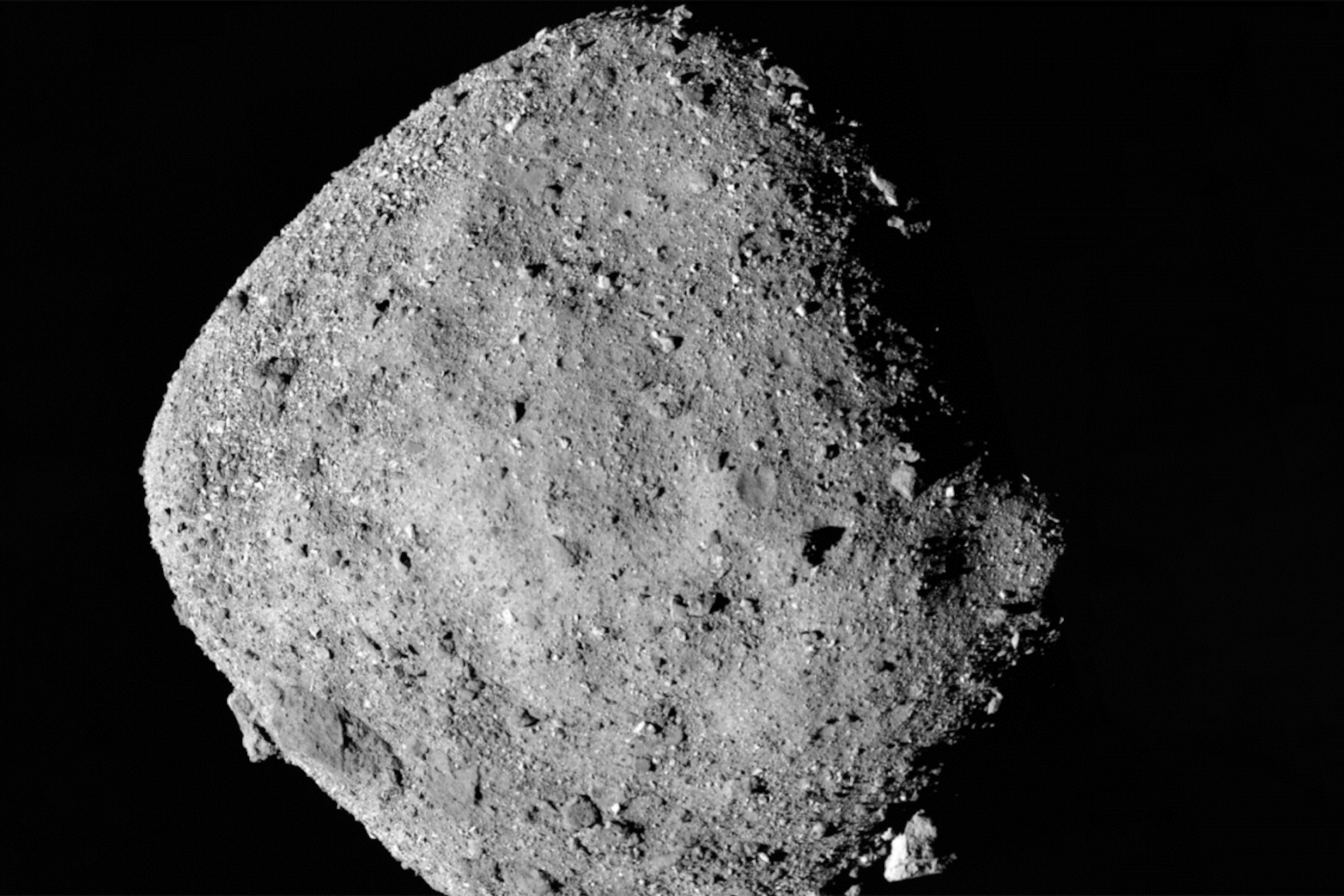
Bennu is a small, near-Earth asteroid that makes a close pass to Earth every six years or so. Scientists believe Bennu might have broken off from a much larger carbon-rich asteroid about 700 million to 2 billion years ago and drifted much closer to Earth since then.
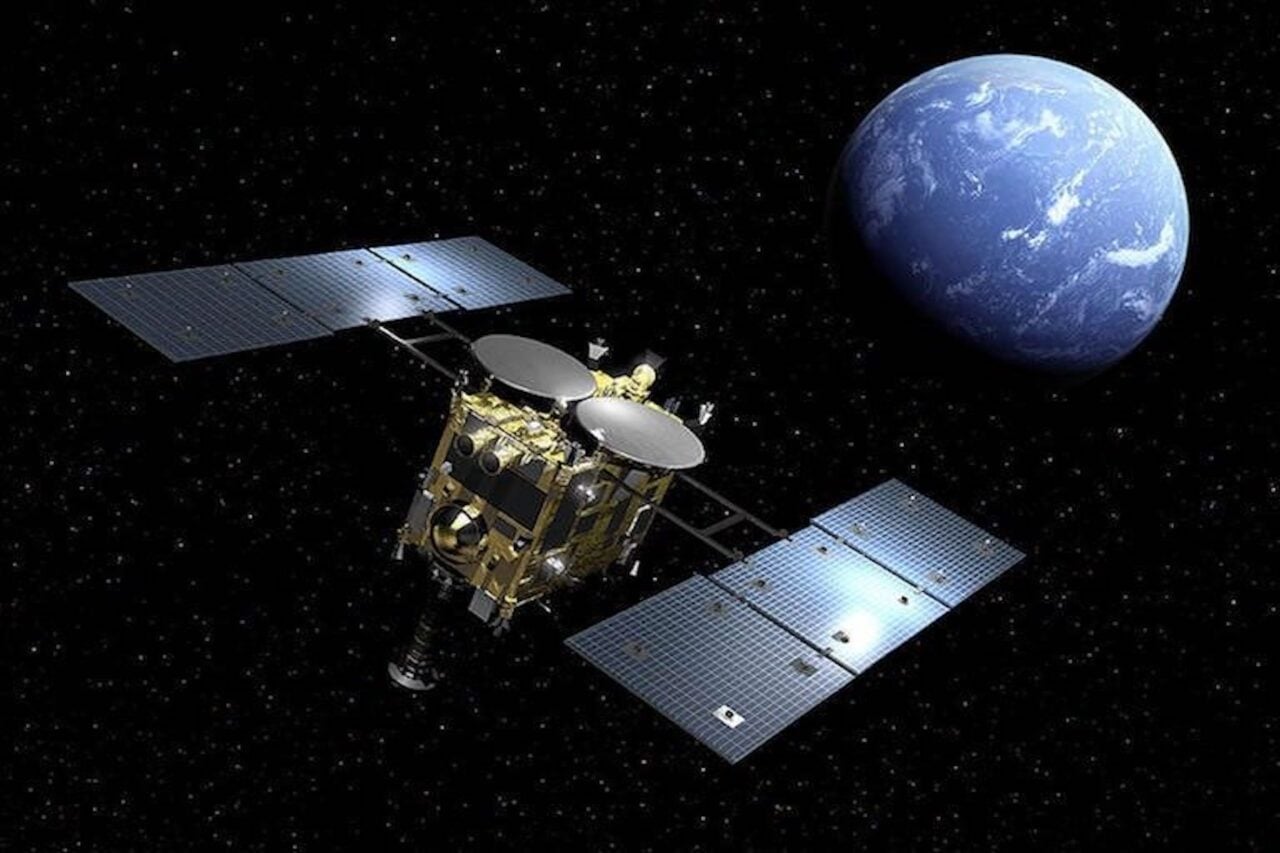
NASA selected Bennu as the target of its OSIRIS-REx mission. In October 2020, the spacecraft briefly touched the asteroid’s surface and snagged a rocky sample in October 2020. The spacecraft dropped off around 120 grams of material from the asteroid in the Utah desert on September 24, 2023, and half a gram was sent to a team at ETH Zurich for analysis.
After years of probing a tiny chunk of Bennu, the team was able to identify the birthplace of the asteroid. By analyzing the chemical fingerprint of Bennu’s minerals, the researchers found that the asteroid formed near the water-ice line in the solar system.
This boundary in the solar system’s planet-forming disc marks the point at which temperatures were too cold for water vapor and the water instead froze as solid ice grains. Inside the water-ice line (also known as the snow line), temperatures were too high for water to condense, forming smaller terrestrial planets like Mercury, Venus, Earth, and Mars.
Bennu likely formed in a specific zone where material from both zones flows in, according to the new study. “Bennu is a hybrid: the material does not clearly match either the inner or the outer Solar System,” Schönbächler said.
In the mix
Scientists had previously assumed that asteroids like Bennu formed in the outer reaches of the solar system, possibly the same region where comets form. The new study, however, contradicts this idea and also suggests that the asteroid likely formed early on in the evolution of the solar system.
Jupiter also likely played a role in Bennu’s formation, according to the researchers. The gas giant formed at a relatively early stage, about one million years after the birth of the Sun, and is positioned roughly around the same area where the water-ice line lies. As it grew, Jupiter acted as a bridge pillar, blocking heavier, coarse clumps of dust while allowing finer dust grains to flow around it, eventually mixing into the zone where Bennu formed.
That would also explain why the material from which Bennu formed is similar to that of the Sun in terms of its chemical composition. The fine dust orbiting in the planet-forming disc around the Sun was stirred up over time, with some of it ending up in asteroids like Bennu.