Margherita Bassi is a freelance journalist and trilingual storyteller. Besides Gizmodo, her work has appeared in publications including BBC Travel, Smithsonian Magazine, Discover Magazine, Live Science, Atlas Obscura, and Hidden Compass.
Follow Margherita Bassi
It's difficult to detect microscopic lifeforms, even with advanced techniques—now there might be a solution.
The team behind a new study says the difference may be due to sexual selection.
Strange wear marks on the teeth of Paleolithic people in Central Europe have long puzzled scientists, but new research may finally reveal the cause.
The Bronze Age footprints stand as a dark omen of the Roman-era disaster—one that clearly went unnoticed through centuries of human activity.
Brain implants, made from small clusters of brain cells, could help restore neural pathways damaged by Parkinson’s disease.
Mysterious little red dots threatened to overhaul modern cosmology—but new research may have solved the celestial conundrum.
The record-breaking spacewalk set a new women's record for total spacewalking time and saw the astronauts finally remove faulty radio communications hardware, among other tasks.
Suzetrigine prevents pain signals from reaching the brain and doesn't give an opioid-like high, making it non-addictive—but it's expensive.
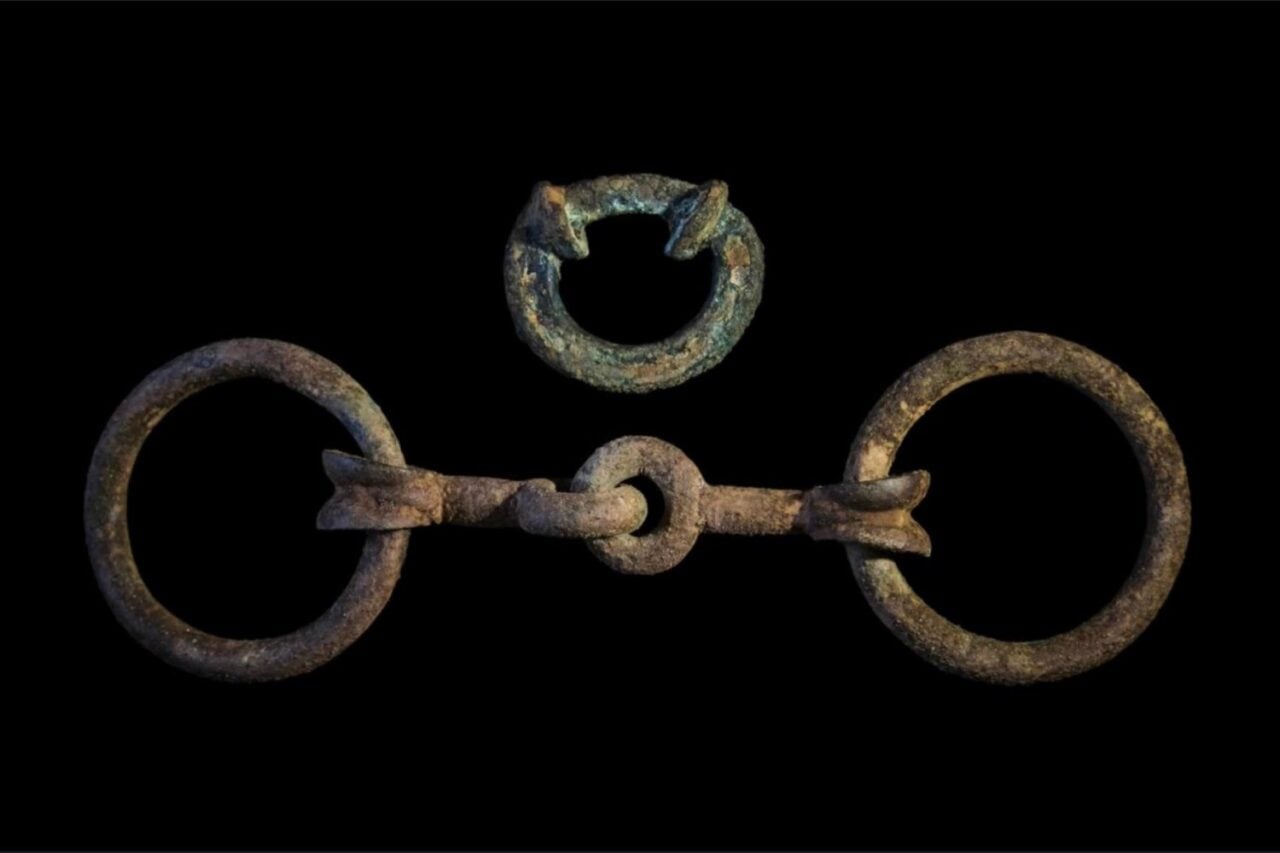
Despite its diminutive size, the artifact once featured a working lock mechanism.
Evolution has largely deprived us of our ability to swivel our ears, but those vestigial muscles still activate when we listen intently, according to new research.
While scratching worsens inflammations, it also protects us from some infections, as new research suggests.
One of King Harold's manors appears twice in the famous Bayeux Tapestry, but only 948 years later have researchers finally identified the building's remains.
A newly-studied ancient papyrus is so detailed it could be an episode of Law & Order, Roman style.
The artifact emerged from the ruins of an ancient Roman building-turned-workshop in Sicily from the second or first century BCE.
Rudiger Koch spent around four months in a 322.9-square-foot capsule 36 feet below the surface of the water.
Researchers put a sensor at the entrance of beehives to register each time the pollinators entered or exited, and how long they were gone.
Researchers identified geological features that point to a single massive flooding event that refilled the Mediterranean Sea 5.33 million years ago
The discovery of this ancient synthetic pigment highlights the impressive artistry of Rome’s imperial era.
If the giant A23a grounds near South Georgia, it could endanger the island's penguins and seals.
The energy flare came from an old galaxy, upending prevailing theories about the source of fast radio bursts.