The thorny puzzle of how to store nuclear waste that will pose a danger to humanity for at least the next 10,000 years has historically been the kind of thing that governments turn to science fiction to help solve. Back in the 1980s, for example, the Department of Energy (DOE) considered burying spent radioactive fuel within eldritch concrete monuments—isolated foreboding structures built to last as long as Stonehenge, with ominous pictograms and even a new cross-cultural mythology inspired by the ideas of Isaac Asimov and Arsen Darnay.
That was then. Today Texas regulators are letting the oil and gas industry take a crack at it.
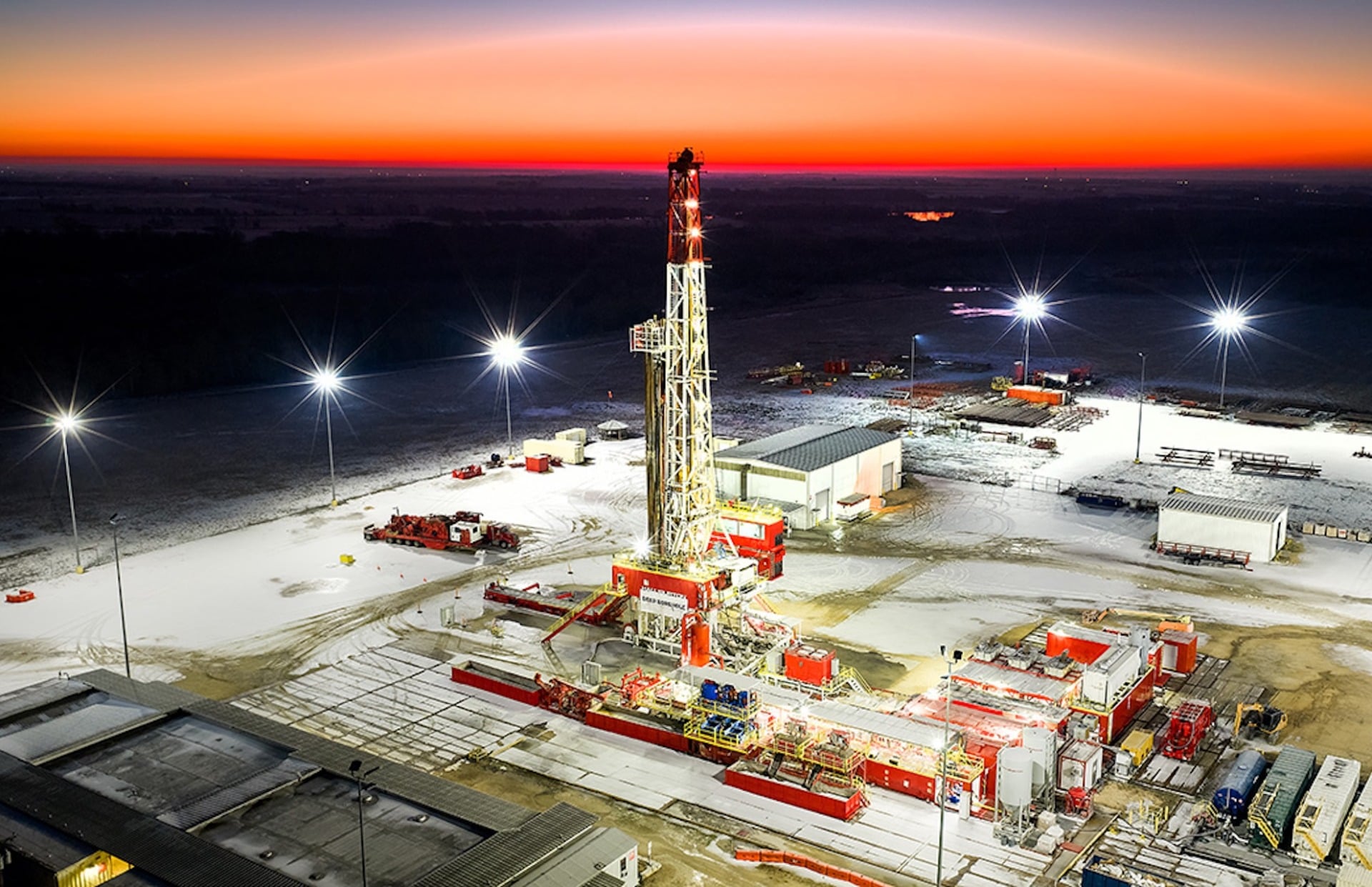
The Texas Railroad Commission has approved a permit for the startup Deep Isolation and its partners—including global war on terror alumnus Halliburton—to test its plan to quarantine thin canisters of nuclear waste via narrow boreholes drilled deep underground. According to a statement from Deep Isolation, Halliburton will lend its “subsurface, drilling, and well-construction expertise” to the project: a non-nuclear feasibility test that will excavate its borehole roughly 0.75 to 2 miles (1 to 3 kilometers) deep below Cameron, Texas, near Austin.
True to its name, Deep Isolation’s hope is to reach geologically stable layers of bedrock far removed from any contact with active aquifers of potable drinking water. Once down there, the plan is to (sometimes) drill sideways.
“We can go twice as deep as a typical [nuclear waste] repository, and then follow a formation that’s been out of touch with the surface for a million years,” as Deep Isolation’s CEO Rod Baltzer told Fortune this August. “Everybody in oil and gas was like, ‘We do this every day,’ […] And everybody in nuclear went, ‘Holy cow, I did not know you could do this and retrieve it. That’s amazing.’”
Lateral moves
Right now, the United States is already dealing with over 100,310 U.S. tons of spent nuclear fuel—waste stored at 94 nuclear power plants across the country and in sore need of a safer resting place. Even without considering the panoply of tech industry schemes for scaling up nuclear power to satisfy its vast AI data-center ambitions, the nation’s energy grid adds about 2,204 to 2,425 more U.S. tons of nuclear waste to the pile each year.
So, it’s the kind of swelling problem that a good, efficient solution would be really nice for, whether or not the ghost of Halliburton’s dearly departed former CEO Dick Cheney is smiling over it.
Deep Isolation says that each roughly 0.9-mile (1.5-kilometer) long “horizontal borehole repository” it plans to drill will be capable of storing six years’ worth of nuclear waste from a steam-powered reactor and 10 years’ worth of waste from a pressurized water reactor. These deep horizontal zones, the company noted, will follow after a gentle curved zone, depositing nuclear waste canisters end-to-end so that there is no risk of “stacking pressures.”
A deep bench
Fortunately, Deep Isolation and Halliburton aren’t working on this alone. Deep Isolation has marshaled an international research team of nuclear experts under the nonprofit Deep Borehole Demonstration Center to help plan and execute its pilot program in Texas. And the firm’s “universal canister system” for the transport and storage of nuclear waste was built in collaboration with the University of California–Berkeley, Lawrence Berkeley National Laboratory, and NAC International with DOE funding.
“Receipt of this permit is a major milestone,” Deep Isolation’s executive vice president of engineering, Jesse Sloane, said in a statement. “Reaching this point reflects a tremendous amount of rigorous, high-quality work by our team and our project collaborators.”
As propitious as that might sound, however, there’s still a small legal matter: No federally approved place to bury any of this waste currently exists anywhere in the U.S. right now. Despite progress identifying prospective sites, it might be time to go back and ask some nice science fiction writers for their own ideas on how this all might become politically feasible.