As if the U.S. grids weren’t stressed enough, AI data centers threaten to overwhelm them further with their massive energy demands. To address these challenges, researchers in Utah are entertaining the viability of microreactors—smaller, often portable fission reactors—for powering AI data centers with high energy demands.
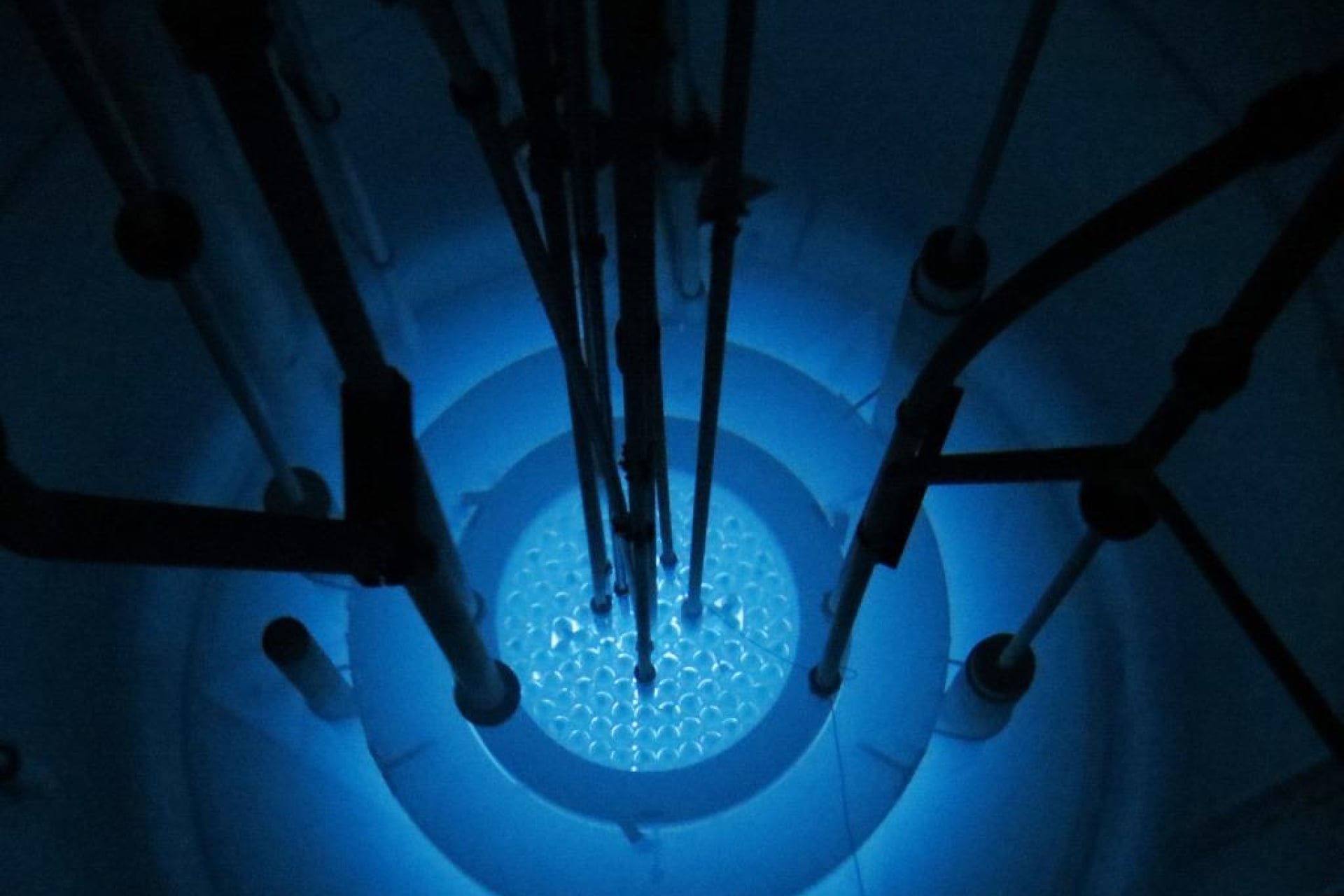
For now, the project is at a proof-of-concept stage. This summer, the University of Utah in collaboration with energy company Elemental Nuclear will repurpose its TRIGA nuclear reactor to power a mini AI data center. According to an institutional statement on the initiative, a novel power generator attached to the university’s reactor will capture thermal energy to generate around 2 to 3 kilowatts of electricity to power a live AI workload.
Strictly speaking, this is far less than the hundreds of megawatts of energy full-scale data centers require. However, the team anticipates that the demonstration will illuminate whether smaller reactors—such as nuclear reactors used for academic research—can generate electricity for AI operations.
“This will be, to our knowledge, the first time any university reactor has produced electricity, not just our own,” reactor manager Ted Goodell said in the release. “It’s a milestone for our students, but it also shows that small, safe reactors could live at data centers, rather than in labs.”
Reactors of modest portions
TRIGA reactors are nuclear fission reactors built specifically for academic research and were designed and developed by General Atomics. According to the International Atomic Energy Agency, research reactors are meant for scientific investigations, development, education, and training. As a result, these instruments are “basically neutron factories” and take on much smaller sizes, according to the World Nuclear Association (WNA).
That said, research reactors are not quite the same as microreactors, which are smaller but fully functional with regard to energy production. Of course, microreactors produce less energy compared to full-sized plants, but the goal of microreactors is to be a portable and reliable energy source for remote locations or military bases. But stakeholders still have much to work out before microreactors can be deployed at commercial scales.
Building bridges
As a proof of concept, the upcoming experiment leverages the characteristics of research reactors to test how and whether nuclear energy generation for AI can be simplified. The power generator developed by Elemental Nuclear captures thermal energy from the TRIGA reactor. Normally, this heat is dissipated by cooling systems, but the new system instead converts it into electricity.
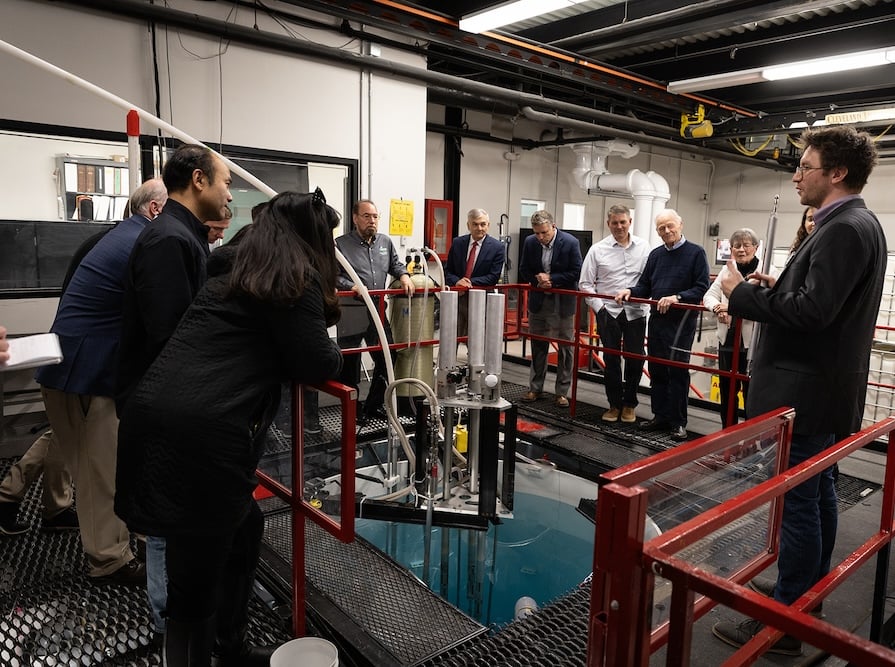
The electrical output produced in the process will then support a high-performance GPU node executing a live AI workload managed by the university’s computational experts. Compared to real-life scales of both reactors and data centers, the project’s scales are of a modest size. But if the team can pull this off, it would give them more confidence in future projects to design and deploy actual microreactors for data centers.
“This project is intended to demonstrate a powerful principle,” said Elemental Nuclear founder Mike Luther. “The energy produced through nuclear fission can ultimately power the computational systems driving artificial intelligence.”
Again, it’ll be a while until microreactors come to electrical grids. Even then, stakeholders will continue to ponder the pros and cons of microreactors. Needless to say, the AI industry also has a lot to reckon with. The project might not end up finding a perfect answer for either, but it’s a meaningful venture that could alleviate some impending problems, even if it’s by a small amount.