More than a year after it became evident that Sam Bankman-Fried was positioning himself for clemency, the former FTX founder and CEO has submitted a formal application for a presidential pardon. Records on the U.S. Department of Justice (DOJ) website confirm the filing. Bankman-Fried previously received a 25-year prison sentence in March 2024 after his conviction on charges tied to the roughly $9 billion November 2022 collapse of the crypto exchange he built and operated.
According to Bloomberg, Bankman-Fried submitted the request to the Justice Department’s Pardon Attorney’s Office and specifically asked for a “pardon after completion of sentence.” He filed from a low-security federal prison in California while his appeal of the conviction and sentence remains pending before the federal appeals court in New York. A decision in that case could come at any time.
It’s currently unclear as to why Bankman-Fried requested a “pardon after completion of sentence” instead of seeking immediate clemency. That type of pardon is more commonly sought by people who have already finished serving their sentences and want to restore certain rights or remove the stigma of a conviction.
In a phone interview with Fox Business on Monday, Bankman-Fried addressed the question directly. When asked whether he wanted a pardon from the White House, he said, “Absolutely. It would be obviously, you know, ultimately up to the president, not up to me.”
Bankman-Fried has spent more than a year seemingly laying the groundwork for the pardon request. In early 2025, he gave a jailhouse interview to Tucker Carlson in which he said he did not view himself as a criminal and voiced support for Republican positions. He described his prosecution as the product of “Biden’s lawfare machine.” The interview aired without approval from the Bureau of Prisons; afterward, Bankman-Fried was placed in solitary confinement at the Metropolitan Detention Center in Brooklyn. His parents had already begun exploring clemency routes and consulted a lawyer who had worked on Donald Trump’s presidential campaigns.
It's not just people who want to pay you in crypto, increasingly it's AI agents.
Crypto is the future of AI-native payments.
And @realDonaldTrump is the first president to see the national statregic potential of both crypto and AI. https://t.co/ROArUnx1Lf
— SBF (@SBF_FTX) March 29, 2026
On X, Bankman-Fried (or whoever is running his account) has attempted to rewrite history and push blame away from himself and towards those involved with the FTX bankruptcy proceedings. More recently, posts from his account have praised Trump’s handling of everything from Iran to artificial intelligence.
In April, Bankman-Fried had a motion for a new trial rejected. He had argued that new evidence would show that the Chapter 11 filing had destroyed sources of hidden liquidity that could have made customers whole. Judge Lewis Kaplan found the claims baseless and noted that the filing appeared aimed at improving Bankman-Fried’s public image rather than presenting a valid legal basis for retrial.
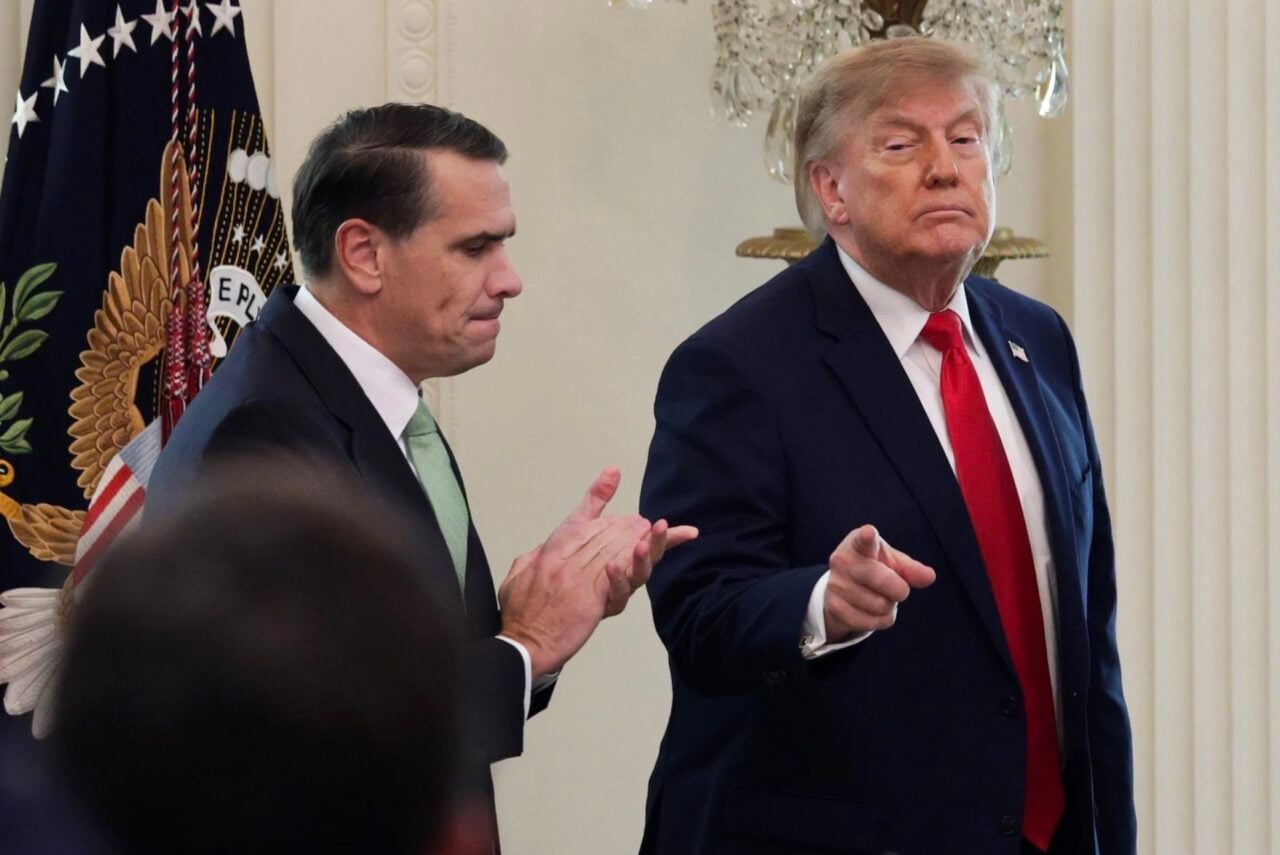
Trump himself has shown no interest in granting a pardon. In a January 2026 interview with the New York Times, he said he doesn’t plan to pardon Bankman-Fried and grouped him with other figures, including ousted Venezuelan leader Nicolás Maduro, who would not receive clemency. White House spokespeople have since referred back to those remarks whenever asked about the latest application.
Trump’s handling of other crypto-related clemency cases has drawn criticism from within the Justice Department’s former ranks. Elizabeth Oyer, who previously served as the department’s pardon chief, described the pardon of Binance founder Changpeng Zhao as unprecedented corruption. Zhao had pleaded guilty to charges involving relaxed anti-money laundering standards at the exchange rather than the direct customer-funds fraud that defined the FTX case. Oyer stated, “This is absolutely not justice. This is corruption.” The decision attracted additional scrutiny because of reported business ties between Binance and the Trump-linked crypto venture World Liberty Financial.
A separate case has fueled criticism that clemency decisions may be influenced by applicants’ proximity to Trump and his business interests. Developers of the privacy-focused bitcoin wallet Samourai Wallet, Keonne Rodriguez and William Lonergan Hill, are currently serving prison sentences after convictions tied to operating the Samourai Wallet bitcoin-mixing service, which prosecutors said transmitted hundreds of millions of dollars in criminal proceeds. Rodriguez received five years; Hill received four. Notably, the pair has no business relationship with the Trump family or its affiliated crypto projects.
World Liberty Financial also recently engaged in a maneuver that echoes one of the practices that helped bring down FTX in 2022. The project’s treasury used roughly five billion WLFI governance tokens as collateral to borrow approximately $75 million in stablecoins from the Dolomite lending protocol. The arrangement has drawn comparisons to the way Alameda Research borrowed billions against FTX’s native FTT token on the exchange itself, creating self-referential leverage that remained hidden until the collapse. World Liberty Financial has dismissed the concerns as market noise and said its position remains far from any liquidation risk.
In the years since the FTX bankruptcy filing, the bankruptcy process has provided for customer recoveries based on the U.S. dollar value of holdings at the time of the bankruptcy filing. However, those customers potentially missed out on the substantial crypto gains that followed the period when FTX’s failure marked a low point for the broader market.