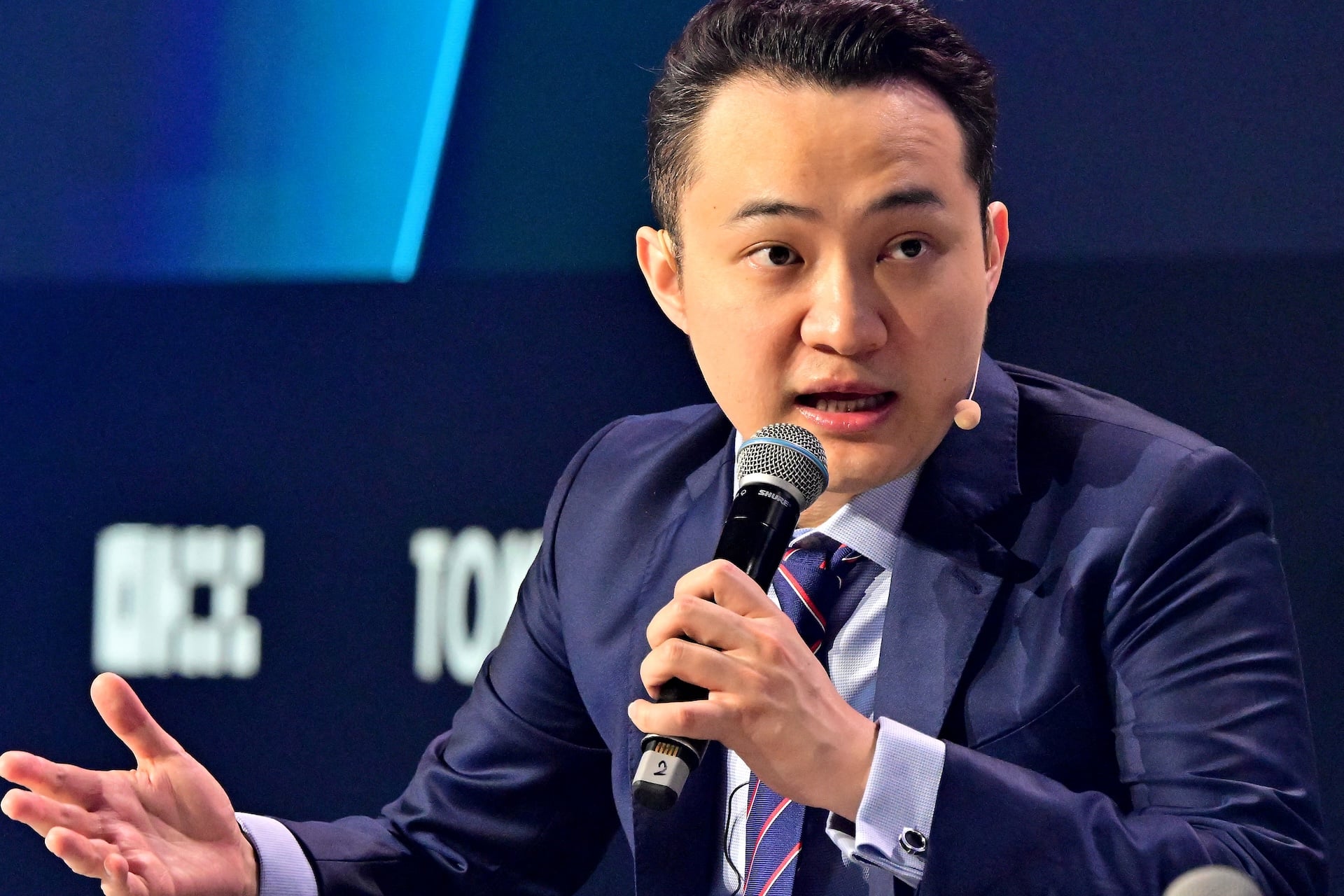
Tron founder and crypto investor Justin Sun has accused Trump-affiliated World Liberty Financial of misconduct and a general lack of transparency. The early backer of the project previously sat at the heart of pay-to-play allegations involving the Trump administration’s SEC, fueled by his large investments in World Liberty Financial and the TRUMP memecoin.
Sun has zeroed in on two key issues with the project. The first is a backdoor blacklisting function built into the WLFI smart contract that lets the team freeze any holder’s tokens without notice or explanation. The second is a roughly $75 million loan the project’s treasury recently took out by pledging about five billion WLFI governance tokens as collateral on its affiliated DeFi platform Dolomite. The borrowing arrangement has drawn direct comparisons to the way Alameda Research borrowed against FTX’s proprietary FTT token ahead of the exchange’s collapse and eventual bankruptcy.
I have always been an ardent supporter of President Trump and his crypto friendly policy.
As an early supporter who invested heavily in World Liberty Financial, I did so because I believed in the vision that was presented to the public: a decentralized finance platform that…
— H.E. Justin Sun 👨🚀 🌞 (@justinsuntron) April 12, 2026
Sun has called himself the “first and single largest victim” of World Liberty Financial. In September of last year the project blacklisted roughly 545 million of his WLFI tokens after he transferred about $9 million worth amid heavy selling pressure. At the time, Sun posted publicly on X, insisting he was innocent and demanding the tokens be released. In response, World Liberty Financial posted on X, “We do not seek to blacklist anyone. We respond when alerted to malicious or high-risk activity that could harm community members.”
“I denounce the ongoing token scandals by the bad actors at WLFI . . . Every action taken by the WLFI team to extract fees from users, to secretly implant backdoor controls over user assets, to freeze investor funds without disclosure or due process, and to treat the crypto community as a personal ATM — all of these actions are illegitimate and were never authorized by any fair, transparent, or good-faith community governance process,” Sun wrote.
World Liberty Financial has mocked Sun and disputed his claims on X. “Does anyone still believe @justinsuntron?,” asked their X account. “We have the contracts. We have the evidence. We have the truth. See you in court pal.”
Does anyone still believe @justinsuntron ?
Justin’s favorite move is playing the victim while making baseless allegations to cover up his own misconduct.
Same playbook, different target. WLFI isn't the first.
We have the contracts. We have the evidence. We have the truth.
See…
— WLFI (@worldlibertyfi) April 12, 2026
Notably, previous charges against Sun and his companies were settled last month. The long-running SEC case accused him of wash-trading TRX tokens and conducting unregistered securities offerings, among other allegations. In the end, Rainberry, which is one of Sun’s entities, paid a $10 million fine with no admission of wrongdoing. Democrats on the House Financial Services Committee previously highlighted the absence of a conviction in a letter to the SEC, tying it to perceptions of pay-to-play because Sun had put at least $75 million into Trump-linked projects. Sun has now taken a far more defiant and adversarial public stance against World Liberty Financial since the case was resolved.
Of course, Sun is not the only major figure connected to the controversy. Binance, under former CEO Changpeng Zhao (CZ), holds roughly $2 billion in World Liberty Financial’s USD1 stablecoin, a position expected to generate tens of millions in annual revenue for the Trump-affiliated project. Trump pardoned CZ after his short prison stint for anti-money laundering failures at Binance. By contrast, the two developers behind the Samourai Wallet Bitcoin privacy app remain in prison serving multi-year sentences for comparable charges involving money laundering facilitation.
A firm tied to UAE National Security Adviser Sheikh Tahnoon bin Zayed Al Nahyan also committed $500 million to World Liberty Financial days before Trump was inaugurated, taking a 49% stake and sending $187 million to Trump family entities. Months later the UAE secured approval to buy hundreds of thousands of restricted Nvidia AI chips for Sheikh Tahnoon’s G42 company.
The wave of alleged grifting and potential conflicts of interest around the Trump administration’s crypto dealings has possibly dulled the pro-bitcoin tailwind many in the industry anticipated. According to one report, Trump-linked ventures pulled in roughly $1.4 billion in 2025, much of it from memecoins, stablecoins, and tokenization plays rather than Bitcoin itself.
There is an opportunity for the Trump administration to still make good with Bitcoin purists via the finalization of regulatory clarity via the CLARITY Act. However, policy groups such as Coin Center and the Bitcoin Policy Institute have warned that developer protections in the CLARITY Act must not be removed before the bill reaches a vote, as it would leave builders exposed to legal risk and potentially push this activity offshore.