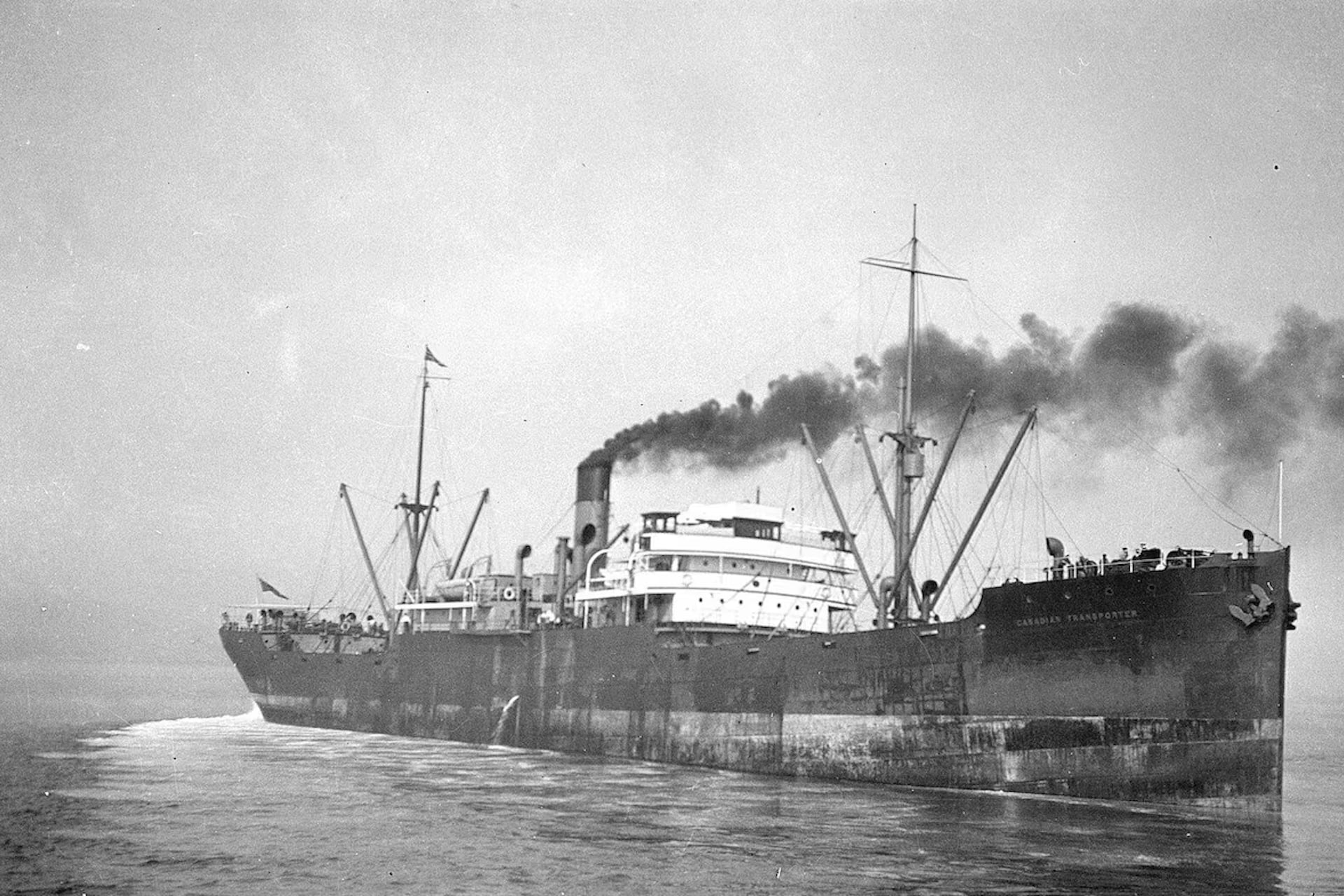
The SS Cornwallis had already been sunk once before. In September 1942, the 400-foot-long (120-meter-long), 5,458-ton merchant steamer had been torpedoed near Barbados. But there was a war on, and so, after refloating and repairs, the Cornwallis once again departed Barbados bound north, ferrying bags of sugar and barrels of molasses—until a German U-boat sank the unlucky cargo ship for the second and final time.
The final resting place of the SS Cornwallis, as well as the bodies of the 43 crew members who lost their lives in this fatal December 3, 1944 torpedo strike, had remained a mystery for over 80 years. All that was known for sure was that the merchant vessel had been sunk somewhere off the coast of Maine. But, after seven years of searching, self-funded technical divers with the volunteer Nomad Exploration Team say they have discovered the World War II-era wreck about 400 feet (122 m) under the Atlantic, near Maine’s lonely lighthouse island, Mount Desert Rock, roughly 25 miles (40 kilometers) off the mainland.
“Very quickly we discovered why it had not been found,” one of the discovery team’s divers, Danny Allan, explained in a YouTube video update. “First of all, freezing water. I think we were diving up there earlier this year and I think the warmest I saw was 42 degrees [Fahrenheit, or about 6 degrees Celsius] on the bottom.”
“Secondly, the currents are ripping up there,” Allan continued. “It’s just outside the Bay of Fundy … [which] has tides that go 30 to 50 feet—and actually, during the tidal pull the current is running at about 10 knots. So crazy currents. And the weather turns in a heartbeat.”
Lost in 10 minutes
Just days before it sank the Cornwallis, German submarine U-1230 had discreetly slipped two Nazi spies into the U.S. roughly 20 miles north near Hancock, Maine, in Frenchman Bay. The sinking of this merchant vessel was largely an afterthought following that infiltration effort, the lynchpin of a well-funded, two-year plan to gather technical intelligence on U.S. military shipyards and manufacturing, codenamed Operation Elster (German for “Magpie”).
According to the Nomad Exploration Team, the Canadian-operated Cornwallis sank less than 10 minutes after being struck by the sub’s torpedo. But actually locating the Cornwallis wreck was a comparatively much longer and harder operation.
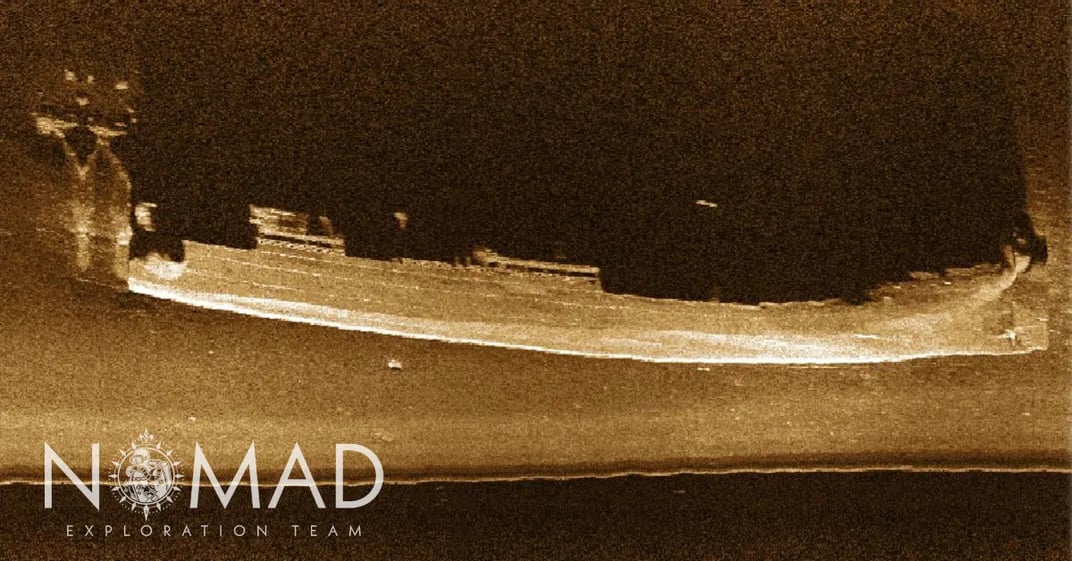
Allan and his fellow technical diver made five trips in total trying to locate the Cornwallis between 2019 and July 11, 2026, when the shipwreck was finally found. The Nomad Exploration Team had narrowed their search to three possible regions along the North Atlantic seafloor, deduced via archival research, but nevertheless wound up surveying over 50 square miles (129 sq km) of Maine’s not particularly hospitable coastal seabed via side-scan sonar.
“It’s very deep, it’s very cold, a lot of current,” as dive team member Jeff Goodreau also emphasized to the Portland Press Herald. “Pretty much the worst-case scenario as far as diving goes.”
Even when they found the Cornwallis, according to one local paper, the Nomad team needed to carefully compare it to the ship’s blueprints to positively identify the wreck as the lost steamer.
Found after 80 years
As with many of the WWII-era shipwrecks recovered in recent years, including Japanese prison vessels in the Pacific, Allan noted that he and his dive team members hope it brings some closure to the descendants of those who perished going down with the Cornwallis. Of the 48 people onboard, including seven guards operating machine guns given the wartime risks, only five managed to make it safely back to shore.
“For the team, finding the wreck was the culmination of years of persistence,” Allan said in a press statement. “For the families and communities connected to the ship, it brings renewed attention to a largely forgotten tragedy.”
The Nomad team said it plans to return to the wreck for further exploration more comfortably above water, using a remotely operated underwater vehicle.