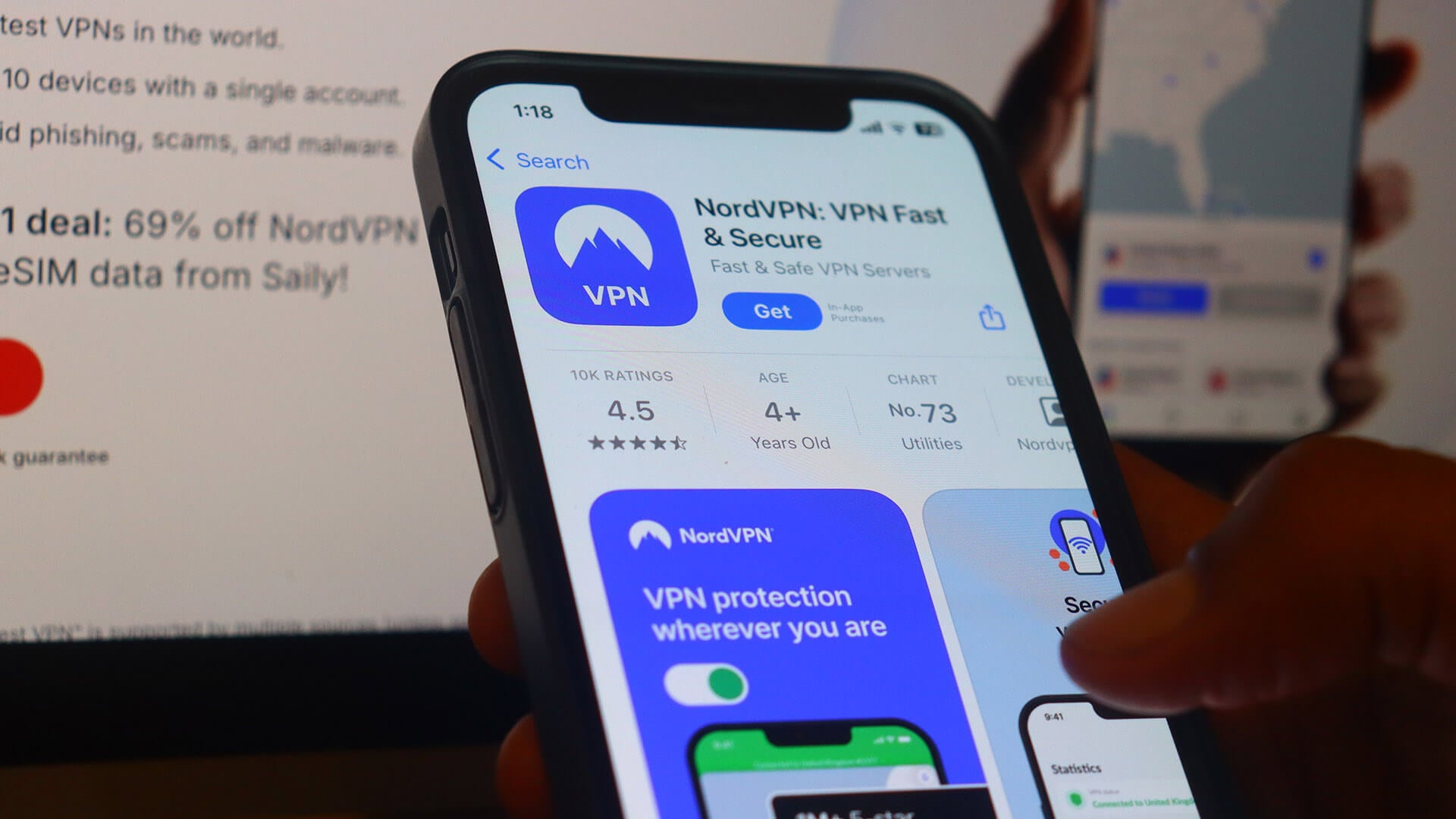
Open the battery menu on an Android phone after a day with a VPN running and the app usually sits near the top of the list, ahead of the browser, sometimes ahead of the camera. For years I read that screen the way most people do as a bill for services rendered. A report published in July by NordVPN, based on testing carried out by West Coast Labs in May 2026, argues the bill is wrong.
The lab ran four test series across six devices: three Android handsets (Samsung Galaxy S24, Galaxy S25 Ultra, Google Pixel 9) and three Apple devices (iPhone 15, iPhone 16, current iPad). The headline test was a scripted 24-hour day covering sleep, a commute, a working day and an evening at home, run once with the VPN connected throughout and once without it. The gap came to 1.4% of daily battery consumption on Android and 1.8% on iOS. Over a month of continuous use on a flagship Android phone, NordVPN says that works out to reaching for a charger about half a day earlier.
So why does the battery screen say something so different? Because of what it counts. When a VPN is on, every packet leaving the phone travels through the tunnel, and both Android and iOS attribute that traffic to the app carrying it: An hour of Netflix over a VPN gets filed under the VPN, even though the same hour without one would cost the same energy. In the streaming test, the on-device battery report attributed an average of around 49% of session power to the VPN app. Instruments wired up to measure actual current draw put the real overhead between 1.6% and 2.1%.
Twenty-five years of protocol design
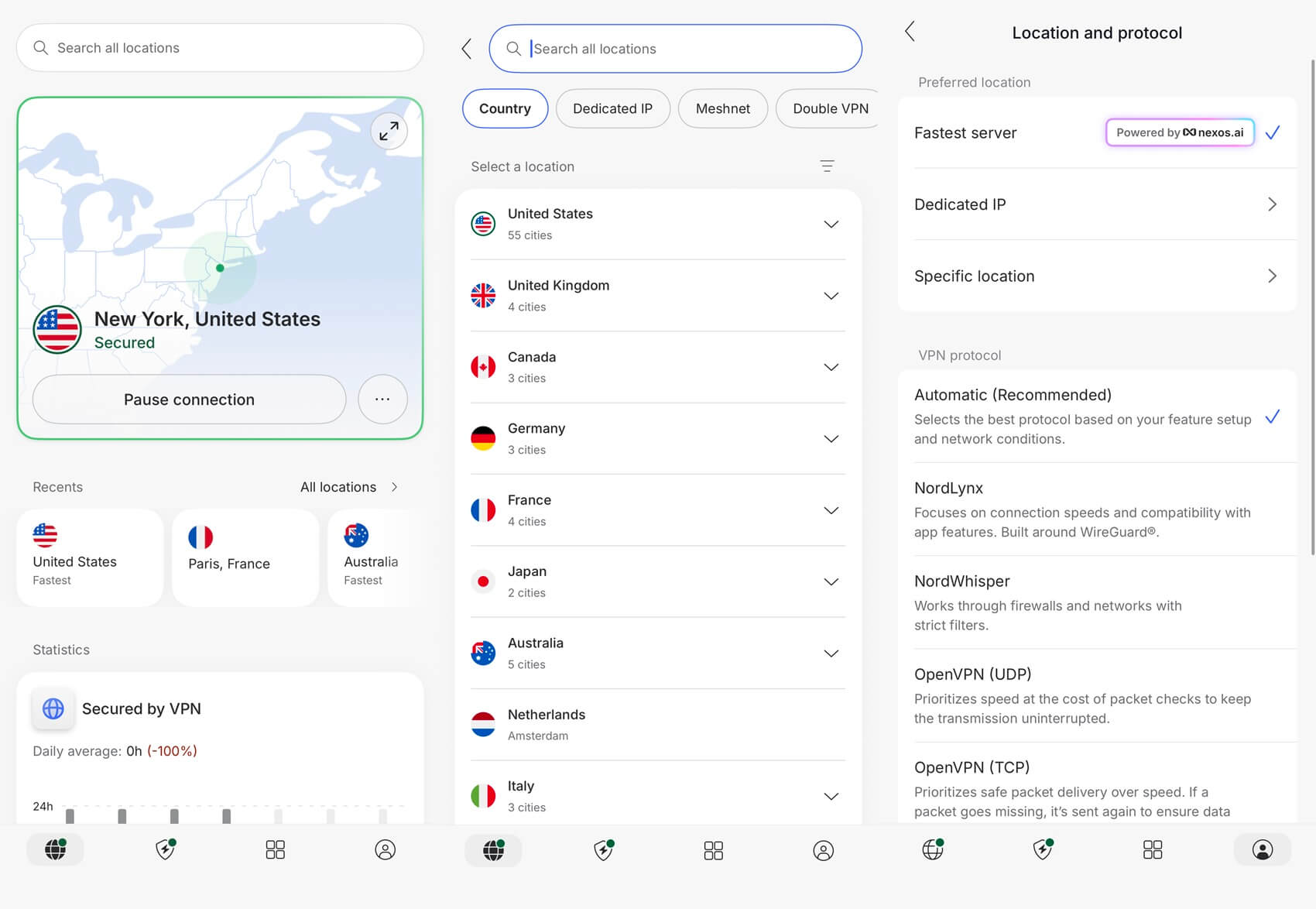
The reputation VPNs carry does have a source, and it is largely OpenVPN, a protocol released in 2001, long before anyone designed encryption around a phone battery. NordVPN, the market leader in consumer VPNs, now defaults to its own protocol, NordLynx, built on WireGuard. The same shift has reached the rest of the market, including the best free VPNs, most of which now run WireGuard by default.
West Coast Labs benchmarked the two directly: NordLynx used 31% less battery per unit of data on Android and 24% less on iOS, and held CPU usage at roughly 6% during active transfers on Android, against more than double that for OpenVPN.
The lab also went after the scenario people assume is worst, the commute, when a phone drops and reacquires connections all morning. Over a simulated two-hour trip with automated network switches roughly every nine minutes, per-transition overhead measured 5.1% on Android and 6.8% on iOS, under the 15% ceiling the test had set, and the app reconnected successfully in more than 99 of every 100 switches. With the screen off and the tunnel idle, background draw stayed below 0.5% of capacity per hour.
That last figure changed how I think about my own habits: I have spent years switching the VPN off before a long train journey and killing it whenever the battery dips into the red, on the assumption it was the expensive thing running. Going by these numbers, the tunnel was costing me a rounding error while the screen and the video I was watching did the real work.
Two things belong on the record. The study was commissioned and published by NordVPN, and it measures NordVPN’s app, so the protocol figures say nothing about the free, ad-funded VPNs that behave very differently on a phone. The attribution problem, though, sits inside Android and iOS themselves, which means it applies to whatever VPN you have installed.