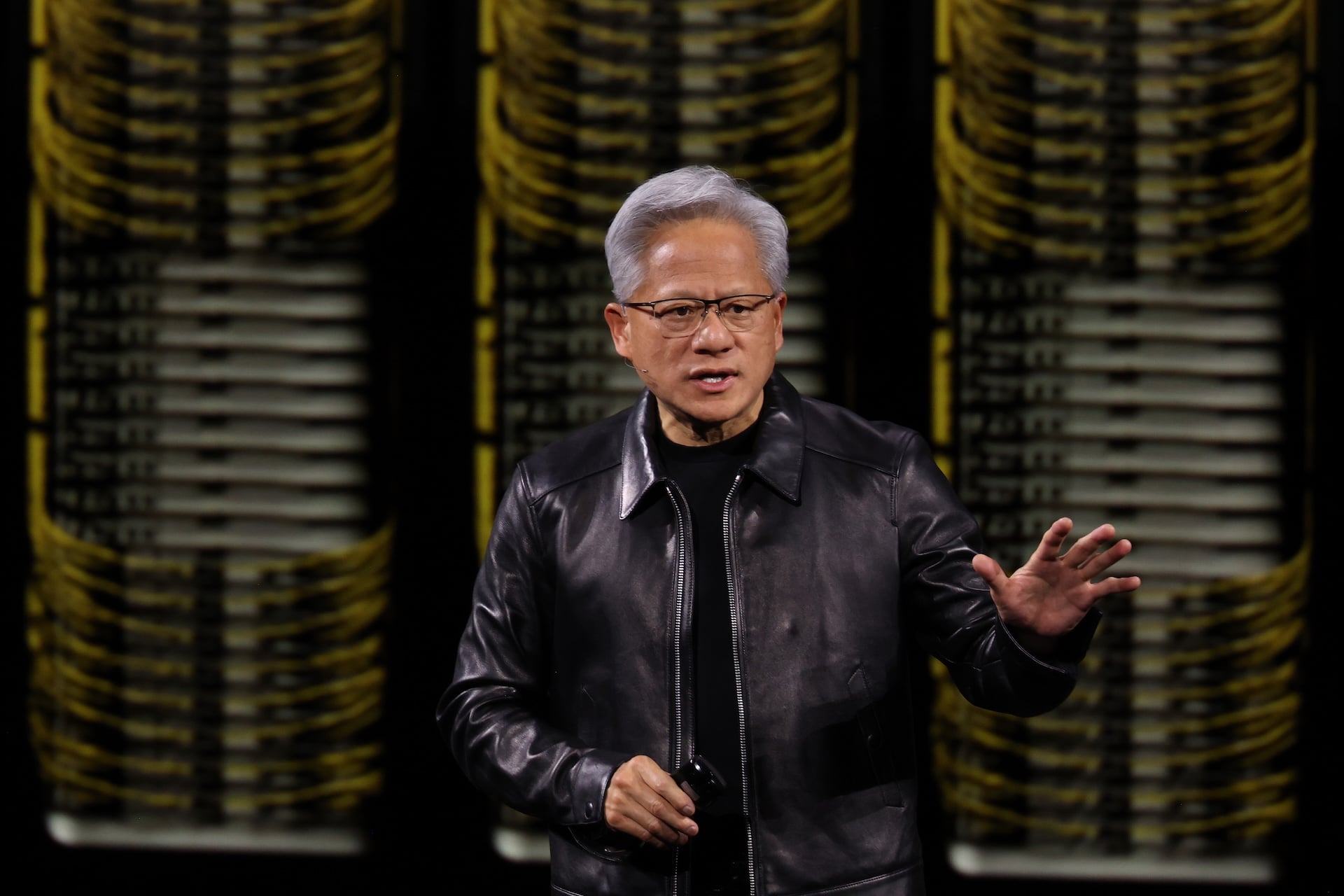
Nvidia reported $115.84 billion in revenue in its third-quarter earnings report on Tuesday evening, beating market expectations and more than doubling since last year. The company said that it forecasts revenue to continue growing to roughly $130 billion in the next quarter, without assuming any revenue from data-center compute sales in China.
The earnings results are Nvidia’s first since co-founder and former CEO Jensen Huang, who led the company for the past 33 years, resigned last week. Huang’s reputation has been battered by reports that he had engaged in three separate affairs: two with Nvidia employees, and one with a woman whose suspected ties to Chinese intelligence are under investigation by U.S. authorities.
Chief financial officer Colette Kress stepped in as interim CEO while the board finds Huang’s successor, even though a group of employees, fellow tech chiefs, President Trump, and even Huang himself have expressed a desire to see the disgraced CEO reinstated. According to a recent Reuters report, Kress clashed with Huang over some of Nvidia’s aggressive financing decisions, which fed the circular-dealmaking accusations the company has spent much of the last year trying to refute.
Nvidia’s financial results have repercussions for the entire AI industry. As the chief infrastructure supplier of the AI industry, the chipmaker sits atop a precarious web of dealmaking that some experts have deemed to be circular. Through several multibillion-dollar deals with the top companies across the AI industry like OpenAI and the soon-to-IPO Anthropic, Nvidia’s role in the AI buildout has evolved from the infrastructure provider to one of its biggest financiers. Critics say that creates financial dependencies, meaning that if one company or particular deal in this tight-knit system goes down, it could create a domino effect with possibly catastrophic consequences for the market.
Nvidia’s financial results have repercussions for the entire AI industry. As the chief infrastructure supplier of the AI industry, the chipmaker sits atop a precarious web of dealmaking that some experts have deemed to be circular. Through several multibillion-dollar deals with top companies across the AI industry like OpenAI and the soon-to-IPO Anthropic, Nvidia’s role in the AI buildout has evolved from infrastructure provider to one of its biggest financiers. Critics warn that these arrangements create financial dependencies, raising the possibility that trouble at one major company or the collapse of a significant deal could ripple through the industry, with potentially serious consequences for the broader market.

At the time of publication, Nvidia shares were up roughly 2% in after-hours trading.
This is a breaking news story and will be updated with further developments…