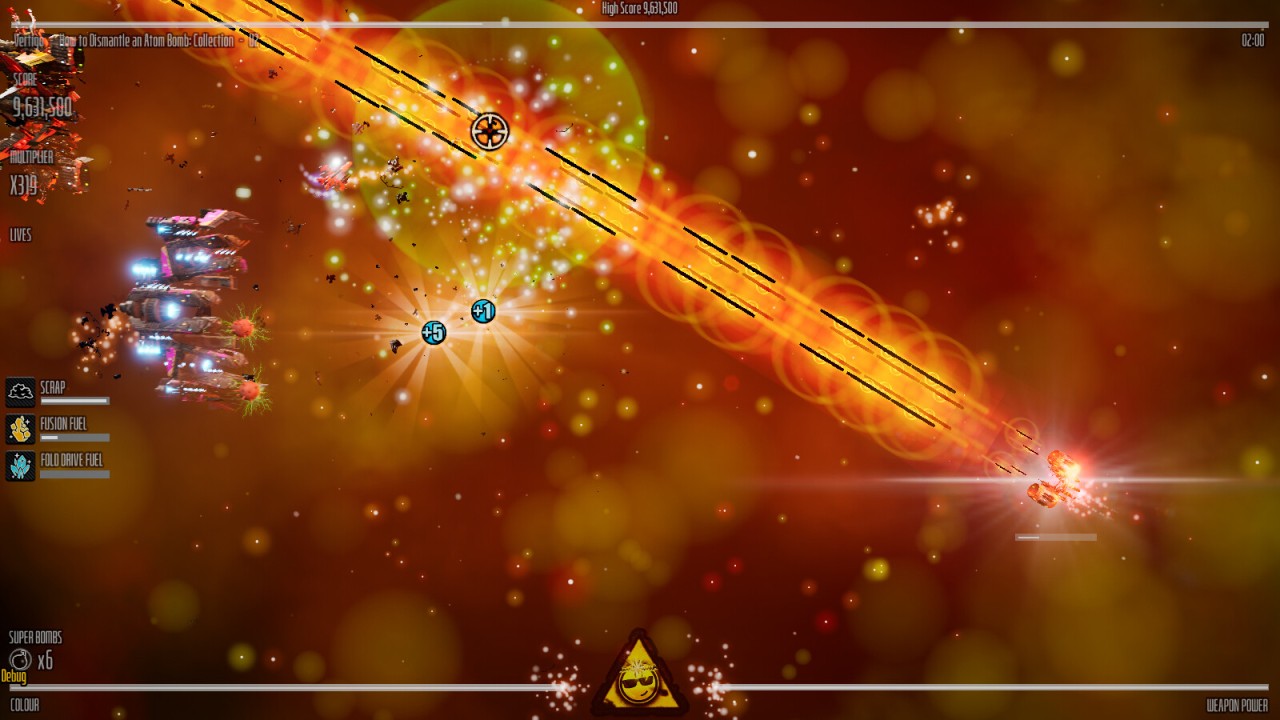
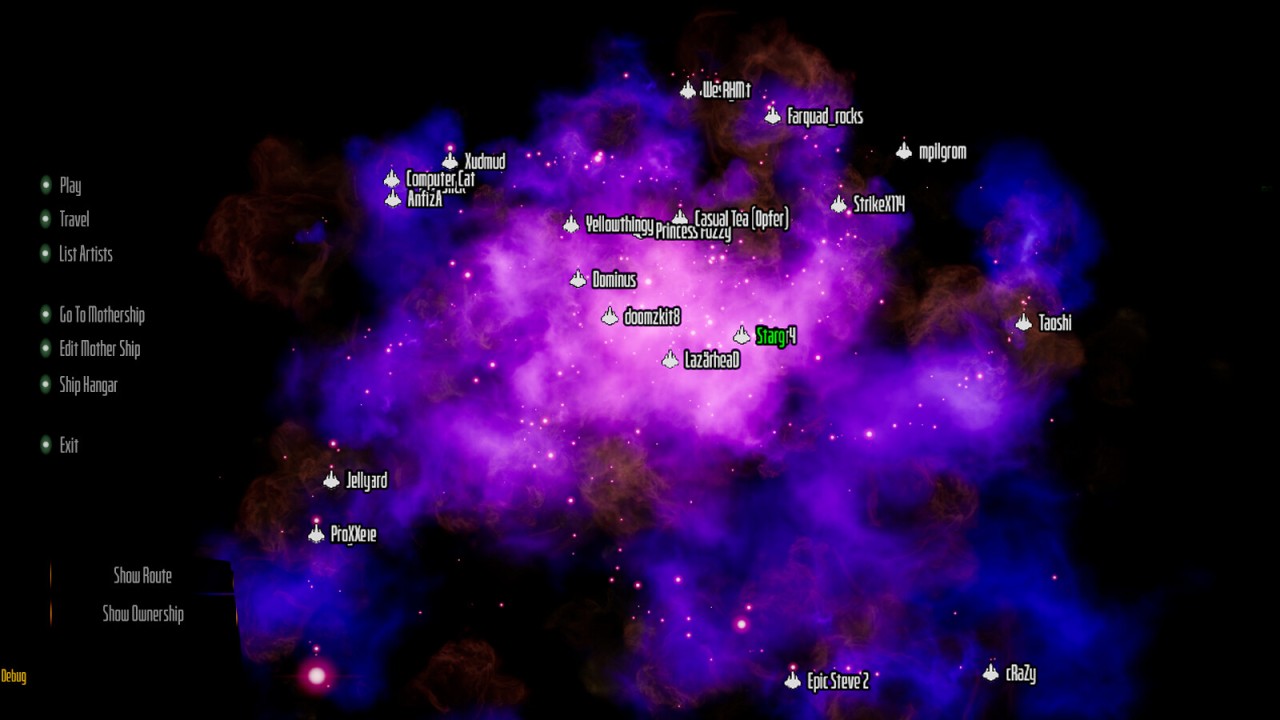
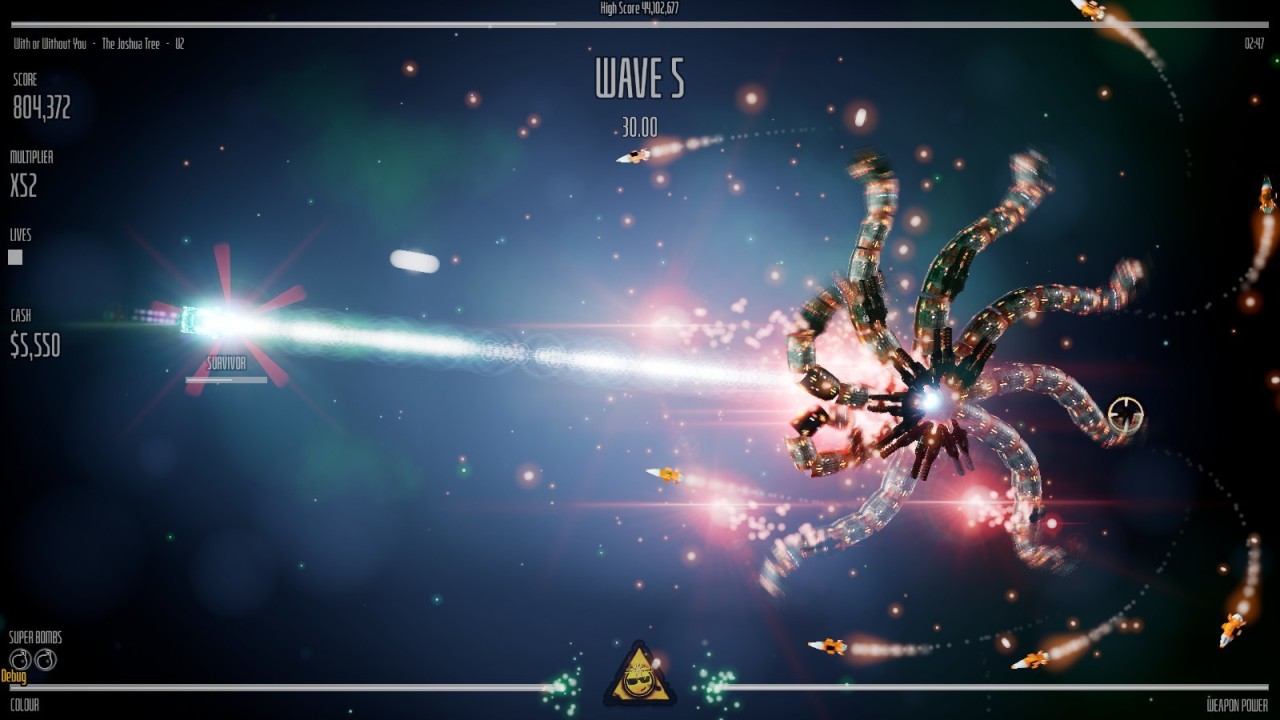
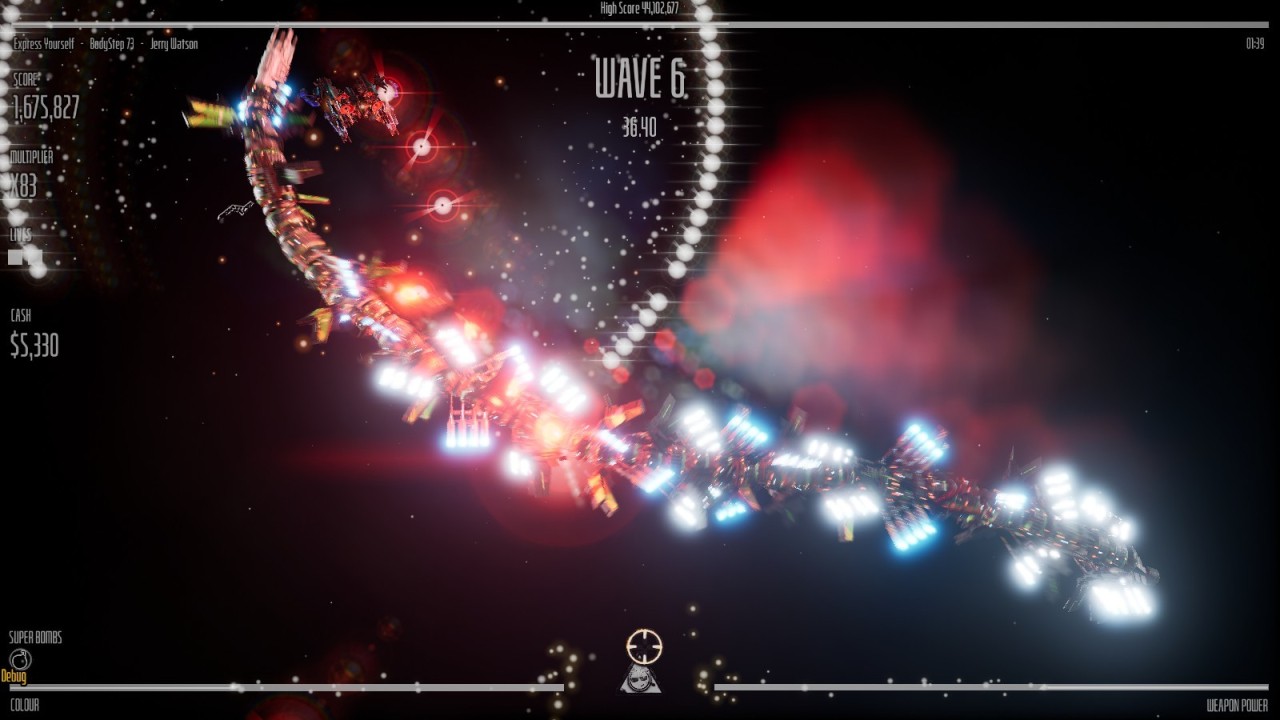
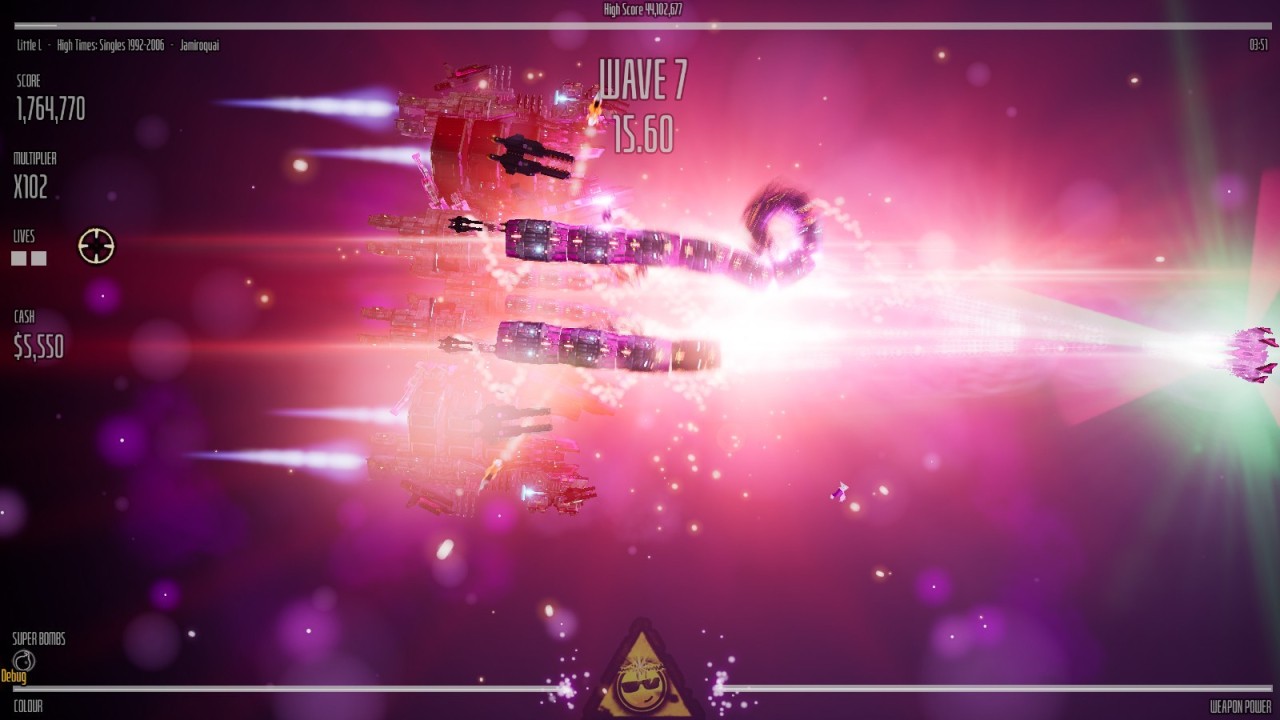
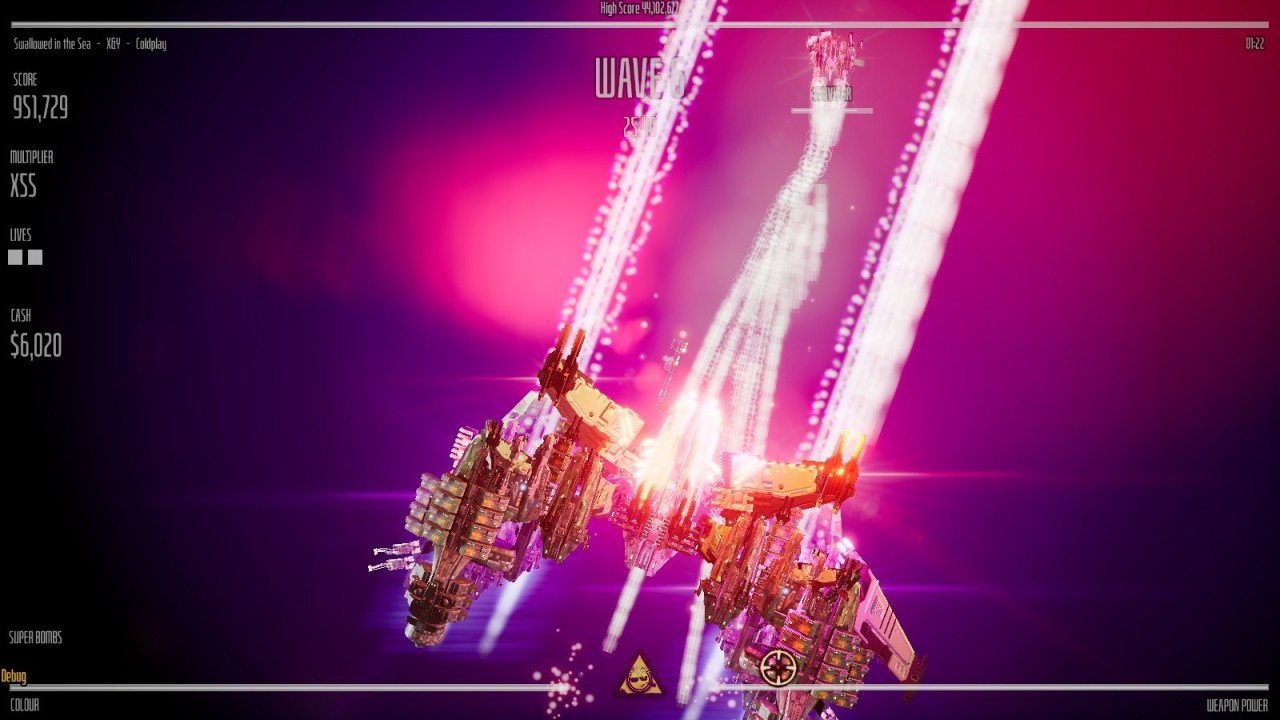
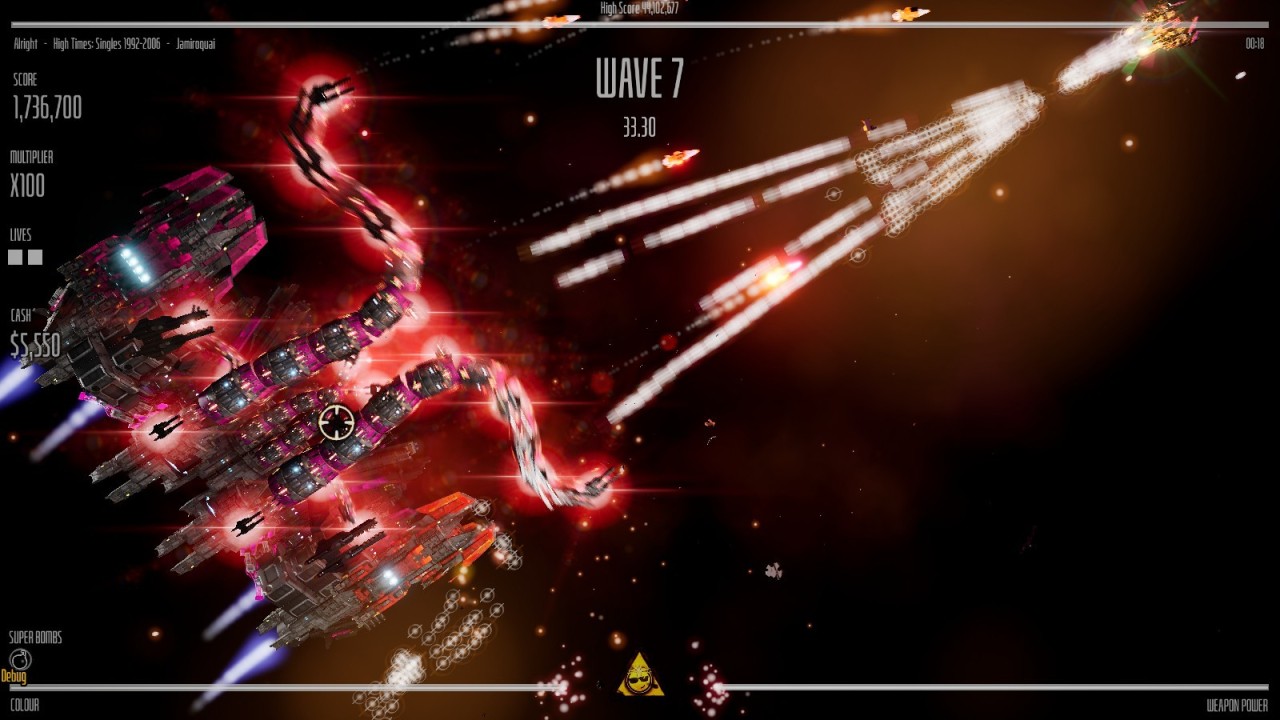
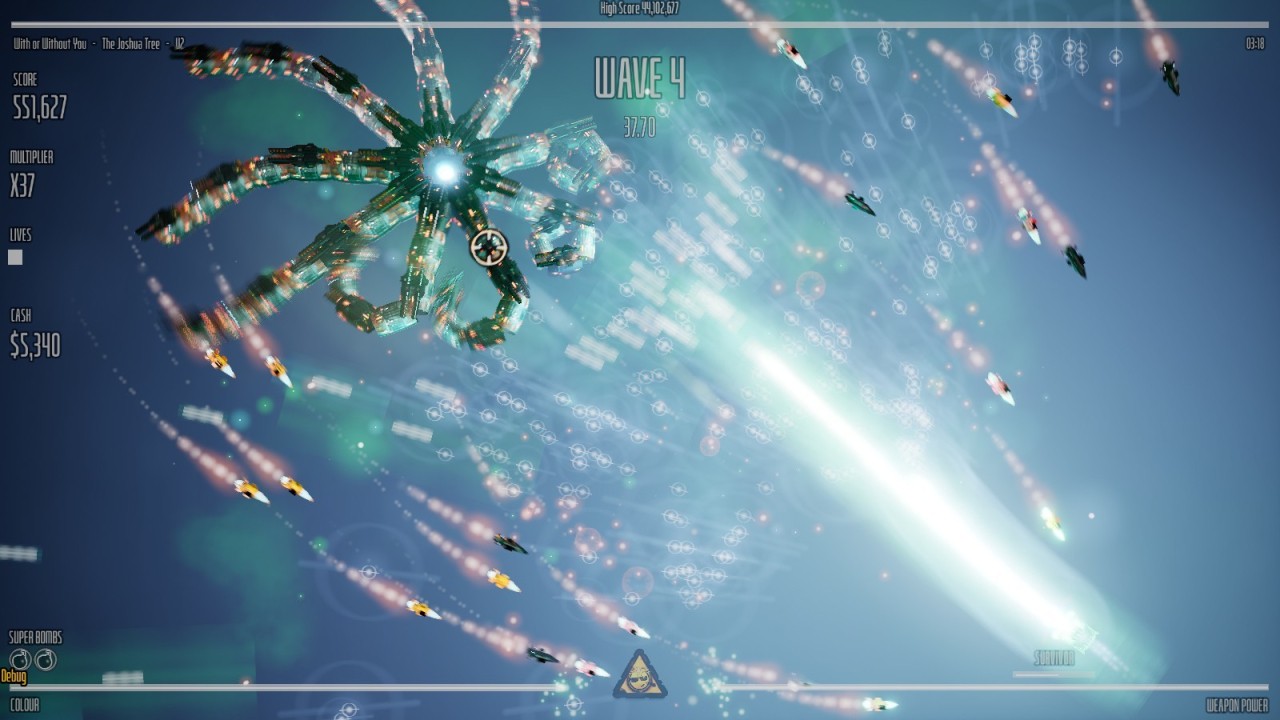
Beat Hazard takes your music and makes it something you can fight through. It’s not just a rhythm game and not a normal shooter either. Every track becomes its own small world that reacts to sound. The louder it gets, the wilder the fight turns. When your song slows, the screen fades into calm; when it rises again, everything erupts. You don’t follow a pattern — you play through one that keeps changing under your hands.
It feels personal. Your playlist is your map. Every song you own can turn into a battlefield with its own colors and motion. The game reads the track and builds enemies from its beats. You don’t really notice the code behind it — only that what you’re hearing suddenly feels alive. When you hit the fire button, bursts of light sync perfectly with the music. It’s strange how natural it feels once you start.
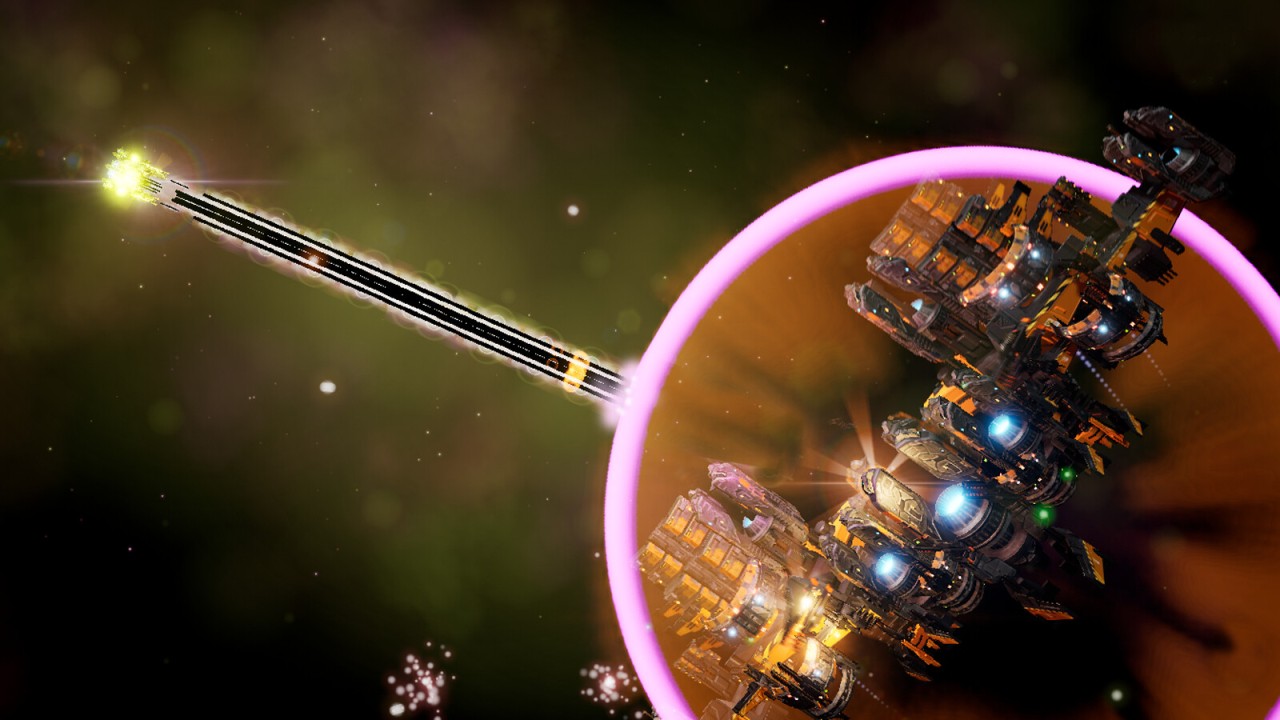
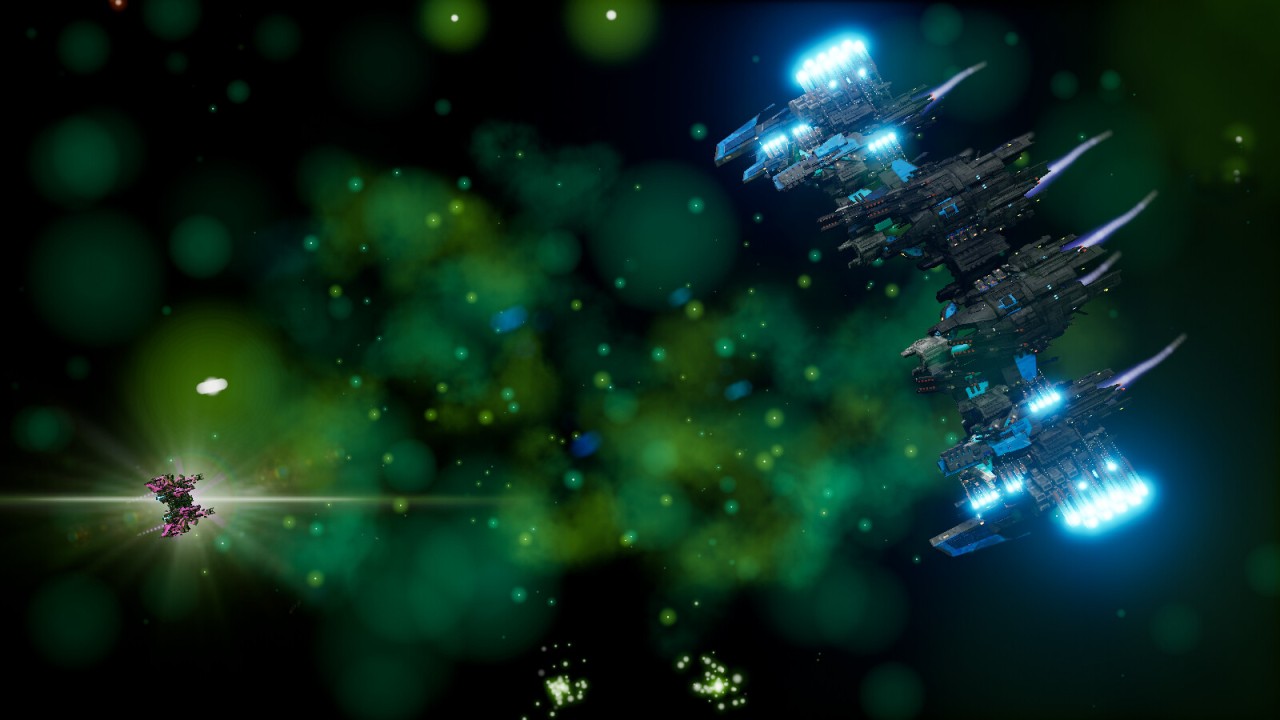
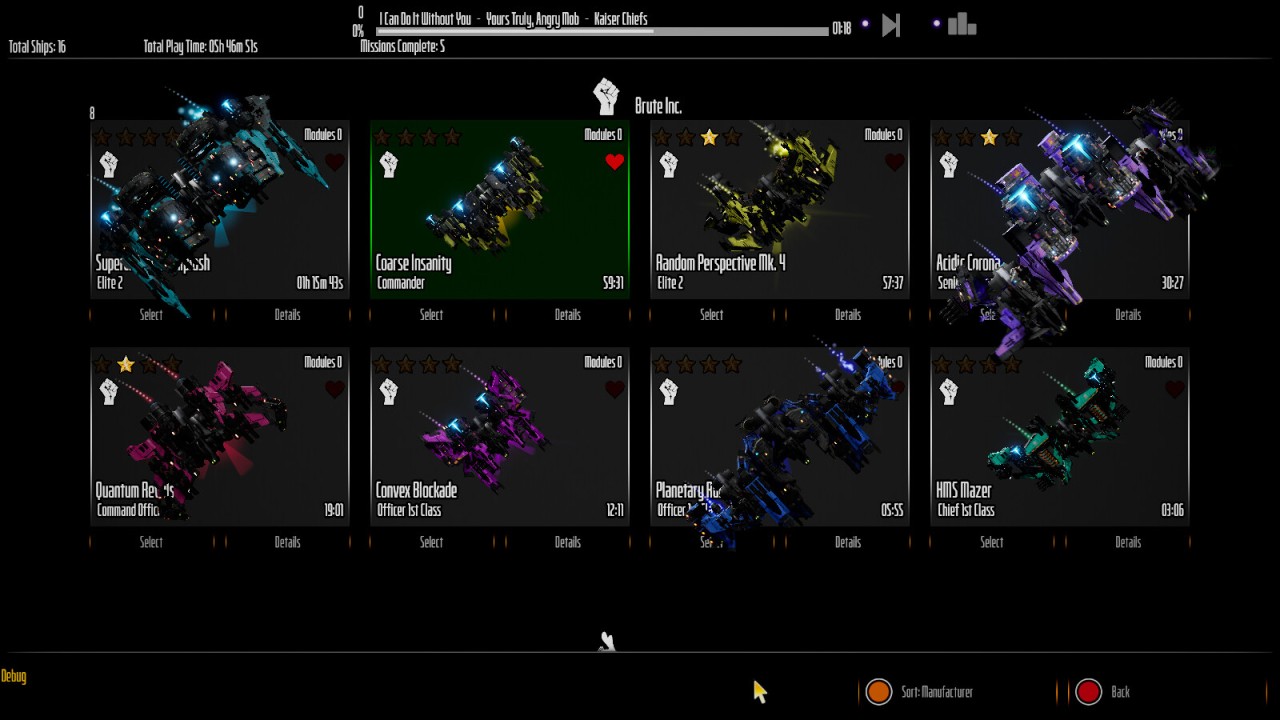
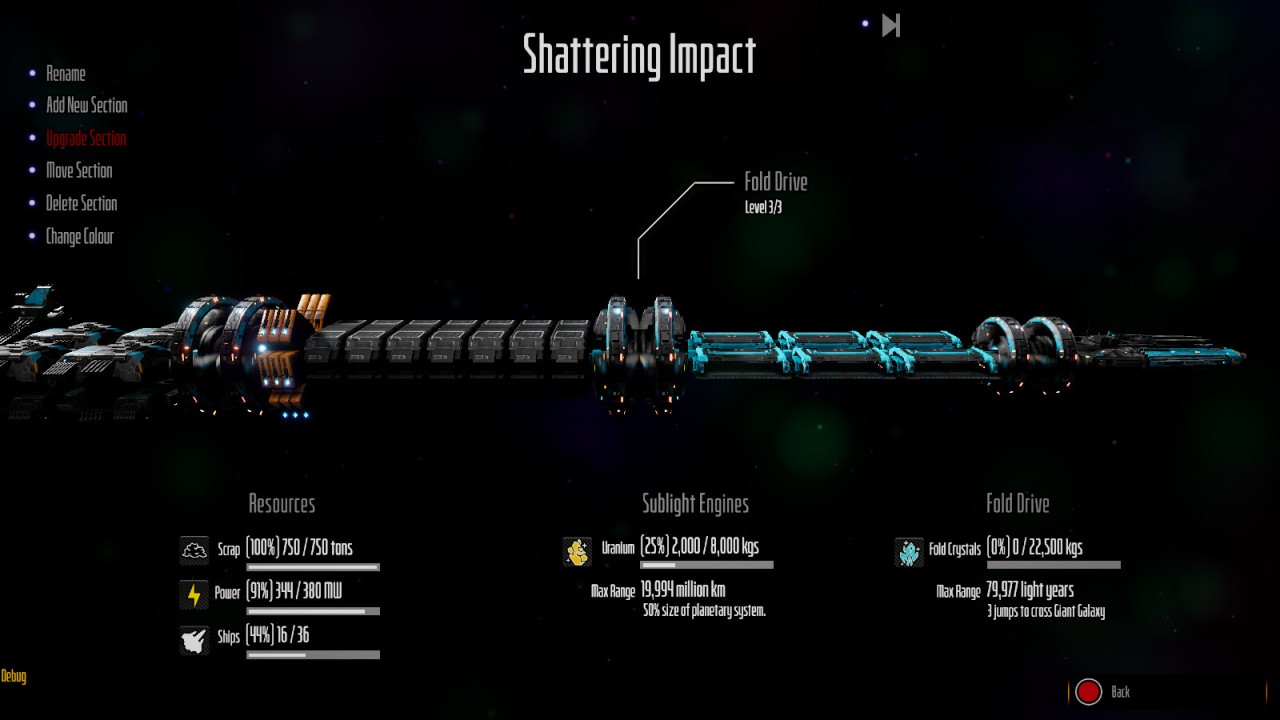
Each song also builds a ship for you. Sometimes tiny and fast, sometimes heavy and strong. Bosses come from that same audio energy, so even a familiar track feels new when played again. It’s all procedural, never the same twice. The point is simple: your songs are the game. Whether it’s a calm tune or something loud and fast, Beat Hazard bends itself to the sound.
Why Should I Download Beat Hazard?
You should download it because no other game lets your own music control everything so directly. When you play your favorite track, you aren’t just hearing it — you’re inside it. The guns pulse with every drum hit, and the lights match every rhythm change. It’s like the screen breathes in time with the song. Some moments feel peaceful, others feel chaotic, but all of them belong to the music you brought in.
Beat Hazard doesn’t rely on levels or fixed progress. It’s your songs that decide what happens. That means every player gets something different. Maybe your playlist is calm, maybe it’s loud — it doesn’t matter. The game listens and reacts. It keeps you curious because you never know what your next track will do to the battlefield.
There’s also something oddly emotional about it. You recognize a song you’ve played a hundred times before, but now it feels different. The visuals and rhythm tie together, and it feels like you’re seeing the sound for the first time. It’s simple, yet you lose track of time while playing. Beat Hazard works because it doesn’t overthink. It just connects what you hear with what you do.
Is Beat Hazard Free?
Beat Hazard is not free, but it’s a one-time purchase — not a game that hides progress behind extra payments. You buy it once, and the rest comes from your music. The game turns songs from your library into explosive, rhythm-driven battles, matching every beat and tempo to what you play. It supports a wide range of formats, including MP3, FLAC, OGG, WAV, AAC, and M4A. Once your tracks are loaded, every session becomes a new level built entirely from your own music. There are no ads, subscriptions, or locked features waiting behind paywalls.
For players who want endless variety, Beat Hazard also connects with internet radio services such as SHOUTcast, allowing you to stream and play levels generated from live music. One minute you could be fighting through a chill ambient track, and the next you’re dodging lasers to a fast-paced rock song. The constant unpredictability keeps every match fresh.
The game also includes original tracks created by developer Cold Beam Games and musician Johnny Frizz, which showcase how the engine transforms rhythm into light and motion. It’s a clean, immersive experience — no in-app advertising or forced purchases, just gameplay shaped entirely by your music collection. Beat Hazard remains true to its formula: you control the ship, but your soundtrack controls the game.
What Operating Systems Are Compatible with Beat Hazard?
Beat Hazard is available on Windows, macOS, Linux, Android, and iOS. The latest version, Beat Hazard 3, runs on desktop platforms via Steam and offers full controller support alongside keyboard and mouse input. It’s designed to be plug-and-play — connect your controller, and it instantly adapts. Installation is straightforward, and once your music folders are linked, the game is ready to build visual levels in seconds.
On mobile, Beat Hazard 2 is available for both Android and iOS. It’s optimized for touch controls and delivers the same dynamic experience as the desktop version, syncing gameplay visuals directly with your songs. Performance is solid across modern smartphones and tablets, and it doesn’t require high-end hardware to run smoothly.
Desktop users can enjoy cross-platform support between Windows, macOS, and Linux, with consistent visual effects and performance. Whether you’re playing on a laptop or a gaming setup, the core experience stays the same — vivid light shows reacting perfectly to your music’s rhythm. Updates and patches are distributed regularly to maintain compatibility with newer operating systems and devices.
Beat Hazard continues to focus on what made it unique from the start: letting you turn your music into an arena. Once it’s installed, you just press play, and your playlist becomes the battlefield.
What Are the Alternatives to Beat Hazard?
AudioSurf is less aggressive. It does not cause you to shoot; it allows you to ride your songs. The song is winding and bending with the beat, and you get blocks to the beat. It is calmer, smoother, it borders on meditative to the messiness of Beat Hazard, but it has the same spirit: your music making the game.
Next is Synth Riders, which is created in VR. You don’t just listen — you move. You move your hands to strike the notes that are flying at you, and are dancing with the song itself. It is corporeal, sunny, and richly colored. The beat is on all sides around you. It is not as much of an attack as it is a movement, but the same kind of relationship between sound and movement exists.
The other genre of rhythm game is DJMAX RESPECT V. It is organized and accurate, and designed for players who like timing and difficulty. You play predetermined charts as opposed to chance patterns. Each of the tracks is made manually, and a note is laid out to fit a given sound. It is not about having your own library, but having the ability to master existing music, being precise and focused.