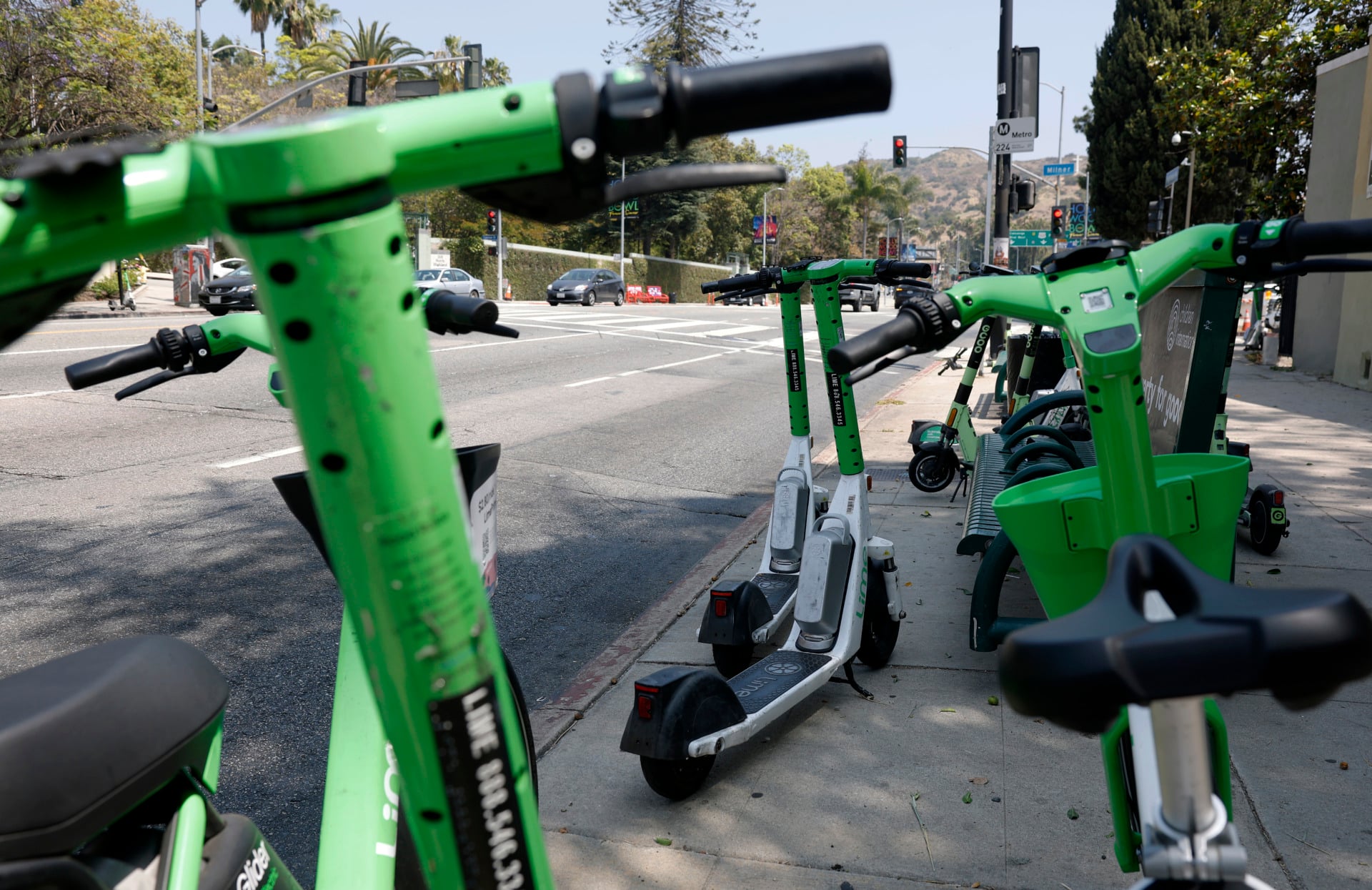
Electric scooters are more likely to cause serious brain injury in crashes than the notorious motorcycles, according to a new study published in Nature’s Scientific Reports journal on Thursday.
Researchers from Chelsea and Westminster Hospital in London, United Kingdom, relied on 38,440 records of data from across England and Wales between 2020 and 2024 to find that e-scooter riders had higher relative risks of suffering traumatic brain injury, internal organ injury, and vascular trauma than motorcyclists.
The e-scooter injuries also disproportionately impacted kids and teens. The study notes that 16.2% of e-scooter injuries were in riders under 18, compared to 6.2% for motorcycle injuries and 8.9% for non-electric bicycles. These underage e-scooter riders also “accounted for a substantial share of craniofacial injuries,” the researchers note.
Along with kids and teens, the study also found that women were at a higher overall risk of injury and severe trauma compared to male riders, which researchers partially blame on e-scooter design.
“Most e-scooters are also designed around male anthropometry, with handlebar height and centre of gravity placement demanding greater upper body strength, compounding these experiential and behavioural disadvantages,” the study notes.
But the authors speculate that the trend is not solely due to e-scooter design. Instead, the high risk rates could also be due to factors like helmet use, urban infrastructure, and rider behavior.
The researchers found that only 5.9% of e-scooter riders were documented wearing helmets, while 75.7% of motorcyclists and 45% of regular, pedal cyclists wore helmets. The lack of helmets combined with the vehicle design likely made matters worse, researchers note, because “a standing posture places the rider’s centre of mass high and far forward, so that abrupt deceleration tends to pitch the body headfirst over the handlebar,” and the small wheels “provide little grip on wet or uneven ground.” The situation is even worse for children, whose abdominal walls are not only thinner but also “align with handlebar height,” meaning that most of the abdominal trauma they receive in e-scooter crashes comes from “direct handlebar impact.”
Crashes were also less frequent in affluent suburbs than in inner-city districts but more likely to lead to severe trauma when they do occur, owing to the wider suburban roads, higher vehicle speeds and fewer dedicated cycling lanes.
The study comes as lawmakers in the United States fret over the rising number of crashes involving e-scooters and e-bikes. In New York City, where e-scooters and e-bikes practically run the streets, lawmakers have proposed a long list of bills earlier this week that will be considered in a hearing on September 30. There were more than 1,350 accidents involving e-bikes or e-scooters in New York City in just the third week of July, per police data cited by the New York Times.
“Every New Yorker deserves to move around our city freely and safely, regardless of how they get around. But too many people have been seriously injured or killed in crashes involving illegal, high-speed e-bikes, e-motos, and e-scooters,” New York City Council Speaker Julie Menin said. “The City Council will bring together pedestrians, cyclists, deliveristas, transportation experts, advocates, and enforcement agencies to conduct a comprehensive review of every available option to make our streets safer.”
The bills propose to ban the sale of some still legal fast e-bikes, establish a task force for researching safer street design and infrastructure, and strengthen oversight of delivery platforms and third-party apps, the riders of which often rely on e-bikes and e-scooters and are incentivized to deliver as fast as possible.
“Every New Yorker deserves to cross the street without fear, every rider deserves to know the device they purchase is safe to use, and every delivery worker deserves to make a living without being pushed to ride dangerously,” New York City Council Majority Leader Shaun Abreu said.
Some of the measures introduced would also crack down on unregistered vehicles and high-speed devices, which were involved in a crash last week in Lower Manhattan that resulted in the death of a 17-year-old-boy. These high-speed vehicles are already illegal in New York but can be purchased online. On Wednesday, New York Mayor Zohran Mamdani issued a cease-and-desist order on the online sellers shipping these devices to New York City.
The researchers behind the newly published study also highlight the need for legislation focusing specifically on mandatory helmet use, stricter speed limits, and infrastructure improvements like protected lanes.