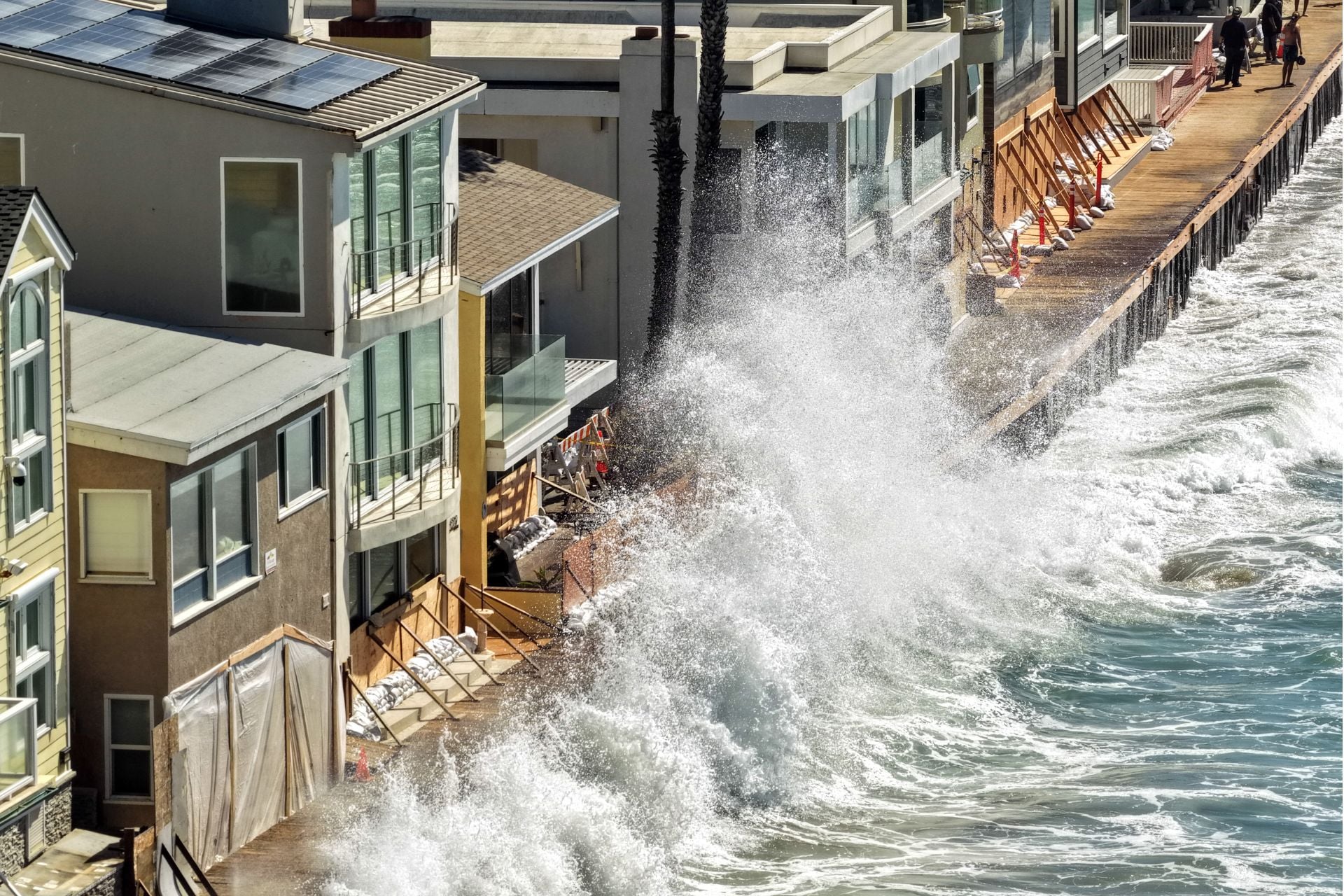
Southern California communities such as Malibu, Long Beach, and San Clemente are watching their beaches disappear. In recent years, rising sea levels have swallowed huge chunks of the coastline, threatening waterfront homes. Now, an El Niño-driven phenomenon is expected to make this situation even worse.
During El Niño, winds that normally blow east to west along the equator weaken and periodically reverse, creating westerly wind bursts that set off oceanic Kelvin waves. These massive, slow-moving pulses of warm water travel from the western Pacific Ocean east across the equator until they reach Central and South America, at which point they travel north as “coastal trapped waves” along North America’s Pacific coast.
That’s exactly what’s happening now. Meteorologists warn that the approaching warm water could reach southern California by early October and raise sea levels by up to a foot (30 centimeters).
“Tides are already running a foot or more above average thanks to the extreme marine heatwave, and additional sea level elevation may begin soon as the largest coastally trapped Kelvin wave of the El Niño-generated sequence thus far arrives in October,” Daniel Swain, a climate scientist at the University of California Agriculture and Natural Resources, wrote in a blog post on Sunday.
From bad to worse
Ocean waters off the coast of southern California are already warming as a direct result of climate change. The world’s oceans have absorbed more than 90% of the excess heat trapped in the Earth system due to human-driven warming. This has led to higher baseline ocean temperatures and increased the frequency and severity of marine heatwaves, like the one currently affecting waters off the coast of central and southern California.
Warm water expands, so elevated marine temperatures also elevate sea levels. This phenomenon, called “thermal expansion,” has been exacerbating coastal inundation and erosion in California for years. Warming Pacific waters are also pumping more energy and moisture into storms, as illustrated by high-impact rainfall and storm surge events that have flooded parts of coastal California in recent years.
Groundwater pumping has also led to significant areas of land subsidence, or ground sinking, along the California coast. At the same time, climate change is rapidly melting land ice in Earth’s polar regions, boosting sea levels on a global scale.
This El Niño-spurred Kelvin wave will greatly exacerbate the human-driven coastal hazards California is already experiencing. Again, elevated ocean temperatures elevate sea levels, so climate scientists expect this surge of warm water to rapidly and drastically increase the risk of coastal flooding and erosion.
Unlike climate change, the Kelvin wave will only influence California’s sea levels temporarily. However, El Niño tends to produce more than one Kelvin wave, helping keep sea levels elevated for months. Dillon Amaya, an assistant professor of marine science at North Carolina State University, told ABC7 San Francisco he doesn’t expect sea levels in the Bay Area to return to normal until spring 2027.
In August, experts warned that California could see its highest sea levels on record this fall and winter. Governor Gavin Newsom has declared a state of emergency to bolster preparedness against flooding, landslides, and coastal risks. Long after El Niño subsides, climate change and land subsidence will continue to eat away at California’s coastline, so hopefully these preparedness measures will be designed for longevity.