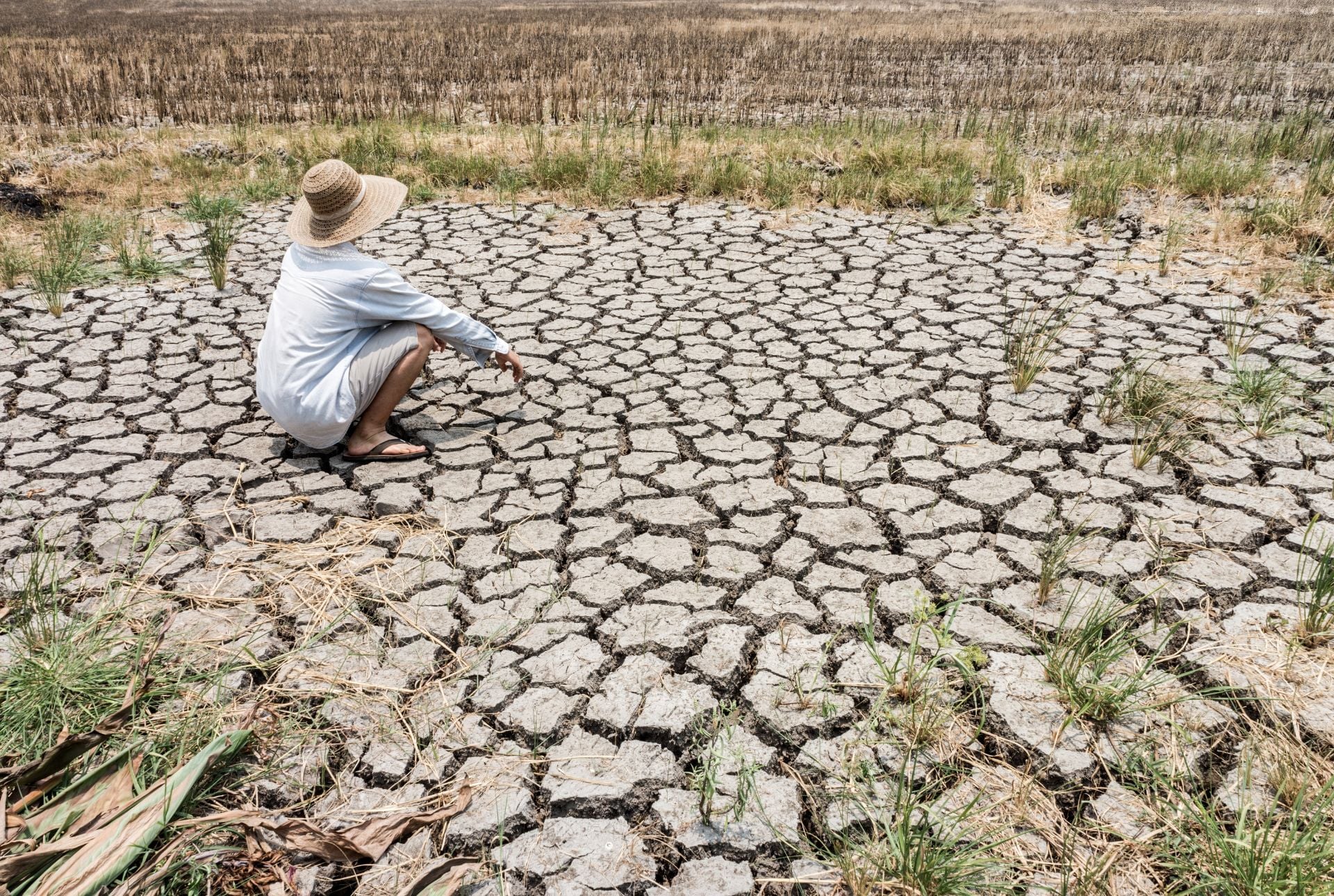
As the strongest El Niño on record unfolds over the coming months, many parts of the world will see drastic weather shifts. This phenomenon alters atmospheric circulation, temperatures, and precipitation patterns across the globe, and different regions will experience starkly different impacts.
To visualize these impacts, climatologist Zeke Hausfather combined projections from 13 dynamical climate models to create a map showing which parts of the world are likely to be hit hardest by El Niño. He notes that all incorporated models point to strong precipitation anomalies, as the many areas of drought and flood risk clearly show.
It’s important to note that these are predictions, not certainties. Every El Niño influences weather differently, and it doesn’t always lead to expected impacts. This “super” El Niño may turn out to be particularly surprising. Neither scientists nor climate models have ever seen one this strong before, so it’s difficult to grasp exactly what it will look like. What’s more, human-driven climate change could interact with El Niño to produce brand new extreme weather patterns.
With that said, let’s dive into the map.
I've updated my map of El Niño impacts this year to incorporate 13 dynamical models (NMME and C3S, Sept runs); the initial version was simply based on an assessment of the impacts literature for past very strong events. This also let me refine the impacted areas using the model… pic.twitter.com/IfoVeGDSgO
— Zeke Hausfather (@hausfath) September 23, 2026
Weird weather around the world
First, it’s helpful to briefly discuss why El Niño has such a strong influence over global weather patterns. This is the warm phase of the El Niño-Southern Oscillation, the biggest year-to-year climate variation on the planet. El Niño begins with a weakening of trade winds that causes warm water to shift from the western Pacific Ocean to the central and eastern tropical Pacific.
Increased sea surface temperatures off the coast of South America pump heat and moisture into the atmosphere. In response, atmospheric convection and wind patterns change, altering global precipitation patterns. In the continental U.S., for example, El Niño tends to bring warm, dry weather to the northern tier and wet, cold weather to the southern tier because the Pacific jet stream shifts southward.
That effect is clearly visible on Hausfather’s map, especially in the Southeast. The models predict wet, stormy weather along the Gulf Coast and in Cuba and the Bahamas from December to February, which could help alleviate current drought conditions. The Southwest can expect similar conditions from December to March, though interestingly, the models show less confidence in this region. California has already declared a state of emergency to prepare the state for the heightened threat of flooding, landslides, and coastal risks.
Other regions likely to experience increased rainfall and flood risk include southeastern South America, the central Pacific Islands, the coasts of Peru and Ecuador, China’s Yangtze basin, Sri Lanka, and the Horn of Africa.
Elsewhere, widespread drought could take hold. The models show high confidence that El Niño will bring dry conditions to most of northern South America, including the Amazon, as well as Central America, the southern Caribbean, Hawaii, the Philippines, the western Pacific Islands, Southeast Asia, and Southern Africa.
Time to prepare
Hausfather’s map brings the scale of El Niño’s impact into sharp focus. The extreme weather likely to result from this event will threaten lives, infrastructure, ecosystems, and the global economy.
In the world’s poorest and hungriest regions, precipitation anomalies could be particularly devastating. According to the United Nations, this super El Niño could push 49 million more people into acute hunger as crops falter, with Central America and southern Africa among the hardest-hit regions.
Extreme weather will also pose a direct threat to human safety in many parts of the world. Heightened global temperatures could lead to 450,000 heat-related deaths globally in the next six months, including 3,500 fatalities in the U.S. alone, according to a recent report.
While the true fallout from this record-breaking El Niño remains to be seen, now is the time to prepare. This event is still months away from its peak, and many parts of the world are already feeling its influence.