Something weird happened during the El Niño event of 2023 and 2024. Climate scientists with the National Science Foundation’s National Center for Atmospheric Research (NCAR) in Boulder, Colorado, noticed that the recurring global climate event somehow did not bring the expected wetter seasons to the United States’ southern tier, nor a dry season to its northern regions. But this El Niño’s powerful effects were still felt elsewhere—including punishing droughts in the Amazon, the likes of which Brazil had not seen in 120 years.
The explanation, as NCAR’s researchers determined the next year, was that global warming’s slow roasting of tropical Indian and Atlantic Ocean waters had offset El Niño’s effects across North America, disrupting a once reliable pair of climate patterns known as a “teleconnection.” Now, scientists are worried that the current state of climate change is poised to make this year’s extreme El Niño conditions even more unpredictable, according to Bar-Ilan University climate scientist Eran Vos, who spoke to the journal Nature about the issue this month.
“We know less about the teleconnections of the new atmosphere,” Vos told Nature, adding that perverse synergies between global warming effects, like rising sea surface temperature, and El Niño’s behavior will make it not only harder to forecast, but consequently harder to prepare for.
A chaos theory
Speaking to Science News, ecosystem scientist Sergio de Miguel at the University of Lleida and the Joint Research Unit CTFC-Agrotecnio in Spain, likened the phenomena of teleconnections in 2023 to “a kind of complex butterfly effect” where events “in one place have many derivatives very far away.” The recurring regularity of these paired events can last weeks or even years, and they include patterns like the El Niño/Southern Oscillation (ENSO) which has become much discussed as ENSO is the climate teleconnection whose warming helps produce El Niño.
Vos and his colleagues have combed through historic meteorological records, hoping to track our warming climate’s countervailing impact on El Niño events. They found that warming patterns created by El Niño across southern Asia and northeast Africa between the years 1960 and 1990 have since bizarrely inverted, leading to colder temperatures in those regions during more modern bouts of El Niño. Elsewhere, in Western Europe, cold snaps tied to El Niño during those same decades have now flipped, consistently correlating to warmer seasons during modern El Niño events.
“You change the patterns and the weather reacts,” as Vos told Nature.
Uncharted waters
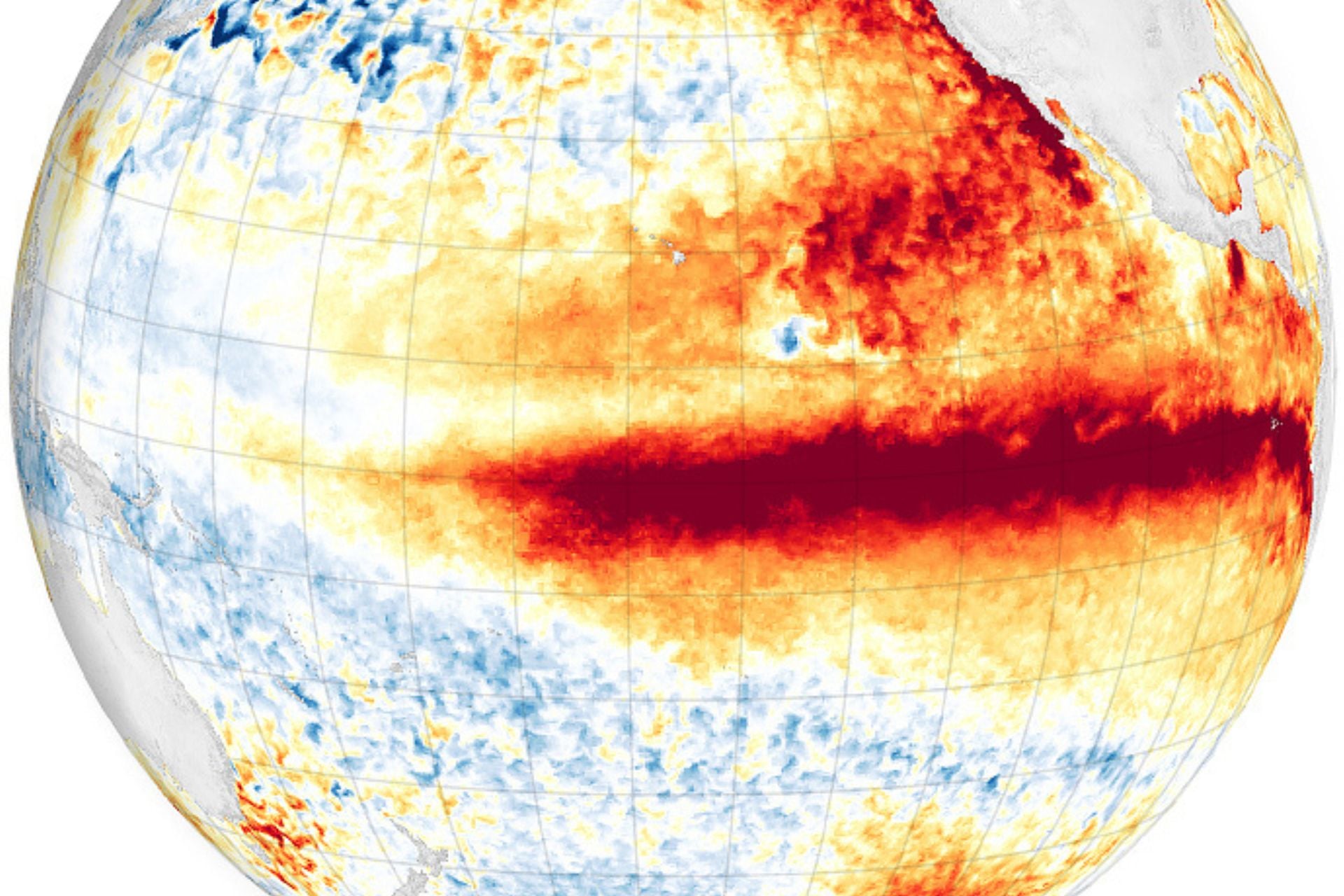
But climate change isn’t the only factor leading to a more intense and unpredictable El Niño this year. The 2026 El Niño itself is the first since the late 1990s to be generated by warm ocean temperatures in the eastern Pacific as opposed to the central Pacific. There’s not a lot of precedent from the past three decades of warming years, in other words, to predict how it might behave or how climate teleconnections might alter.
Clara Deser, a senior scientist at NCAR, and her coauthors on that study into the odd 2023-24 El Niño season spelled it out this way, “historical precedent may no longer be a reliable guide to ENSO teleconnections as anthropogenic warming patterns intensify.” The sea surface temperatures themselves create uncharted waters, with the atmosphere itself changing too.
As Deser told The New York Times this May, “We are now in a different base line climate.”