As El Niño intensifies with unprecedented speed, record-high Pacific temperatures are already pushing marine species into new territory. Scientists believe the phenomenon could explain why blue whale sightings have dramatically declined in the Galápagos Islands.
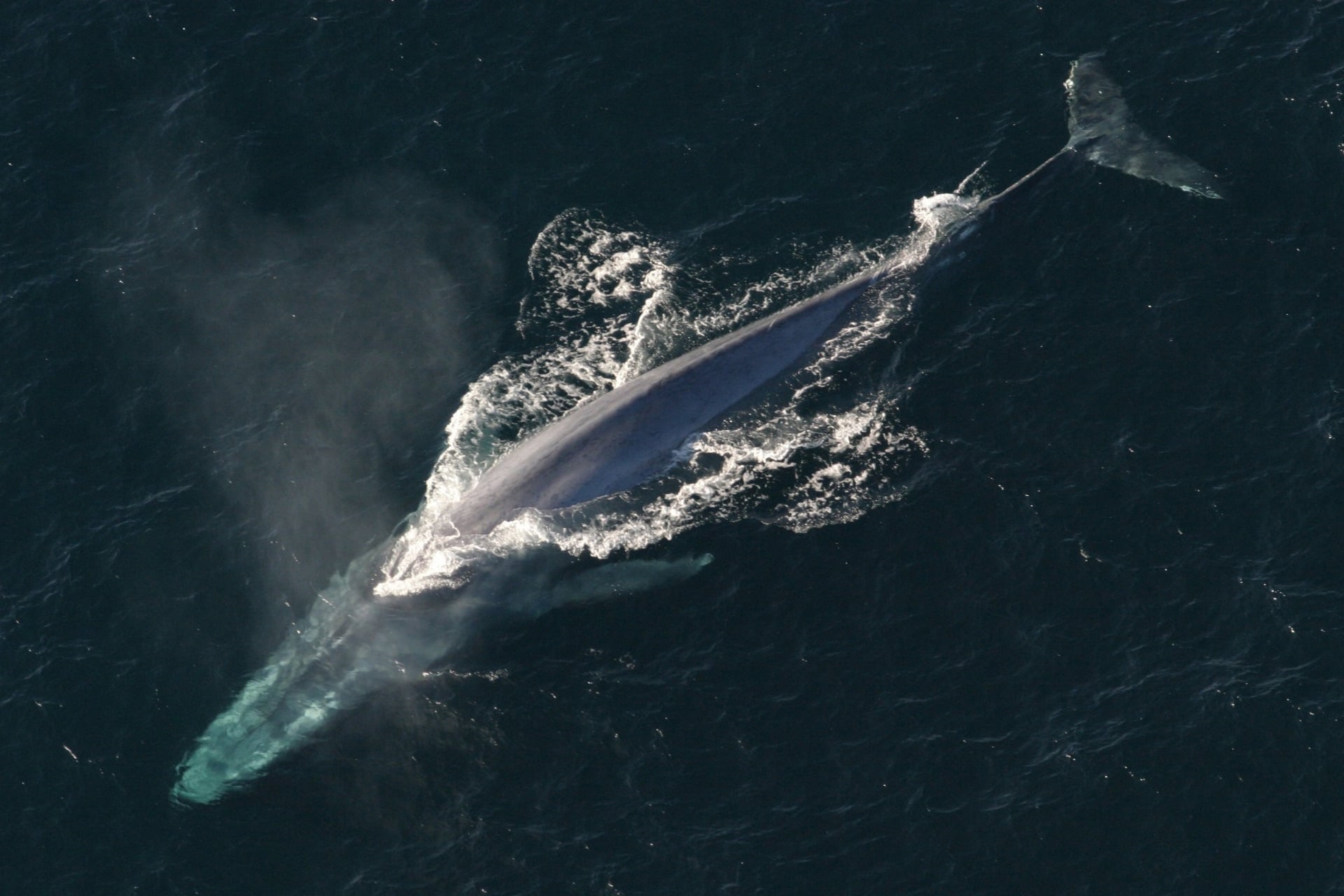
From October 2025 to July 2026, researchers dispatched by the Galápagos National Park Directorate looked for these majestic creatures in areas where they had been observed before. The team’s objective was to tag individuals with satellite transmitters that would track their migratory routes, but despite nine months of continuous searching, they did not find a single one.
Water temperatures recorded during the expedition reflected El Niño’s presence. Sea surface temperatures ranged from 77.9 to 81.6 degrees Fahrenheit (25.5 to 27.6 degrees Celsius), while temperatures at a depth of 328 feet (100 meters) ranged from 66.4 to 67.4 degrees F (19.11 to 19.67 degrees C). Those readings are above average for this time of year, according to the Galapagos Science Center (GSC).
A layer of the ocean called the isotherm—which is about 68 degrees F (20 degrees C) and usually found at depths of 66 to 148 feet (20 to 45 meters) in the Galápagos—was also located much deeper during the expedition, between 256 and 315 feet (78 and 96 meters). This suggests that the temperature range in which blue whales feed may not have aligned with the depth at which their food (mainly krill) was located.
It’s possible that the whales are remaining farther south, where waters are cooler and food is more available, lead expedition scientist Daniela Alarcón, a professor and researcher at Universidad San Francisco de Quito and the Galápagos Science Center, told LiveScience. But to be clear, “not finding whales during an intensive search effort does not mean they have stopped coming to the Galápagos,” she said in a GSC statement.
A marine mystery
In September, after the expedition ended, the Cetácea Galápagos citizen science network reported an adult blue whale with its calf at Punta Pitt, San Cristóbal. The sighting confirmed that blue whales have not vanished from the Galápagos, but the fact that researchers had gone nine months without seeing one is cause for further investigation.
“By combining these records with oceanographic data, we can begin asking better questions about the conditions that determine their presence and how much their movements may vary,” Alarcón said in the statement.
According to reports submitted to the citizen science network Cetácea Galápagos, blue whale sightings were already declining before the expedition began, LiveScience reports. They first took a downward turn between August and September 2025. There were two isolated reports of blue whales during the expedition, in May and June 2026, but Alarcón and her colleagues could not confirm either one.
Few places on Earth feel El Niño’s impact more acutely than the Galápagos Islands, which straddle the equator in the eastern Pacific. In late August, Ecuador declared a nationwide Red Alert due to the potential effects of this phenomenon. At that time, some coastal and island monitoring stations recorded sea levels up to 16 inches (40 centimeters) above normal, a signature of significantly warmer waters, according to the GSC.
Krill are sensitive to changes in ocean temperatures, which can affect their availability to blue whales. A 2024 study that tracked 16 blue whales in the Galápagos from 2021 to 2023 found that the strong 2023 El Niño altered ocean temperatures and reduced primary productivity, potentially disrupting the whales’ food supply.
The findings offer a possible explanation for the lack of sightings this year, but it’s still too soon to definitively attribute this to El Niño, according to the expedition team. Still, this exceptionally strong event is already bringing drastically altered marine conditions to the Galápagos. Scientists will be watching closely to see how the entire ecosystem—not just one species—responds.