Off the coast of California, a historically strong El Niño is unfolding on top of a record-breaking marine heatwave, pushing ocean temperatures to new heights. In addition to boosting sea levels and amplifying storm risks, all that extra heat is encouraging exotic species to pay the Golden State a visit.
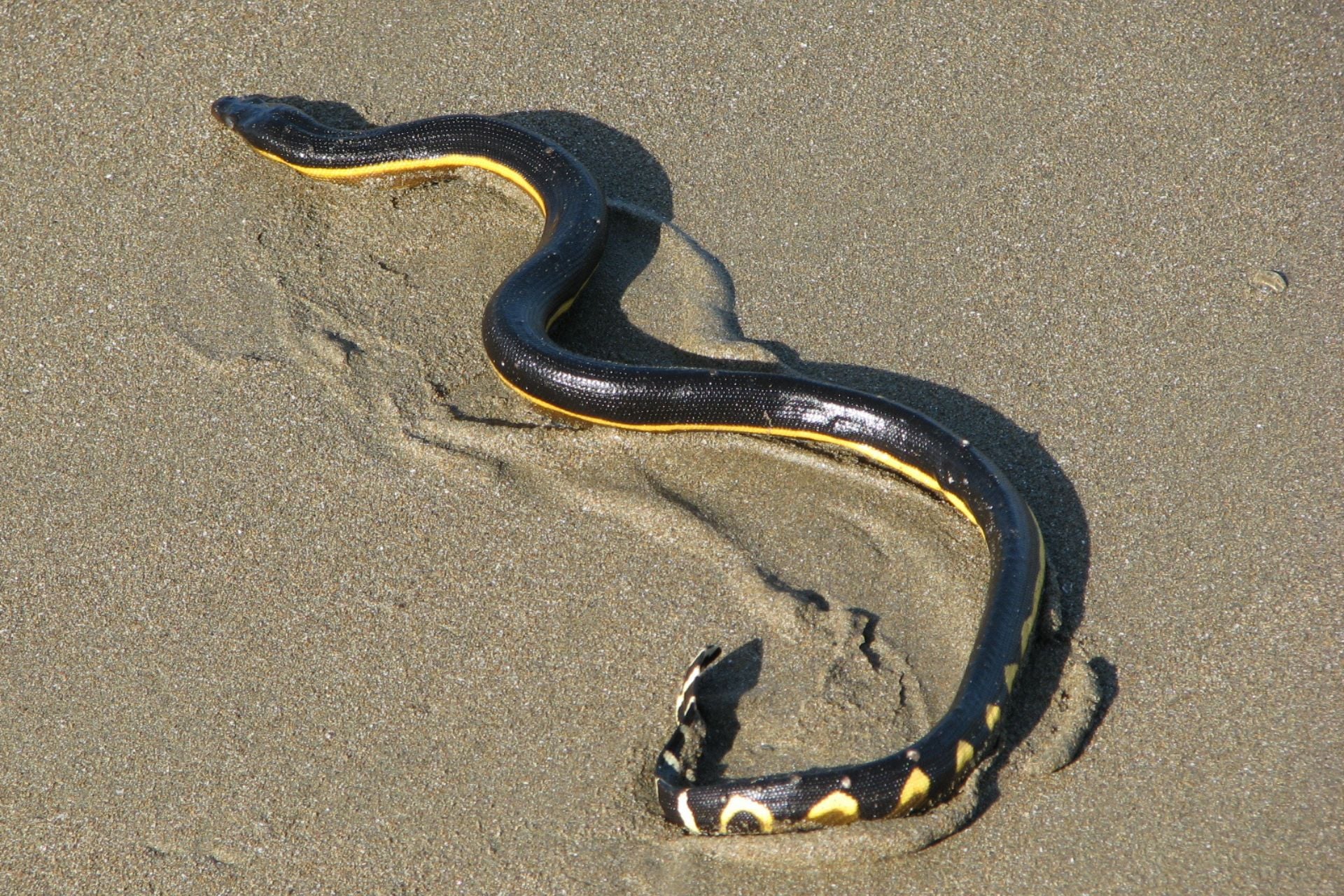
In September, a woman walking with her family at Crystal Cove in Orange County spotted a venomous yellow-bellied sea snake. It was only the sixth confirmed sighting in California, and five of those washed up during El Niño years. Local fisherman Julius Cardines recently caught a longfinned bigeye—the first ever seen in the state—off the Venice Fishing Pier in Los Angeles. Other SoCal residents have reported sightings of whale sharks, olive ridley sea turtles, hammerhead sharks, oceanic manta rays, and pilot whales that rarely venture into these usually chilly waters.
The wave of non-native visitors is yet another sign of the profound impact El Niño is already having on California, and we’re still months away from its expected peak.
El Niño shakes up marine ecology
El Niño begins with a weakening of trade winds that pushes warm water from the western Pacific Ocean to the central and eastern tropical Pacific. Heightened water temperatures in this region pump huge amounts of heat and moisture into the atmosphere, altering weather patterns across the globe. But major changes take place beneath the ocean’s surface as well.
According to the Scripps Institution of Oceanography, El Niño tends to reduce coastal upwelling—when warm surface water is replaced by cold, nutrient-rich water from the deep ocean. This is an important food source for plankton, which are foundational to the marine food web. At the same time, El Niño can force less heat-tolerant species to stray from their typical ranges in search of cooler waters.
“Due to less food availability, marine predators, like seabirds, can’t find enough food, which leads to decreased body condition, reproductive stress, and increased mortality,” Tammy Russell, a marine ornithologist at Scripps, said in a statement. “The decrease in ecosystem production will disproportionately affect species with constrained diets and/or distributions. Species unable to shift their diet to other prey or those that can’t travel as far to forage will likely be hit the hardest.”
During El Niño, some tropical species venture north in response to rising marine temperatures and shifting food availability. That explains why so many unusual creatures have been spotted along California’s coastline in recent weeks.
Many native species can’t take the heat
While El Niño makes California’s waters more welcoming to tropical species, native species often suffer.
In this part of the world, elevated ocean temperatures can decimate kelp forests that provide habitat for numerous species. Scientists at Scripps are already seeing the impact of this super El Niño and marine heatwave on the La Jolla kelp forest off the coast of San Diego.
“We have been seeing tremendously warm water, and not seeing a lot of upwelling,” Jennifer Smith, a Scripps professor of marine biology, said during an October 7 El Niño briefing. “Even on the bottom—50 feet [15 meters] below—the water has been 70 degrees [21 degrees C]. When kelp is exposed to warm water for extended periods of time, it dies. Given the lack of upwelling, there is also no nitrogen and phosphorus, which kelp need to grow, so the ability for kelp to persist under current conditions is significantly reduced.”
What’s more, heat stress and nutrient loss often shift native fish populations, which can in turn lead to mass die-offs of seabirds. Scores of California seabirds have been starving to death for months now as a result of record-breaking ocean temperatures.
“We’ve been seeing cormorants walk to shore and then just die within the hour. I mean one time it happened within 15 minutes, and I’ve never seen that before,” Russell told the Associated Press in July. “That has been heartbreaking for me and we’re seeing this happening across the whole coast.
California’s waters will grow even warmer as El Niño approaches peak strength. That means more exotic creatures could appear along the coast, and native species will increasingly struggle to cope with their rapidly changing environment. The fallout of this El Niño could offer a glimpse of California’s ecological future in a warming world.