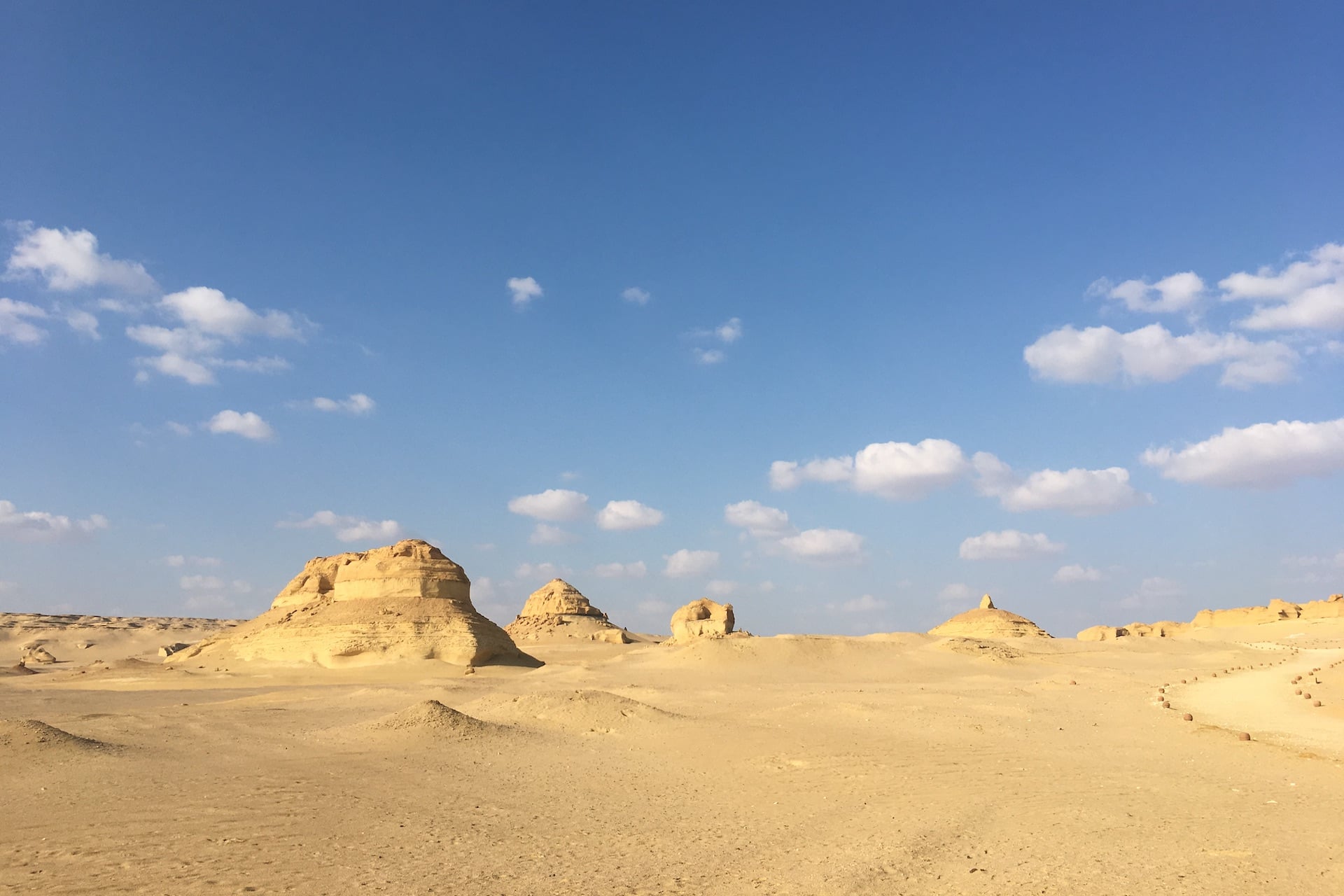
Millions of years ago, marine life flourished in waters that spread across what is now Egypt’s Western Desert. Today, the phosphate-bearing layers of the Duwi Formation preserve a record of that vanished ecosystem—and paleontologists have uncovered new evidence of the diversity of animals that once called it home.
A team of researchers led by Cairo University paleontologist Tarek Yassin discovered fossilized teeth that belong to at least seven different shark species in Egypt’s Abu-Tartur Plateau. Five of the species had not been previously identified in this region.
The findings were published in Cretaceous Research, offering a new glimpse into a nutrient-enriched marine ecosystem that thrived tens of millions of years ago before the shallow sea gradually retreated.
Ancient sharks
Around 80 million years ago, a shallow, inland sea covered parts of the Western Desert in Egypt that connected to the southern margin of the Tethys Ocean. The Duwi Formations were submerged in the warm waters during the Late Cretaceous period, including the phosphate-rich sediments of the Abu-Tartur area.
The waters eventually retreated as sea levels fell and tectonic changes reshaped Egypt’s connection to the Tethys Ocean, exposing the seafloor and transforming the marine landscape into the arid desert it is today.
The Duwi Formation’s phosphate deposits have preserved evidence of the ancient ecosystem that scientists are still uncovering. The researchers behind the new study had previously identified two shark species from teeth found in the fossil bed, and they went back to Abu Tartur looking for more.
In the recent study, the team collected 14 shark teeth that varied in shape; some were long and slender, while others were sharply curved. Some of the teeth were more broad and serrated, ideal for slicing through prey. The differences indicated that the sharks of the ancient seas adopted different feeding strategies and ecological niches.
A thriving ecosystem
Sharks’ skeletons are made up mostly of cartilage, not bone, which generally fossilizes much less completely. That’s why finding shark teeth is the best indicator of ancient shark populations.
Based on other fossil records of shark teeth, the team behind the new study traced the newly excavated teeth to five extinct species that were new to Abu-Tartar: Cretalamna cf. maroccana, Scapanorhynchus cf. raphiodon, Serratolamna cf. serrata, Squalicorax bassanii, and Squalicorax pristodontus. Two of the species, Serratolamna cf. serrata and Squalicorax bassanii, were new to Egypt altogether.
Each of the species may have inhabited a different part of the shallow waters. “The presence of Squalicorax could suggest an input from nearshore/inner shelf settings, while the occurrence of Scapanorhynchus reflects deeper-water conditions on the outer shelf and slope,” the researchers wrote in the paper.
The discovery sheds new light on the buried lives of extinct marine animals that once inhabited the tropical seas of North Africa.