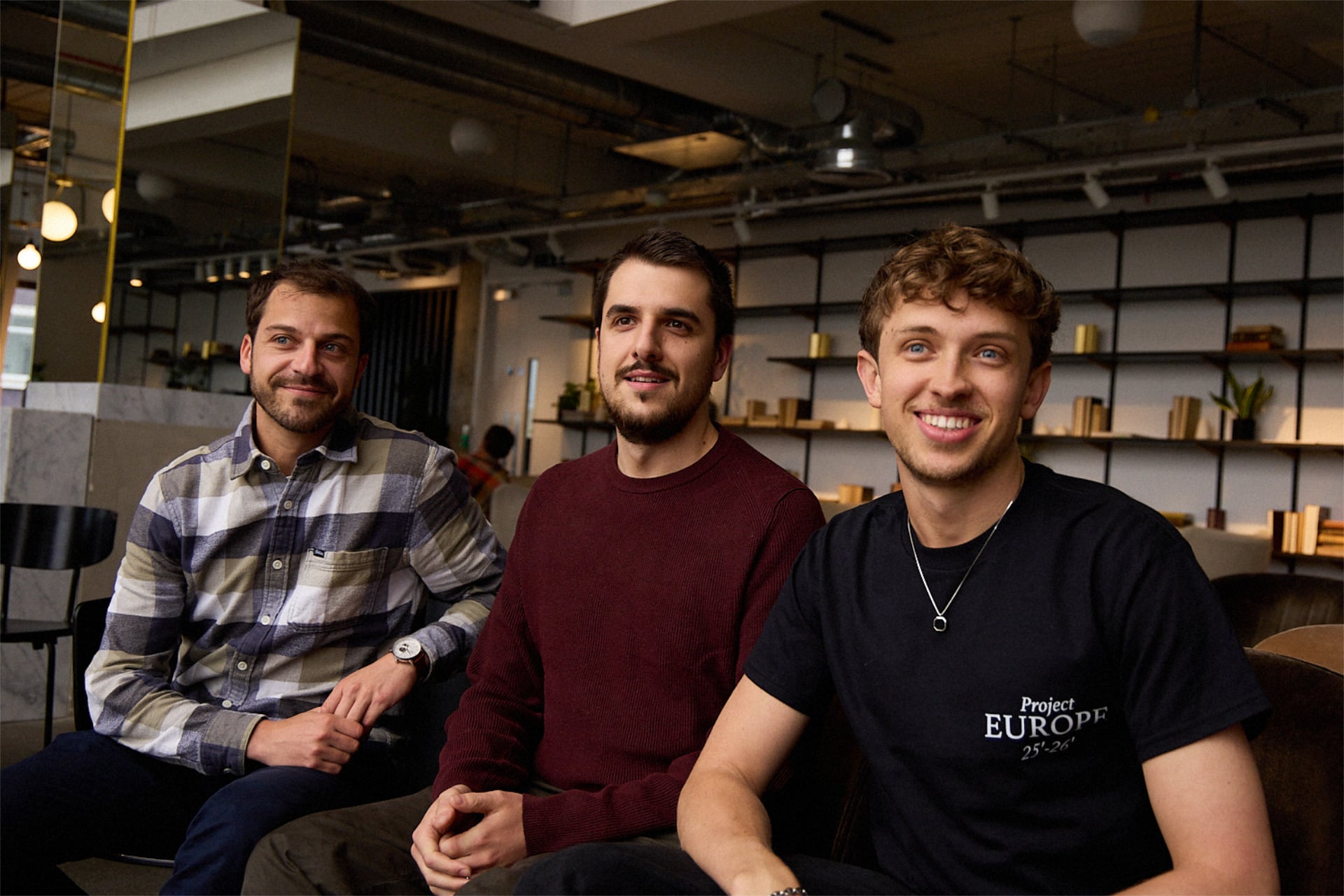
Hoora was founded in September 2023 by 25-year-old French serial entrepreneur Romain Mussault and it has just closed a $1.3 million funding round. But the company’s ambition extends far beyond that modest sum. Mussault, who previously built successful digital agencies focused on influence marketing and user acquisition, believes the mobile gaming industry has been stuck in the same model since the App Store launched. Download, wait, play, delete, repeat. He thinks there’s a better way.
The app works like TikTok, but for games. Users scroll through a continuous feed of titles that launch instantly—no downloads, no waiting, no storage issues. One swipe, one game. It’s designed for a generation that has grown accustomed to infinite scrolling and instant gratification. Within months of launch, Hoora has already racked up hundreds of thousands of downloads across France, the UK, Belgium, and Switzerland, with user acquisition costs that make even seasoned gaming investors take notice.
“Hoora is not just a gaming app, it’s a new entertainment format – one for a generation that scrolls more than it downloads,” Mussault explains. His co-founder and CTO, Flavien Marianacci, built the technology to make every game launch instantaneously, creating what they describe as a “frictionless” experience that matches how people actually use their phones today.
The Spotify vision
The company is entering a crowded and cutthroat market. In Europe, French unicorn Voodoo commands a $1.4 billion valuation with billions of cumulative downloads from hyper-casual hits like Helix Jump and Paper.io. Another French player, Homa Games, raised $100 million in 2022. Across the Atlantic, Lion Studios—owned by mobile marketing giant AppLovin—and other publishers have built empires on simple, addictive games designed for commutes and bathroom breaks.
But Mussault isn’t trying to beat them at their own game. Instead, he’s betting on a fundamentally different model. “Our ambition goes beyond just streaming games. Today, we monetize through advertising and subscriptions, but the ultimate goal is to create a true revenue-sharing ecosystem with developers, like Spotify did for musicians. Except instead of artists, we’re working with game developers.”
It’s an ambitious vision in an industry where developers often struggle to monetize and where traditional app stores take a 30% cut. The plan is to build a sustainable ecosystem where creators can publish their games and generate recurring revenue based on engagement—a stark contrast to the current model dominated by intrusive ads and predatory in-app purchases.
Here’s where Hoora is making an unconventional bet: the entire $1.3 million funding round will go into product development and hiring, not marketing. In an industry where startups typically burn through millions on Facebook and Google ads to juice their download numbers, Hoora is betting on organic growth driven by product quality and word of mouth.
The investor lineup reflects the company’s hybrid positioning between tech and Gen Z culture. Alongside Kima Ventures and gaming industry veterans, the round includes influencer marketing experts and major french content creators. It’s the kind of cap table that signals a company built for viral growth.
The founding team—Mussault as CEO, Nicolas Marchal as COO, and Marianacci as CTO—is moving fast. Europe is the testing ground, but the real prize is America. “This fundraising allows us to accelerate our development and strengthen our growth in Europe before tackling the US market, where our initial tests are already very promising,” Mussault says. The tone suggests they’re not planning to wait long.
The question now is whether this “TikTok of mobile gaming” can scale against entrenched giants who have spent years optimizing every metric, from day-one retention to cost per install. With hundreds of thousands of downloads in just months and acquisition costs well below industry averages, the early signals are promising. But in mobile gaming, the real test isn’t getting users—it’s keeping them. And that’s a story that’s only just beginning.