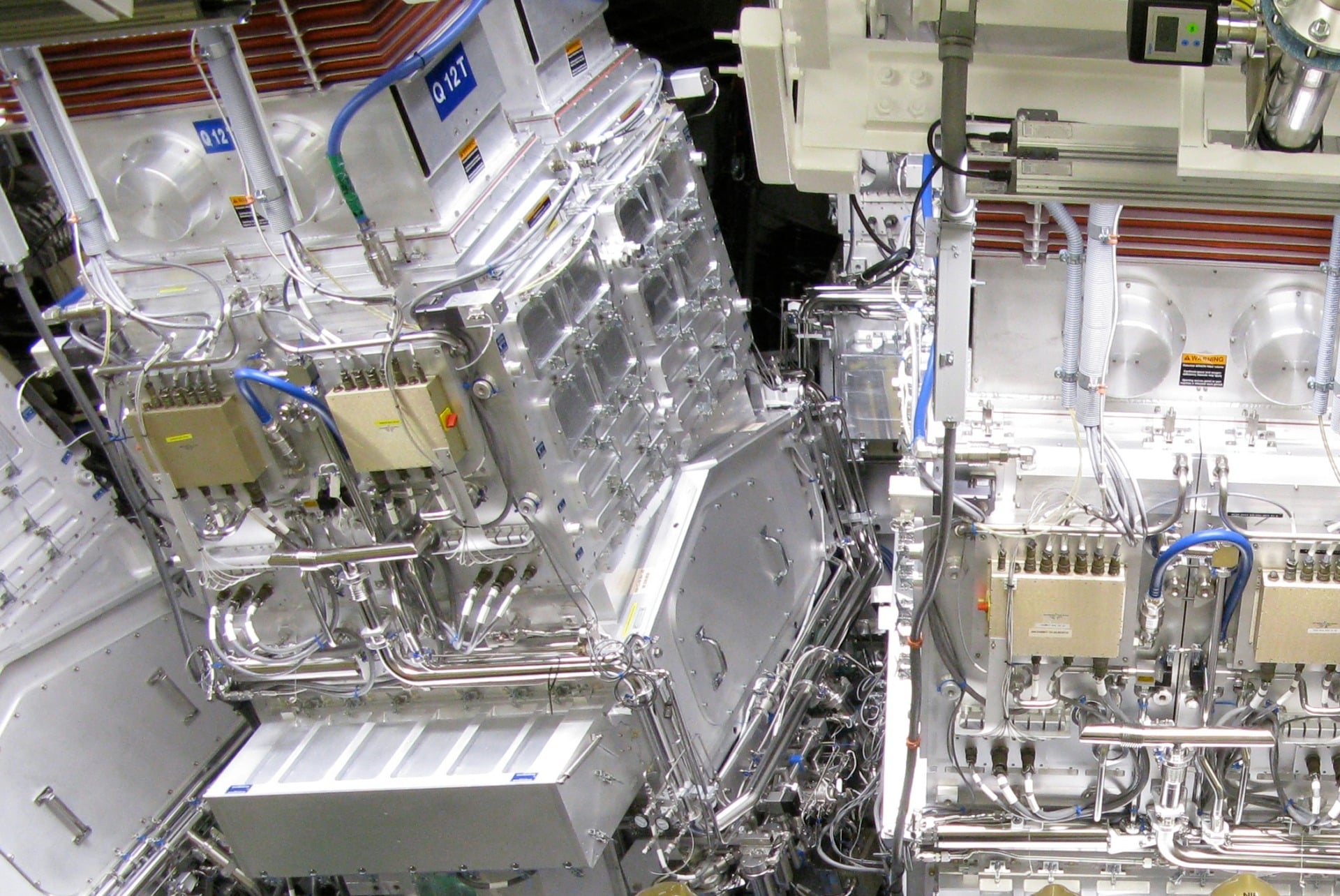
Billions of dollars in venture capital and state investments have recently been poured into efforts to finally make nuclear fusion a viable energy source—big bets that a futuristic leap is coming soon, despite decades of premature prognostications.
Plenty of hurdles remain, of course, from engineering a system that can safely contain the literal power of a burning Sun to ensuring that such a system would be stable enough, consistently enough, for 24/7 use as an energy utility. Now, a particle physicist at Virginia Tech and physicists at Princeton have added a new hurdle to this race to crack fusion: How do we prevent rogue actors from secretly using their fusion plant to stockpile a nuclear arsenal?
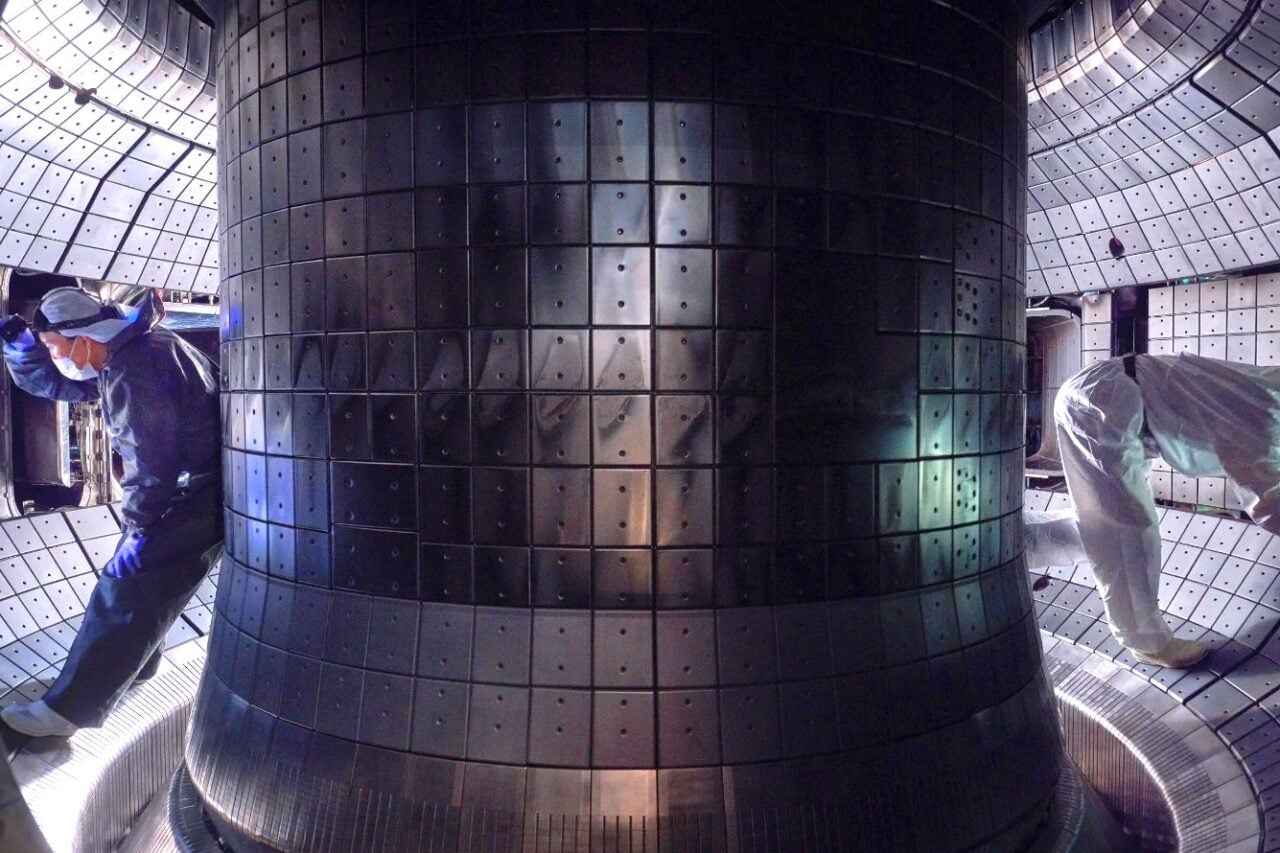
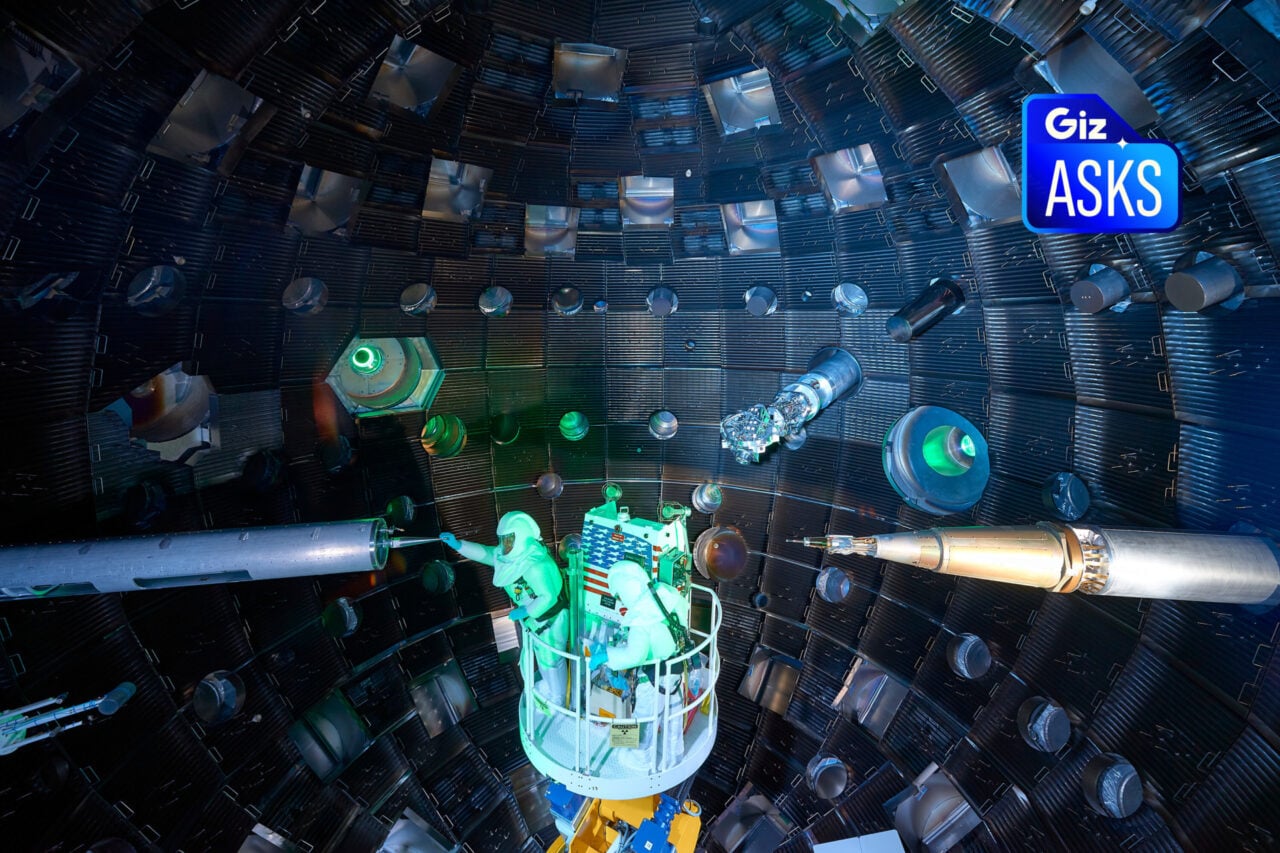
Patrick Huber at VT’s Center for Neutrino Physics and Robert Goldston at Princeton’s Plasma Physics Laboratory zeroed in on this unintended consequence specifically for the case of deuterium-tritium (DT) fusion reactors. DT methods have shown great promise in U.S. government tests recently, tapping into a flow of energetic neutron particles created as its supply of hydrogen isotopes fuses into helium atoms. But those substantial neutron fluxes, Huber and Goldston noted, “could be used for covert production of fissile materials.”
“When operated in such a mode, a gigawatt scale fusion reactor could in principle produce tens of kilograms of plutonium or uranium-233 per week,” the researchers calculated in their new study, published Tuesday in the journal Physical Review Applied.
Fortunately, these researchers and their coauthor, Princeton security researcher Alexander Glaser (also a physics PhD), have a fix: the antineutrino, antiproliferation detector.
Scanners
The researchers’ concept rests on physicists’ history of tracking antineutrinos, elusive antimatter particles emitted by nuclear reactors and released during reactions involving uranium-238. Devices tracking the emission of antineutrinos—like these lithium-6 plastic scintillators developed by Lawrence Livermore National Laboratory—have matured into a fairly well-understood instrument for nuclear and particle physics research.
Huber, Goldston, and Glaser’s central insight is that these antineutrino detectors might make a handy tool for non-proliferation experts enforcing nuclear weapons bans, whether via international treaties or whatever else.
The trio simulated the distribution and energies of antineutrinos that would be released if uranium-238 were being secretly enriched into weapons-grade plutonium-239 while hidden inside a DT fusion reactor putting out 1,500 megawatts of power. For the purposes of further verisimilitude, they assumed this uranium was hidden in the reactor’s “breeding blanket,” simulating a molten salt variety in one case with lithium fluoride and beryllium fluoride that recycles neutrinos by letting these particles turn lithium into more fusion fuel (the hydrogen isotope tritium).
To model their sneaky dual-use fusion reactors and their normal control group reactors, the researchers turned to a simulator developed at Los Alamos National Laboratory for gaming out a variety of radiation scenarios.
The researchers found that a modestly sized antineutrino detector, about the weight of two grand pianos (2,204 pounds or one metric ton), would be sufficient to ferret out illicit plutonium-239 generation. This detector could be stationed about 82 feet (25 meters) from the center of the reactor.
That distance implies something of a sweet spot, the researchers noted: “Neutrinos cannot be shielded, their signatures cannot be spoofed, and they can be detected from a distance, either onsite or offsite, allowing for nonintrusive monitoring of reactor operation.”
Crimes of the future
Huber, Goldston, and Glaser admit we’re a long way off from both this problem existing in the real world and from their detector system actually being employed. The physicists also noted that they have only scratched the surface of sneaky nuclear enrichment schemes that could piggyback off the benign generation of fusion power.
The team noted that “a wider range of blanket designs should be studied” and that “additional covert production scenarios could also consider thorium as a fertile material, in which case the fission signature would be weaker.”
Maybe some of the venture capitalists scrambling to dominate our fusion-powered future would like to fund more research like this before one of their insufferable VC frenemies suddenly gets the bomb.