Photographer Qingrong Yang was visiting Yundang Lake near his home in Fujian province, China, when he captured the stunning scene in the photo above.
Yang regularly goes to this lake to photograph feeding frenzies—when birds fly low over the surface to grab fish leaping to escape underwater predators. During this one, he snapped a photo at the exact moment a ladyfish snatched its prey right out from under a little egret’s beak. It won Yang the Behavior: Birds category award in the 2025 Wildlife Photographer of the Year competition.
This annual contest, organized by the Natural History Museum in London, showcases the best wildlife photos of the year. Read on to see more of this year’s jaw-dropping award winners.
Animals in Their Environment category winner

Marine conservation photojournalist Shane Gross waited for several weeks to capture this rarely seen peppered moray eel behavior on D’Arros Island, Amirante, Seychelles. Peppered moray eels can hunt both above and below the water’s surface and are well-adapted to the intertidal zone. These three were scavenging for dead fish when Gross spotted them and snapped a photo.
Photojournalist Story Award winner

Photographer and biologist Javier Aznar González de Rueda explores the complex relationship between humans and rattlesnakes throughout the U.S. He spotted this black-tailed rattler on the road at night outside of Fort Davis, Texas. González took this picture as the snake raised its tail and began rattling to ward off the perceived threat of the snake handler who moved it from the road.
Young Grand Title winner

While hiking in the Lepini Mountains of central Italy, teenage wildlife photographer Andrea Dominzi stumbled upon abandoned machinery in an area once logged for beech trees. Soon, he realized he wasn’t the only observer. A longhorn beetle of the species Morimus asper made the perfect subject for this photo. Framed as though the beetle is looking out over the disturbed patch of forest, tells a poignant story of habitat loss and hope for renewal.
Behavior: Mammals category winner

Wildlife photographer Dennis Stogsdill had spent days searching for wild cats in the Serengeti National Park, Tanzania, when a call came over the radio. A caracal—a medium-sized wild cat known for its impressive leaping ability—had been spotted at Ndutu Lake. When Stogsdill arrived, he found the cat hunting lesser flamingos and took this striking photo of the hunter proudly displaying its catch.
Behavior: Invertebrates category winner

Nature photographer Georgina Steytler spent years looking for the gum-leaf skeletonizer caterpillar, also known as the “mad hatterpillar.” While exploring Torndirrup National Park in Western Australia, she noticed eucalyptus trees with skeletonized leaves—a sign that the animal had been grazing there. Once she found her subject, she took this backlit image showcasing its bizarre headgear, made up of the old head capsules it keeps every time it sheds its skin.
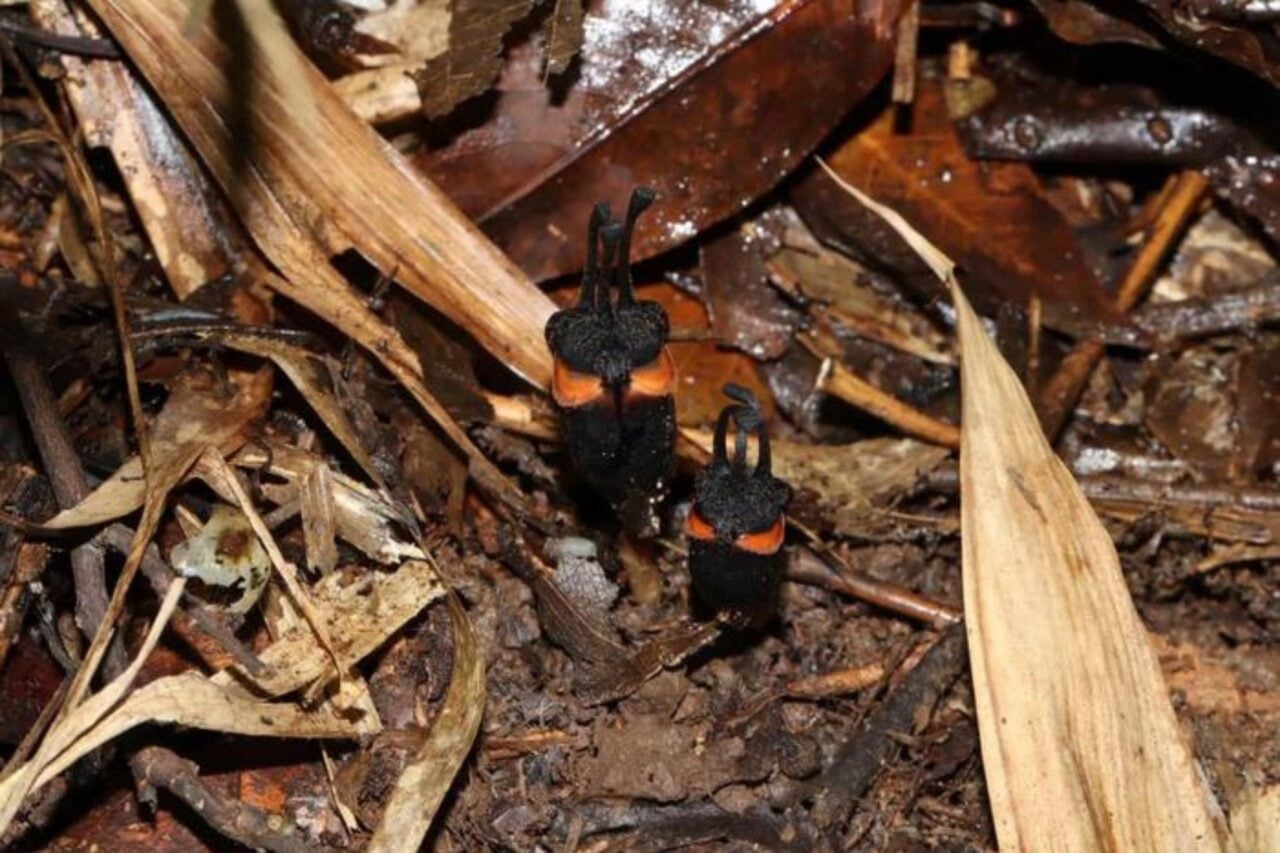
Plants and Fungi category winner

Rising Star Portfolio Award winner

Wildlife and nature photographer Luca Lorenz snapped this photo of a curious harbor seal popping its head above water off the archipelago of Heligoland, Germany. Lorenz minimized the lens aperture to bring the full expanse of the sea into focus and captured the texture of the ocean surface as rain pattered against it.
Behavior: Amphibians and Reptiles category winner

Post-doc researcher and wildlife photographer Quentin Martinez found this group of lesser tree frogs during a rainy night on Kaw Mountain in French Guiana. These vibrant frogs had gathered for a breeding event, producing short, shrill calls to attract mates. This species breeds only during heavy rainfall, assembling in huge numbers to mate for just a few hours.
Adult Grand Title winner

Wildlife and landscape photographer Wim van den Heever is the overall winner of this year’s Wildlife Photographer of the Year awards—and the winner of the urban wildlife category—for this haunting image. It took Heever a decade to capture this perfectly framed image of a brown hyena standing before the dilapidated ruins of an abandoned mining town in Kolmanskop, near Luderitz, Namibia.
Brown hyenas are the rarest hyena species in the world, and their nocturnal, solitary nature makes them challenging subjects to photograph. They are known to pass through Kolmanskop on their way to hunt Cape fur seal pups or scavenge for carrion that washes ashore along the Namib Desert coast.