A prominent congressional candidate in the upcoming 2026 midterm elections just unveiled a striking new AI policy that is bound to ruffle some feathers in Silicon Valley.
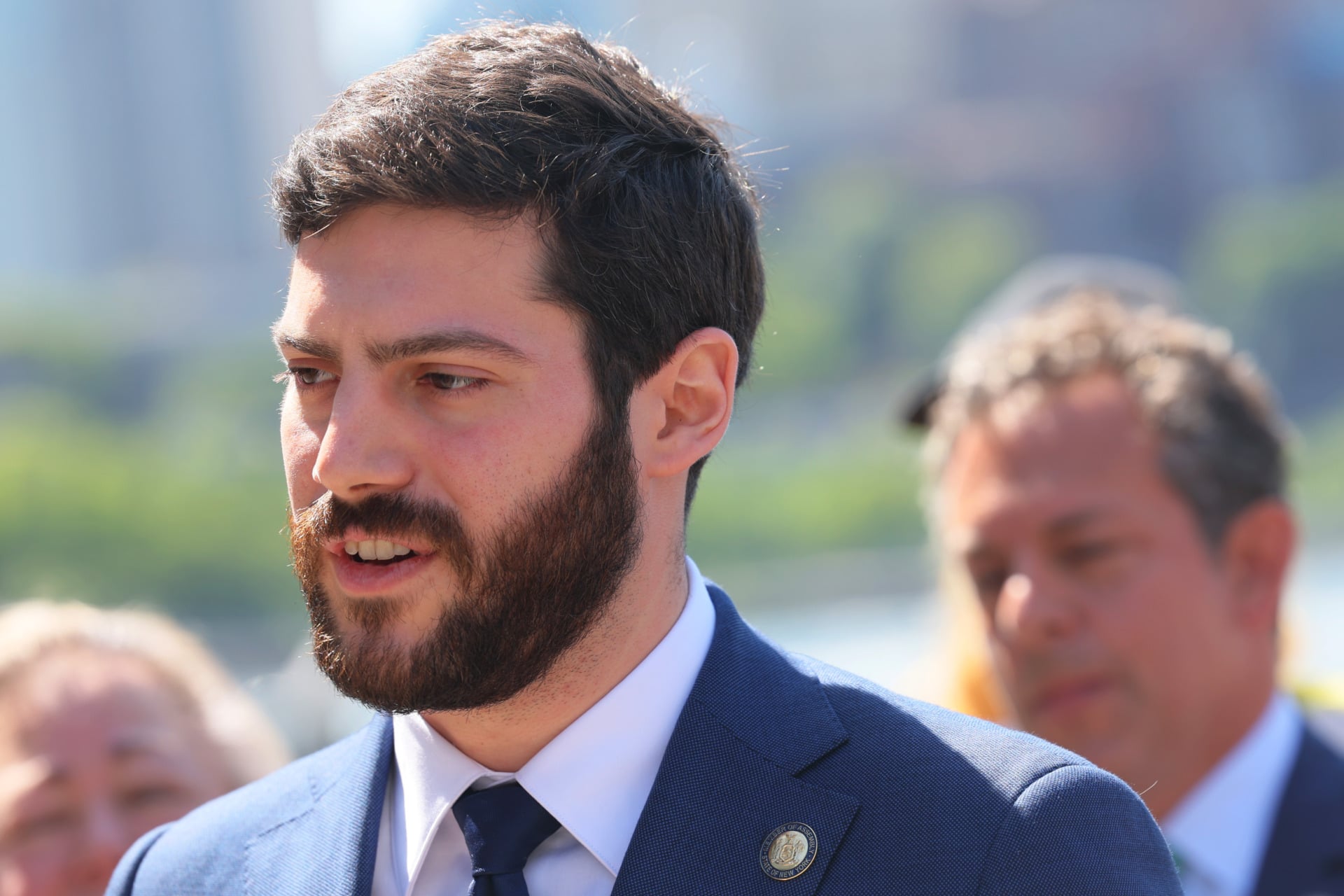
New York assemblymember Alex Bores, a Democrat who is running for a House seat, unveiled his proposal for an AI Dividend program on Monday that would have the government send direct payments to Americans whose jobs are replaced by AI.
“The AI Dividend is about expanding freedom and choice. It gives Americans a direct stake in the wealth generated by AI—room to adapt, learn new skills, care for family, start something new, or simply keep up in an economy changing faster than government has prepared for,” Bores said in a memo announcing the policy proposal. “It’s a way to ensure that if AI transforms the economy, it strengthens the country, not just the balance sheets of a few companies.”
On top of the direct payments, the government would also allocate funds under the program to workforce transition, training, and education.
The program is meant to address a much-feared jobs armageddon that the AI industry and the corporate world at large have been warning about for the past year.
Executives across industries are increasingly eager to integrate artificial intelligence tools into their workflows in the boundless capitalist quest for productivity, at times at the expense of workers, whose job losses have come to be viewed as collateral damage. Over the past year, a long list of companies have frozen hiring or downsized teams altogether while pointing the finger at productivity gains from AI, even when said gains have been contested. The result has been somewhat of a growing PR crisis for AI, one bad enough that even Nvidia CEO Jensen Huang had to weigh in and caution executives to change the way they frame AI’s impact on labor.
Some studies have found evidence that AI is already causing an impact on the job market. In a report from earlier this year, the Irish government said that employment for young workers had been declining in industries with high exposure to AI. Stateside, a Stanford study from August linked corporate AI initiatives to a particularly bad job market for young graduates, and Fed Chair Jerome Powell admitted AI’s influence on the young graduate unemployment rates, but the data coming out of the federal government is limited. For months now, economists and senators have urged the Department of Labor to expand its research into AI’s impact on the job market.
“For decades, new technologies have created more jobs than they destroyed. But AI is different,” Bores’ memo reads. “For the first time, the people building the technology are explicitly trying to automate all human labor. They may not succeed—but the fact that they are trying means government needs to take the possibility seriously.”
The program would kick in at the moment the government decides that AI has begun to “meaningfully” displace workers. The memo describes that meaningful change as either a persistent decline in labor force participation, a compression of wages in sectors affected the most by AI, or a notable increase in AI-driven productivity without a parallel measure of job growth.
The funds would come from “a combination of AI-linked revenue mechanisms,” according to the memo. These mechanisms could include the federal government taking equity stakes in major AI firms or a complete tax code reform, which would include a “modest tax” on AI consumption that would be tied to the amount of tokens used.
“If AI can substitute for labor rather than complement it, then our tax code is actively subsidizing job elimination. We encourage companies to invest in AI by making it cheaper through tax breaks, while taxing the wages of the workers being displaced,” the memo writes. “Taxing the thing that is growing, AI, rather than the thing that is shrinking, wages, is simply sound fiscal management for the country.”
Bores, who also co-sponsored the landmark New York state-level AI safety legislation RAISE Act, called the AI Dividend program only “a first step” in broader AI regulation. Bores’ stance as an AI hawk has made him the prime target of pro-AI and anti-regulation super PACs, most notably “Leading The Future,” which is backed by venture capital firm Andreessen Horowitz, OpenAI president Greg Brockman, Palantir co-founder Joe Lonsdale, and the AI search engine company Perplexity.
With the big spenders in the AI industry making huge financial commitments to sway races, candidates like Alex Bores making AI regulation a core part of their campaign platforms, and the impact of AI becoming more top of mind for voters, its looking like voters are not only choosing the next Congress in the 2026 midterms but will actively be deciding what the future of AI regulation and adoption in the U.S. is going to look like.