NASA officials wrapped up an investigation into an incident that caused significant damage to one of its largest Deep Space Network (DSN) antennas, finding that operators were stretched beyond their usual roles to keep the facility operating.
The Mishap Investigation Board issued its final report on the incident, blaming software weaknesses, human error, and an undocumented failure for the mishap. The 230-foot-wide radio antenna remains offline while NASA gets to work on its repairs, which the agency estimates will cost somewhere between $4.1 and $4.6 million.
“We are committed to learning everything we can from this incident, and we’ve already begun putting those lessons into practice,” Kevin Coggins, deputy associate administrator for NASA’s SCaN (Space Communications and Navigation) Program, said in a statement.
Here’s what happened
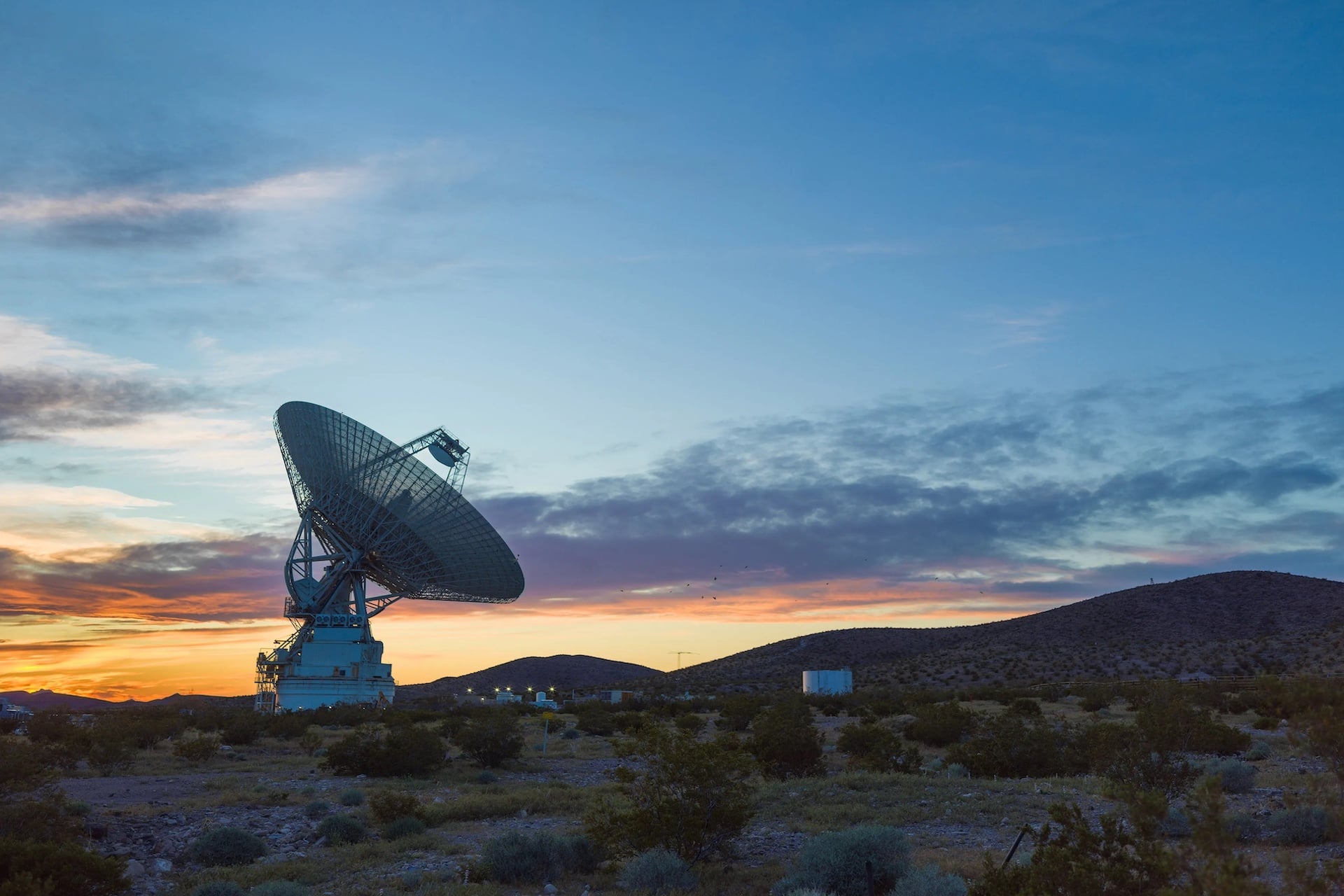
On September 16, 2025, the DSS-14 antenna went dark after over-rotating and subsequently straining the cabling and piping at its center. The hoses from the antenna’s fire suppression system were also damaged, resulting in flooding and water damage.
DSS-14, located at the Goldstone Deep Space Communications Complex near Barstow, California, is crucial for sending commands and receiving data from ongoing missions in deep space.
At the time, NASA didn’t share much information on the cause of the mishap, but the recent report reveals new details on the incident. The radio frequency antenna was tracking the Juno mission, an orbiting probe that’s been studying Jupiter for the past decade, when it over-rotated and placed excessive stress on cabling and associated structural supports.
Investigators later found that an electrical issue from the previous day caused the control system to misreport the antenna’s rotation state. The issue went unnoticed, and it triggered multiple limit stops while the antenna was tracking Juno. Operators at the site were trying to identify what was causing the limit stops and performed several troubleshooting steps that inadvertently bypassed software and hardware safeguards. That is what ultimately led to the antenna over-rotating.
Once operators noticed the flooding in the facility, they attempted to stow the antenna as a safety precaution. The system had already passed the rotation limits, so their attempt drove the antenna further into overrotation and caused additional damage.
The investigation also found the antenna’s hydraulic limit system, its final mechanical safeguard, was inoperable on that day after being damaged in a prior incident that was undocumented. The hydraulic limit system had not been adequately tested for an undetermined period of time, according to the report.
“NASA takes safety and any departure from established procedures seriously, and the investigation at Goldstone made clear that we must strengthen our processes,” Joel Montalbano, acting associate administrator for NASA’s Space Operations Mission Directorate, said in a statement. “We will update and improve procedures, rebuild core in-house capabilities, and reinforce operational discipline across the Deep Space Network.”
A deeper issue
NASA relies on DSN, an array of giant radio antennas spread across different parts of the world, to communicate with its interplanetary spacecraft. The network is made up of three deep-space communications facilities located at Goldstone in California’s Mojave Desert, another near Madrid, Spain, and the third near Canberra, Australia.
The locations are strategically placed approximately 120 degrees apart to ensure that at any point in time one or more of these facilities can communicate with a spacecraft as the Earth rotates around its 360-degree axis.
DSN was first established in 1963, and it is currently operating at capacity. A 2023 report by NASA’s Office of Inspector General revealed that demand on DSN’s radio antennas is exceeding supply by as much as 40% at times. That means that spacecraft are requesting more time than the network’s current capacity can provide.
Demand on DSN is also anticipated to dramatically increase within the coming decade, exceeding its capacity by 50% by the 2030s, according to the report. A major contributing factor to the increased demand is NASA’s Artemis program, which plans on landing a crew of astronauts on the surface of the Moon by 2028.
The recent investigation into the DSS-14 mishap revealed some underlying issues at the facility. “Investigators also concluded workplace culture pressured operators to work as expeditiously as possible, often stretching beyond their usual roles, expertise, and training, to keep the antenna operating,” according to NASA. “Other contributing factors outlined in the report include inadequate procedures, reliance on undocumented practices and tacit knowledge, and gaps in the antenna’s control logic.”
NASA estimates that repairs to the antenna, in addition to maintenance and upgrades, will be completed by October 2028. “Our teams are working to strengthen and standardize processes and training across all three network sites to ensure it remains resilient, consistent, and ready to support the next generation of missions,” Coggins said. “Every challenge is an opportunity to improve, and this is no exception.”