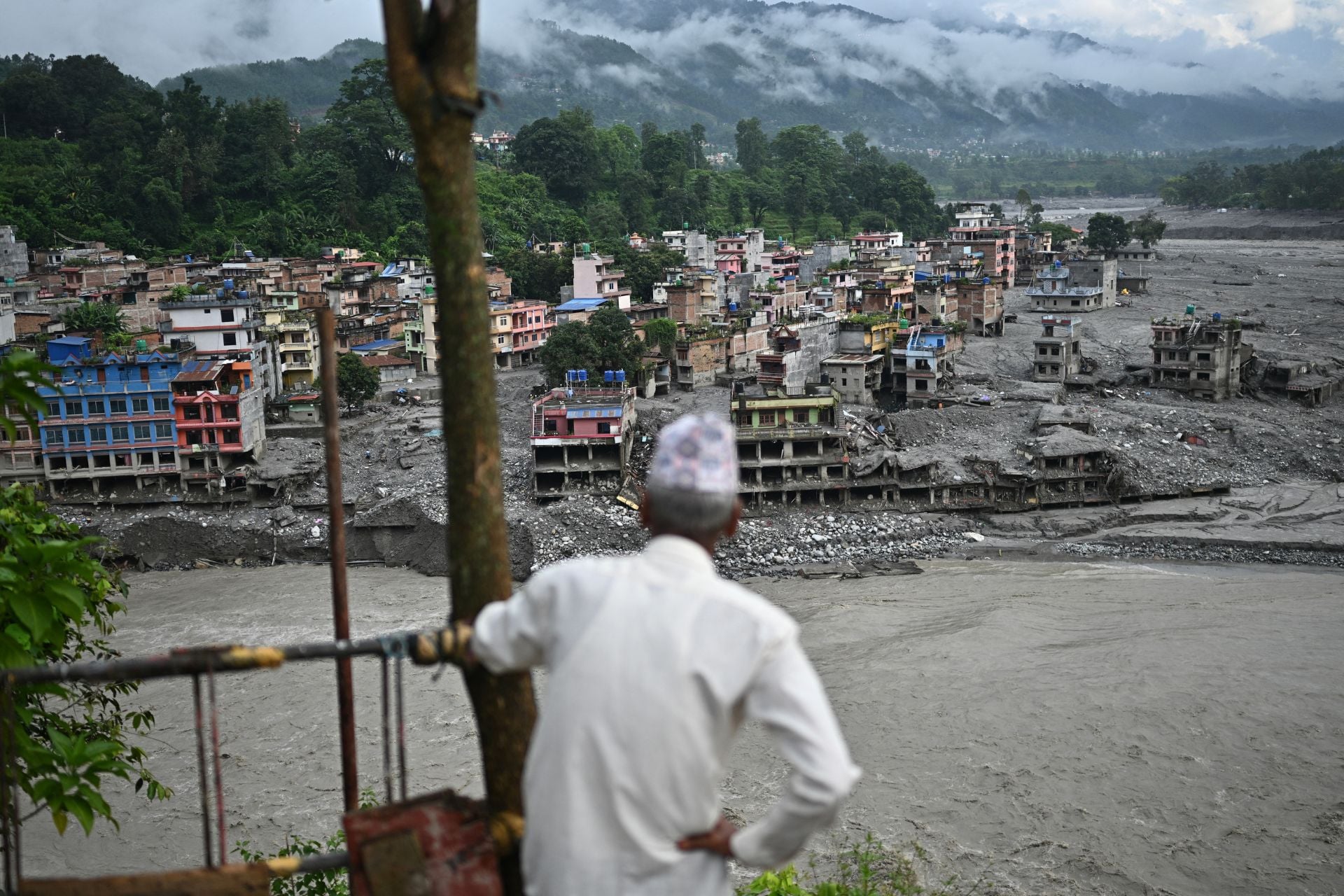
In late August, a rock-ice avalanche in the Himalayas transformed into a debris flood that decimated communities across Nepal and neighboring regions. As of last week, the death toll in Nepal was over 1,300, and more than 5,000 people remained missing. Scientists believe rising global temperatures set the stage for this catastrophe.
This disaster is one of many this year that underscore the dangerous ways in which human activities are reshaping our planet. From burning fossil fuels and clearcutting forests to polluting our air and water, humanity is failing to steward the systems our lives depend on. In fact, a new report suggests Earth is on the brink of irreversible change.
The 2026 Planetary Health Check, published Monday by the Planetary Boundaries Science Lab at the Potsdam Institute for Climate Research and authored by 60 scientists from around the world, shows that Earth has breached seven out of nine planetary boundaries.
🆕7 of 9 Planetary Boundaries are now transgressed; all 7 at their highest recorded levels: Planetary Health Check 2026 finds Earth’s interconnected life-support systems under increasing strain.
Report👉️ https://t.co/DbFREPjYJ3
Video👉️ https://t.co/uQh549173a pic.twitter.com/eb1lwkM7O1— Potsdam Institute for Climate Impact Research PIK (@PIK_Climate) September 21, 2026
First introduced by scientists in 2009, the Planetary Boundaries framework identifies nine ways humanity is pushing crucial processes that maintain Earth’s stability and resilience past their limits. They are climate change, ocean acidification, biodiversity loss, atmospheric aerosol loading, stratospheric ozone depletion, freshwater change, land-use change, chemical pollution, and biogeochemical flows.
According to the new report, only two have shown improvement in the last decade: stratospheric ozone depletion and atmospheric aerosol loading. The authors note, however, that aerosol loading may have reached unsafe levels in some regions.
“Taken together, the 2026 assessment shows broad and increasing pressure across the Earth system,” they write. “Seven of the nine Planetary Boundaries are transgressed, several control variables lie in the High Risk Zone, and all seven transgressed boundaries show worsening trends. The farther and longer human pressures move beyond the boundaries, the greater the risk of large-scale and potentially irreversible Earth-system change.”
A planet on the precipice
The consequences of breaching the planetary boundaries are already unfolding. Recent warming-driven disasters such as Nepal’s debris flood, Europe’s record-breaking summer of heatwaves and wildfires, and exceptional drought across the western U.S. plainly illustrate that climate change is not a distant threat. It is destroying lives and livelihoods right now.
Humans are far from the only species that’s suffering. Many scientists believe that Earth is in the midst of sixth mass extinction, this time driven not by natural phenomena but by human activities. Indeed, the 2026 Planetary Health Check finds that Earth’s biosphere integrity is buckling under the pressure of land-use change, including urban and industrial development, agriculture expansion, overexploitation of natural resources, and the spread of invasive species.
Pollution is further disrupting the biosphere and degrading the essential natural resources: water, air, and fertile soil. According to the report, human activity has significantly increased nitrogen and phosphorous flows, mainly through fertilizer use. In aquatic ecosystems, nutrient pollution is leading to algal blooms and oxygen-depleted dead zones that contribute to biodiversity loss and harm industries such as commercial fishing.
The introduction of novel entities into the environment has also entered the danger zone. These human-made chemicals, materials, and other substances are entering the Earth system faster than they can be adequately tested, monitored, or regulated, the report states. Some examples include PFAS and microplastics, which have been found even in the most remote regions on Earth and pose serious threats to ecosystems and human health.
The list goes on. To see such damning assessments of the many environmental disasters unfolding at our hands is frankly overwhelming. But the report’s authors believe there is still time to reverse course.
“The impacts of breached planetary boundaries are all around us, and they will continue to become more severe,” they write. “But today, we still have a narrow window of opportunity. If we manage to bend the curves within this decade, we can put our societies on a course towards a safer, more just future.”
This will be no small feat. Whether the global community can align toward common goals of stewardship and sustainability remains to be seen.