Writing in Playboy in 1968, Alan Westin predicted that in just seven short years, improved techniques in computerized data gathering would result in “a record-control society that could make George Orwell’s Oceania almost look like a haven of privacy.” We’ve got a few spookily familiar moments from his dystopian vision of the future, below.
Westin’s predictions:
Typical citizen Roger M. Smith commutes to work on a turnpike. When he reaches the tollgate, “his license plate is automatically scanned by a television camera and his number is sent instantaneously to an on-line computer containing lists of wanted persons, stolen cars, and traffic-ticket violators.” If the scan registers a hit, “police stationed 100 yards along the turnpike will have the signal before Smith’s car reaches that position.”
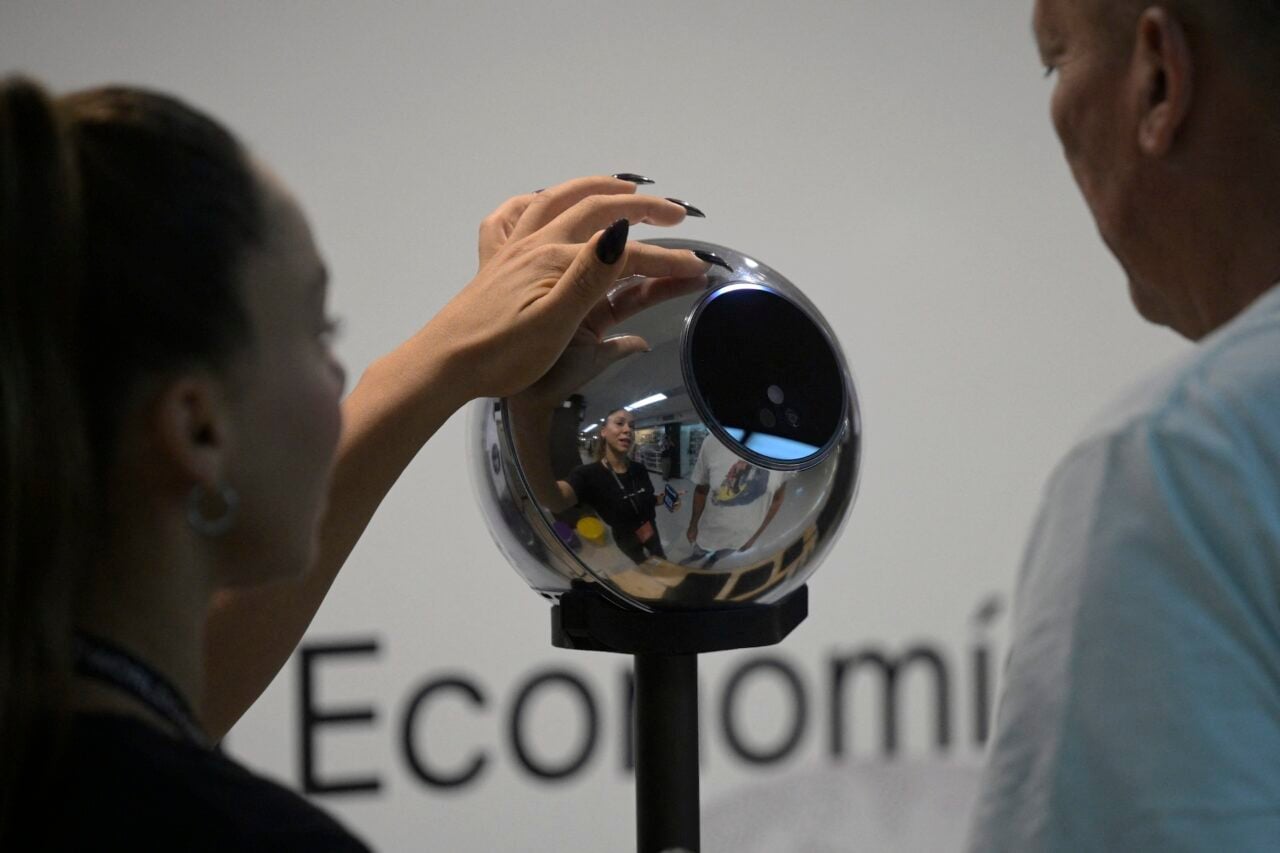
Meanwhile, back at the tollgate, Roger “places his right thumb in front of a scanning camera. At the same time, he recites into the unit’s microphone” his name and national I.D. number, “the initial performance of a ritual that will be repeated” throughout the day.
That’s because voiceprint, thumbprint, and I.D. number will be used in lieu of cash. “Money has been eliminated except for pocket-change transactions.”
One “byproduct of the cashless society is that every significant movement and transaction of Roger Smith’s life has produced a permanent record in the computer memory system. As he spends, uses and travels, he leaves an intransmutable and centralized documentary trail behind him.”
In 1975, for every person in the U.S., there are “four master files”: educational records, employment history, financial history, and the all-important “national citizenship file. . . . a unified Federal-state-local dossier that contains all of Roger’s life history that is ‘of relevance’ to Government. In 1975, that is quite a broad category.”
Westin went on to describe how new “laser memory system” technology meant that “a single 4800-foot reel of one-inch tape could contain about 20 double-spaced typed pages of data on every person in the United States-man, woman and child.”
Westin remains a leading authority on privacy issues.