Funerary practices have evolved a lot over human history, but the underlying idea has been that we like to honor the dead. But there are always exceptions—which are also often the most unsettling stories from long ago.
During the Iron and Viking Age, humans living in modern-day Scandinavia were “infamous” for their “warrior ideology,” according to a recent paper published in the Journal of Archaeological Method and Theory. However, actual findings from cemeteries dated to this period didn’t necessarily show that much physical trauma, a discrepancy that the team sought to address. For the study, researchers studied what they call a “neglected” dataset of bones found in and around domestic places.
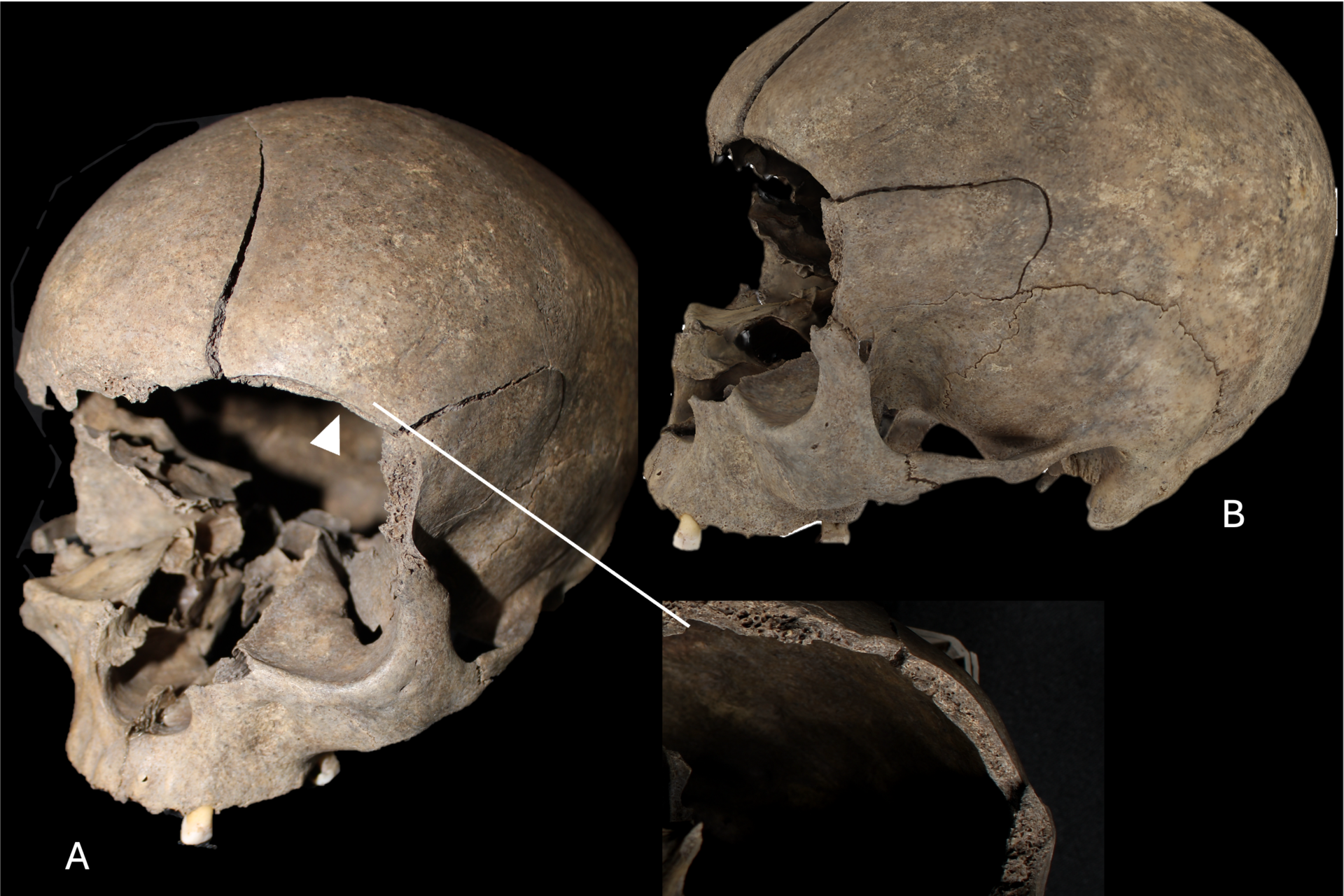
Compared to others living at the same time, these individuals showed what the researchers called unusually high levels of trauma before or around the time of death—painting a picture of structural, slow violence experienced by marginalized groups. The analysis pointed to some seriously gruesome stories, such as a small boy with several sharp-force traumas, possibly from a sword or a sharp weapon. His bones were then placed between two floor phases of a house, meaning its inhabitants “would routinely have walked across the later floor with the child’s partial cranium under their feet,” according to the paper.
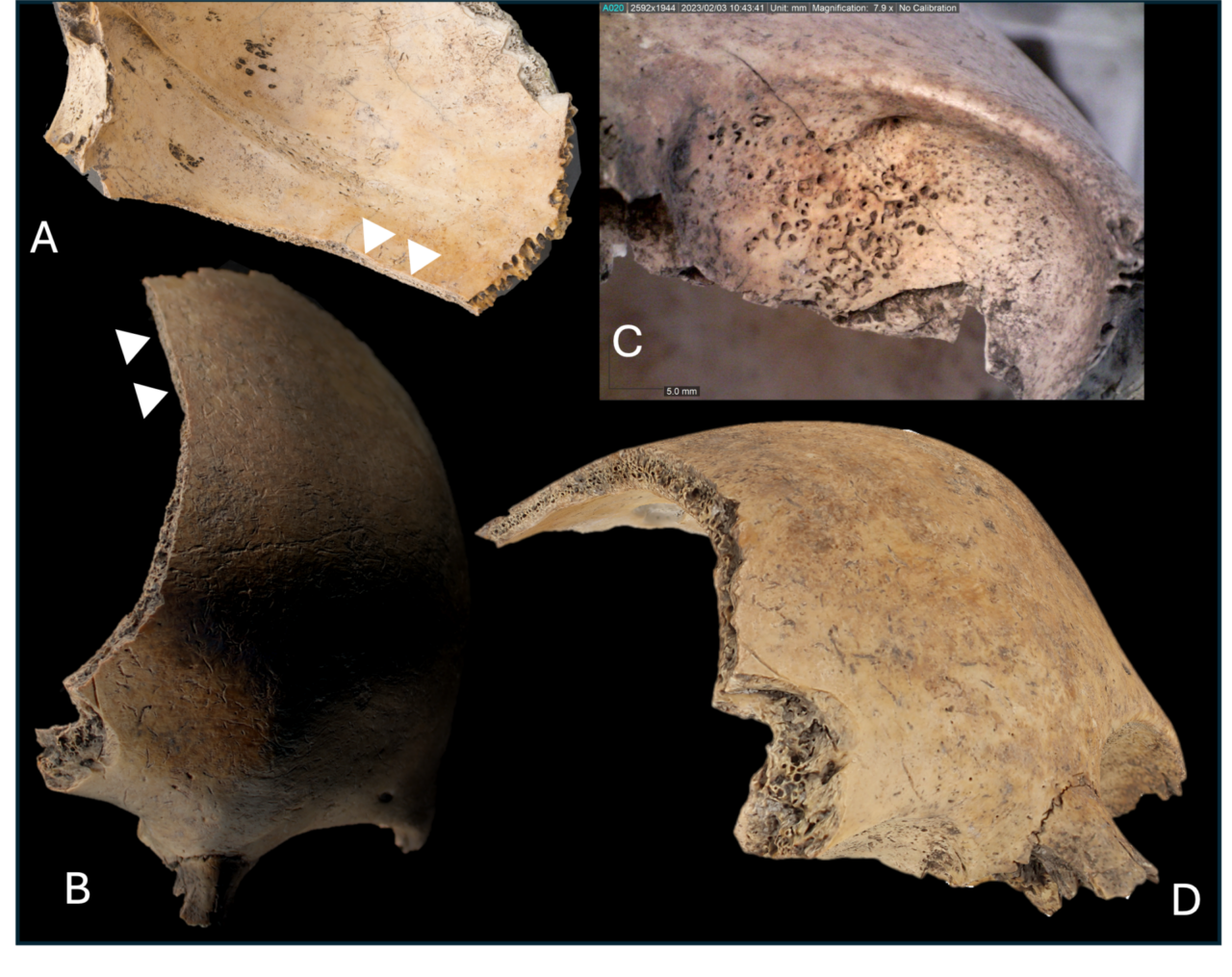
“This means that someone has walked over a child’s skull day after day,” Marianne Hem Eriksen, the study’s first author and an archaeologist with the National Museum of Denmark, said in a translated statement (via Google). “These glimpses of lives lived from the past show how fascinatingly different people must have thought about life and death.”
An incomplete narrative
According to the paper, archaeological studies of past interpersonal violence tend to rely on samples gathered from large cemeteries for “statistical safety.” In the case of Viking practices, archaeological investigations have primarily focused on elite burials and monumental burial mounds, the researchers added. While a reasonable approach, the team pointed out that this inevitably leads to gaps and discrepancies in our understanding of Viking life.
And the data speaks for itself. Although historical and modern investigations largely characterize the Vikings as enjoying a “hegemony of violence,” only around 0.7 to 6% of Viking Age cemetery populations showed physical trauma. Mortuary evidence has “informed a long-standing discourse” on violent Viking practices, but the cemetery record shows one—probably smaller—part of a broader picture, the team added.
No rest in pieces
Accordingly, the goal of the new paper was to “[move] focus from the familiar protagonists of the past to people only preserved in fragments,” the team said. The new study examined 192 remains deposited in and around longhouses, pits, wells, postholes, and hearths dated to Iron and Viking Age Scandinavia. For context, the Iron Age in Scandinava took place between 500 BCE and 800 CE, followed by the Viking Age, which lasted up to 1050 CE. Of these samples, the team picked out 12 individuals with notable trauma and directly assessed eight of them, as the remaining four had already been independently analyzed.
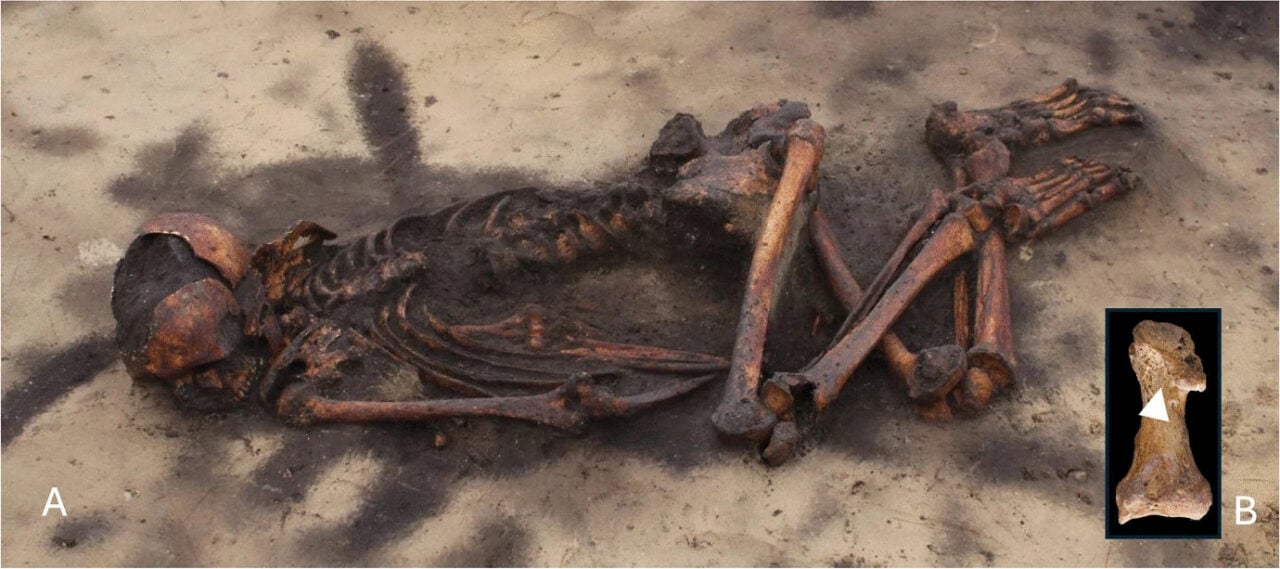
As a result, the researchers identified 19 injuries sustained either before or after death. With one exception, the individuals were all adults, and the team was able to ascertain the sex of half the samples (four males, two females, and potentially three more males). Six individuals displayed head trauma, whereas four suffered multiple sharp and blunt force blows to the head, as well as skeletal fractures.
In some cases, it appeared that the bones were incorporated as a part of houses or other structures. These bones may have come from sacrifice or execution or, perhaps more disturbingly, been left to rot for long periods before becoming (literally) one with the house.
A lost story
It’s worth noting that the overarching rate of trauma was 6.25%, which is consistent with the higher end of estimates for Viking-era violence from previous studies. But the story shifts if we consider these samples by community. The 12 individuals come from roughly 23% of the sites known to have deposited human remains in settlements, which implies that the “total frequency of trauma” was “likely higher than what the available evidence allows us to identify,” the researchers argued.
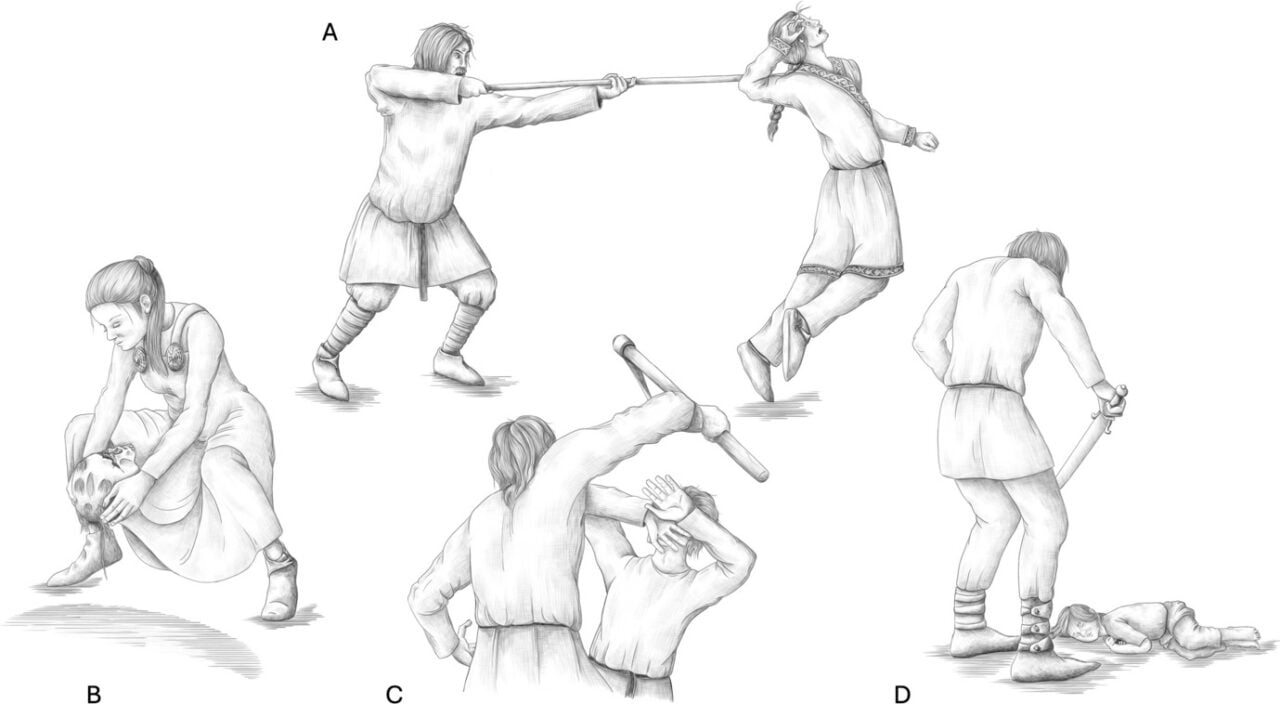
However, the team admitted that some of these fractures may have been the results of accidents. That said, things like malnutrition and violent interactions do increase fracture risk, as do repeated and intense physical activity. In other words, it’s not unreasonable to hypothesize that these individuals didn’t have it easy.
“It opens up a completely new understanding of Iron Age society, of the occurrence of violence and of the handling of the dead,” Eriksen said. “The results show a much greater complexity in the everyday life and world of imagination of the time than we often attribute to Iron Age people.”